Blog / F150

Blog

All F150 Albuquerque Ford Dealer Albuquerque Area Ford Albuquerque Ford Service Power Ford Service Albuquerque Used Cars Bronco Ford Trucks & SUVs Explorer EV Safety Awards Performance Bronco Sport Finance Ford Blue Advantage Certified Maverick Mustang Rio Rancho Expedition Ranger Super Duty Comfort Fleet Interior Tires Mustang Mach-E
2026 Ford F-150

2026 Ford F-150: Built Around the Job You Actually Do

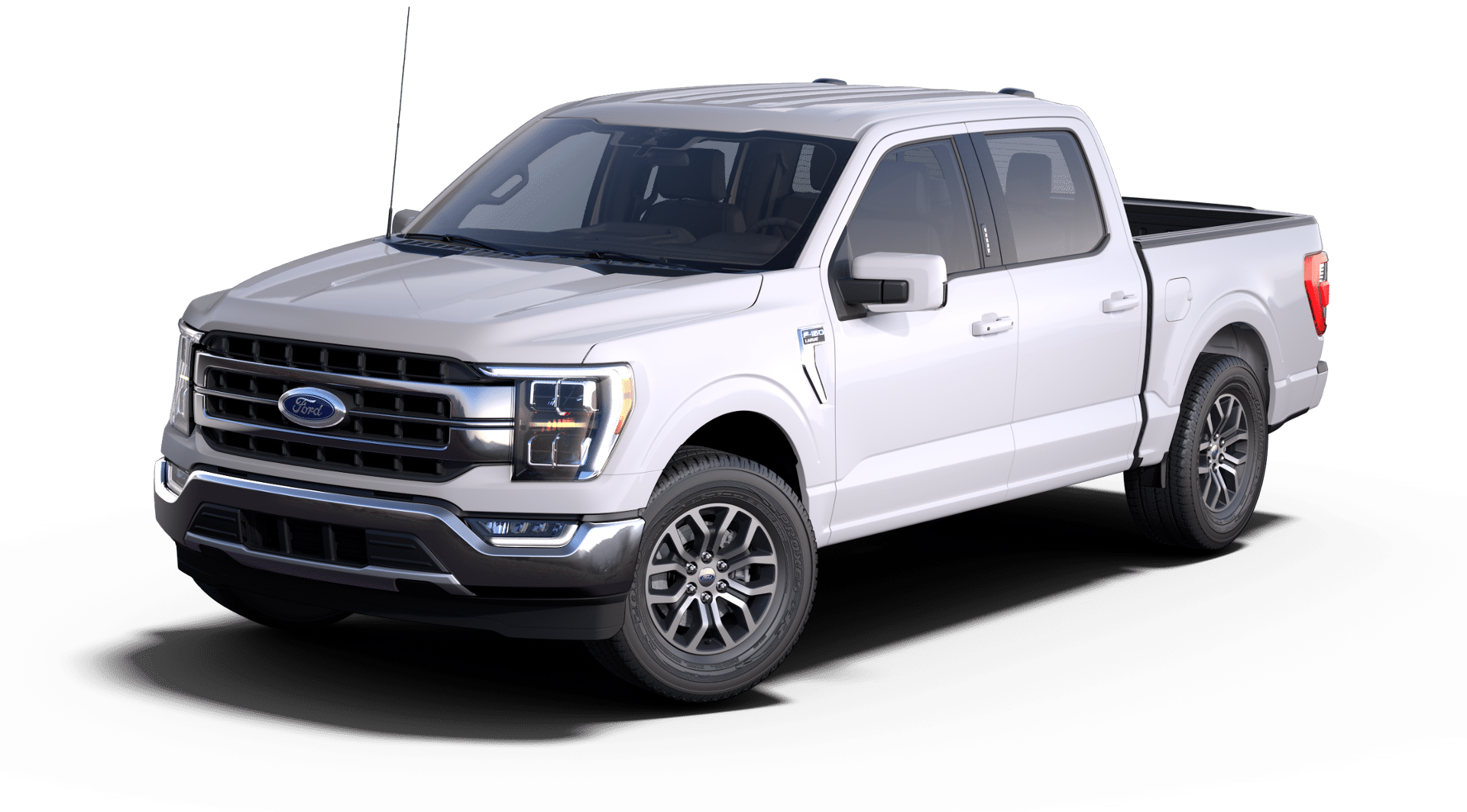
The 2026 Ford F-150 is not one truck with a few trim choices. It is a wide range of cabs, beds, drivetrains, engines, and equipment packages that can be shaped around commuting, towing, work, or recreation. Powertrain choices include EcoBoost V6 engines, an available 5.0-liter V8 and the available 3.5-liter PowerBoost full hybrid. Properly equipped configurations can tow up to 13,500 pounds, while available Pro Power Onboard can supply electricity for compatible tools, equipment or recreation. The important step is matching those features to the exact truck rather than choosing from the maximum numbers alone. Start with what you carry, what you tow, and how often the truck works. Compare current Ford options at Power Ford and verify the window sticker and payload label before deciding.

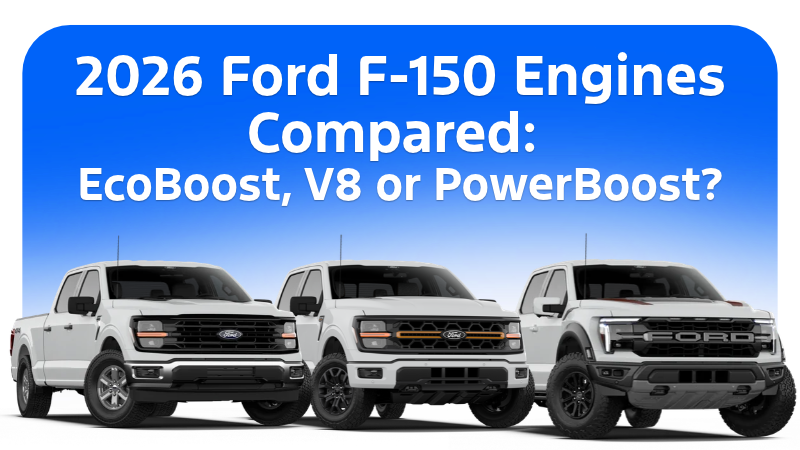
2026 Ford F-150 Engines Compared: EcoBoost, V8 or PowerBoost?

2026 Ford F-150 Engines Compared: EcoBoost, V8 or PowerBoost?

Choosing a 2026 Ford F-150 engine is less about finding one “best” option and more about matching the truck to the work you actually do. The 2.7-liter EcoBoost V6 is a strong everyday choice. The 3.5-liter EcoBoost V6 is the towing leader. The 5.0-liter V8 combines traditional V8 character with serious capability. The available PowerBoost full hybrid adds strong performance and useful onboard power. For New Mexico drivers, the right answer also depends on elevation, trailer weight, passengers, cargo, and how often the truck will work near its limits. Here is how the four mainstream F-150 powertrains compare. Start With Your Real Workload Before choosing an engine, write down what the truck needs to carry and tow on its busiest day, not just during a normal commute. For towing, consider the trailer’s loaded weight rather than its empty weight. Include water, fuel, tools, recreational equipment and anything else that will travel inside it. Trailer tongue weight, people and cargo in the truck all use part of the F-150’s available payload. Engine choice matters, but it does not determine capability by itself. Cab, bed, drivetrain, axle ratio, equipment and other factors can change a truck’s rating. Maximum towing and payload figures are separate ratings and should not be treated as if one configuration achieves every maximum at the same time. Always confirm the exact truck’s specifications and check the payload label on the driver-side doorjamb. Is the 2.7-Liter EcoBoost V6 Enough? For many F-150 shoppers, yes. The 2.7-liter EcoBoost V6 produces 325 horsepower and 400 lb-ft of torque. When properly equipped, it can tow up to 8,400 pounds. That makes it a practical fit for drivers who primarily commute, handle home projects and occasionally tow a smaller boat, utility trailer or recreational trailer. It offers substantially more torque than its displacement might suggest, without requiring shoppers to step up to one of the higher-output engines. Choose the 2.7-liter EcoBoost if your priorities are: - Everyday driving with useful truck capability - Occasional light or moderate towing - A lower engine requirement than a maximum-towing build - Strong low-end torque in a practical configuration The limitation is straightforward. If your trailer and cargo regularly approach the truck’s rating, a higher-capacity configuration can provide more operating margin. Which F-150 Engine Is Best for Maximum Towing? The available 3.5-liter EcoBoost V6 is the conventional towing leader in the 2026 F-150 lineup. It produces 400 horsepower and 500 lb-ft of torque. Properly equipped configurations can tow up to 13,500 pounds, and the highest available F-150 payload rating of 2,440 pounds is also associated with a properly configured 3.5-liter EcoBoost truck. Those two maximum figures are not a promise that one truck will deliver both at once. Shoppers should compare the doorjamb label, axle ratio, towing equipment and Ford’s rating for the exact cab, bed and drivetrain under consideration. The 3.5-liter EcoBoost is the strongest starting point for buyers who regularly tow larger travel trailers, equipment or other heavy loads. It is also worth considering when future needs may be more demanding than today’s trailer. Choose the 3.5-liter EcoBoost if your priorities are: - The highest available conventional towing capacity - Strong torque for loaded driving and grades - More capability margin for frequent towing - A gas powertrain with broad work-truck flexibility Why Choose the 5.0-Liter V8? The available 5.0-liter V8 produces 400 horsepower and 410 lb-ft of torque. When properly equipped, it can tow up to 12,800 pounds. Its appeal is not limited to the specification sheet. Some truck buyers simply prefer the response, sound and driving character of a naturally aspirated V8. The 5.0-liter also offers capability that sits close to the top of the conventional F-150 range without using a turbocharged engine. Choose the 5.0-liter V8 if your priorities are: - Traditional V8 feel and sound - Strong towing and hauling capability - Naturally aspirated power delivery - A familiar choice for work, recreation and long-term truck ownership Availability varies by trim and configuration, so confirm that the V8 can be ordered with the cab, bed, drivetrain and equipment you want. What Makes the PowerBoost Full Hybrid Different? The available 3.5-liter PowerBoost full hybrid combines a twin-turbocharged V6 with an electric motor. It produces 430 horsepower and offers the strongest torque output among the four mainstream F-150 powertrains. Its clearest advantage is versatility. PowerBoost includes Pro Power Onboard, which can supply electrical power for tools, recreation and other compatible equipment. Available output depends on the truck’s equipment, with Ford listing a 2.4-kW system and an available 7.2-kW system for PowerBoost configurations. Properly equipped PowerBoost trucks are rated to tow up to 12,400 pounds in certain 4x2 configurations or up to 11,600 pounds with 4x4. The hybrid equipment can also affect available payload, making the exact truck’s doorjamb label especially important. Choose PowerBoost if your priorities are: - Strong acceleration and towing capability - Built-in electrical power at a jobsite, campsite or tailgate - A hybrid powertrain without giving up full-size-truck utility - One truck that supports work and recreation in different ways Fuel use will vary with configuration, weather, terrain, driving habits and load. Buyers should compare the EPA label on the exact truck rather than assuming the hybrid will deliver the same result in every use case. What About the F-150 Raptor Engines? F-150 Raptor and Raptor R use specialized high-output powertrains designed around off-road performance. The Raptor’s high-output 3.5-liter EcoBoost V6 produces 450 horsepower, while the Raptor R’s supercharged 5.2-liter V8 produces 720 horsepower. These are compelling choices for performance-focused buyers, but they are not the route to the F-150’s maximum towing or payload ratings. If your main objective is hauling a heavy trailer, begin with the mainstream 3.5-liter EcoBoost, 5.0-liter V8 or PowerBoost configurations. How Does New Mexico Elevation Affect the Decision? Elevation deserves attention when a truck will tow through northern New Mexico, mountain passes or other high-altitude routes. Ford notes that vehicle performance can decrease at higher elevations when a truck is heavily loaded or towing. To match sea-level performance, Ford’s 2026 towing guidance recommends reducing gross vehicle weight and gross combined weight by 2 percent for every 1,000 feet of elevation. That does not automatically mean every Albuquerque driver needs the largest engine. It does mean buyers who tow near a truck’s limits should calculate for the routes they actually travel. Extra capability margin can be more valuable than selecting a configuration that only works on paper at sea level. Which 2026 F-150 Engine Should You Choose? For a quick starting point: - Choose the **2.7-liter EcoBoost** for daily driving and occasional light or moderate towing. - Choose the **3.5-liter EcoBoost** when maximum conventional towing is the main goal. - Choose the **5.0-liter V8** for strong capability with traditional V8 character. - Choose the **PowerBoost full hybrid** for strong performance plus useful onboard electrical power. - Consider **Raptor or Raptor R** when specialized off-road performance matters more than maximum towing or payload. The final decision should be made at the configuration level, not just the engine level. Power Ford can help you compare window stickers, payload labels and towing ratings across available 2026 F-150 configurations. Bring the weight and type of trailer you plan to tow, along with an estimate of passengers and cargo, so the conversation starts with the truck’s real job. Shop new Ford vehicles at Power Ford or contact Power Ford to compare 2026 F-150 powertrains in Albuquerque

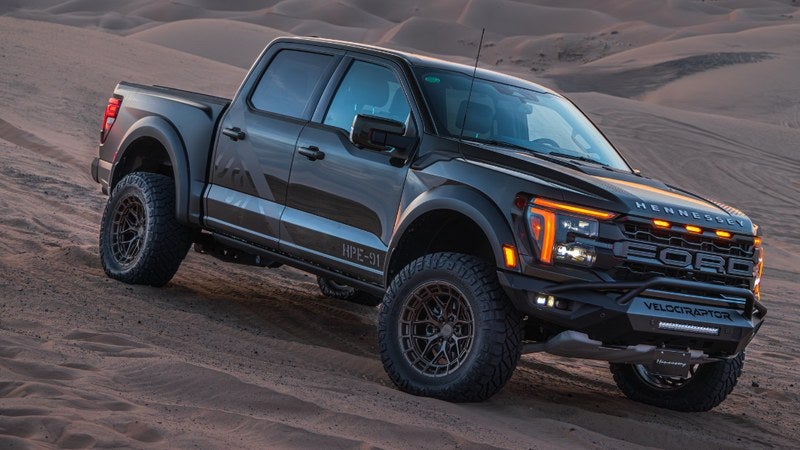
Hennessey VelociRaptor Ford F-150 Raptor on desert dunes, a Hennessey Ford truck for sale near Albuquerque, NM

Where Can I Find a Hennessey Ford Truck for Sale Near Albuquerque, NM?

The place to find a Hennessey Ford truck for sale near Albuquerque, NM is Power Ford on Montaño Road, New Mexico's Hennessey Performance dealer, which sells Hennessey-tuned Fords new from stock and as ordered builds. The 2026 lineup covers the 800-bhp F-150 Venom 800, VelociRaptor packages for the F-150 Raptor and Raptor R, and the VelociRaptor 500 Bronco Raptor. You can see current builds on our Hennessey performance Fords for sale in New Mexico page. This guide covers what each build makes, how Hennessey's 3-year/36,000-mile warranty sits alongside Ford's factory coverage, and whether to buy a truck already on the lot or order one built to your spec. The Hennessey Ford Trucks Available in 2026 Hennessey Performance, founded in 1991 and based in Sealy, Texas, now centers its Ford truck program on three platforms. The headliner for 2026 is the F-150 Venom 800, which starts with the 5.0-liter V8 F-150 and doubles its horsepower. Hennessey adds a 3.0-liter supercharger, an air-to-water intercooler, upgraded fuel injectors and its own engine calibration to take the stock 400 horsepower to 800 bhp at 6,200 rpm, with 757 lb-ft of torque, and quotes 0-60 mph in 3.4 seconds and an 11.7-second quarter mile. The package also brings Brembo six-piston brakes, a 6-inch suspension lift with FOX coilovers, 20-inch Hennessey wheels on 35-inch tires, Venom bumpers and serial-numbered interior plaques. Hennessey Package Base Ford Truck Hennessey-Rated Output Worth Knowing F-150 Venom 800 2026 F-150, 5.0L V8 (400 hp stock) 800 bhp @ 6,200 rpm / 757 lb-ft @ 4,100 rpm 3.0L supercharger; 0-60 mph in 3.4 sec (Hennessey) VelociRaptor 600 2026 F-150 Raptor, twin-turbo 3.5L V6 558 bhp @ 5,100 rpm / 672 lb-ft @ 3,500 rpm Marked sold out on Hennessey's spec sheet VelociRaptoR 1000 2026 F-150 Raptor R, supercharged 5.2L V8 (720 hp stock) 1,043 bhp @ 7,000 rpm / 824 lb-ft @ 4,800 rpm Hennessey's highest-output Raptor build VelociRaptor 500 2026 Bronco Raptor, twin-turbo 3.0L V6 (418 hp stock) 500 bhp @ 5,700 rpm / 550 lb-ft @ 3,900 rpm Production limited to 200 units The Raptor packages are where availability gets tight. Hennessey's own spec sheet marks the VelociRaptor 600 for the twin-turbo 3.5-liter Raptor as sold out, so a truck that is already built may be the only way to get one. The VelociRaptoR 1000 starts from the 720-horsepower supercharged Raptor R and is rated at 1,043 bhp. On the Bronco Raptor, the VelociRaptor 500 lifts the stock 418 horsepower to 500 bhp and adds 37-inch tires, 20-inch wheels including the spare, chassis dyno tuning and up to 500 miles of road testing, with production capped at 200 trucks. Every one of these builds carries Hennessey's 3-year/36,000-mile limited warranty. If you are still deciding whether you want a factory Raptor at all, our look at buying a new F-150 Raptor near Rio Rancho covers the stock truck first. Explore Power Performance Builds Buying a Hennessey Truck in Stock vs Ordering a Build An in-stock Hennessey truck is the faster and more certain route. The conversion is finished, calibrated and road tested, so you can drive the exact truck before you sign, match its serial-numbered plaques to the paperwork and take it home without waiting on a build slot. For a limited run like the 200-unit VelociRaptor 500, or a package Hennessey has already sold out, a truck from stock may be the only option left. The trade-off is that the color, trim and factory options were chosen before you arrived, and high-demand builds rarely sit on a lot for long, so call ahead to confirm a truck is still available before you make the trip. Ordering makes sense when the spec matters more than the date. You choose the base truck, its trim, color and factory options, then the Hennessey package, and the conversion is scheduled. Power Ford's guidance is that builds take anywhere from a few days to several weeks depending on parts and scheduling, and if the base truck is not already in the pipeline it has to be factory-ordered from Ford first, with lead times that vary by model and configuration. Buyers who want the full experience can also take final delivery at Hennessey's Pennzoil Proving Grounds in Sealy, Texas. If you already own a qualifying late-model F-150, Raptor or Bronco Raptor, ask whether upgrading your own truck is possible for the package you want. Start a Custom Factory Order How Hennessey's Warranty Works Alongside Ford's Factory Coverage A Hennessey truck effectively carries two warranties, and each covers a different part of the truck. Ford's New Vehicle Limited Warranty still runs 3 years or 36,000 miles, with powertrain coverage to 5 years or 60,000 miles, for defects in factory-supplied materials and workmanship, but Ford's list of what its warranty does not cover includes alterations, modifications and non-Ford parts. Hennessey's 3-year/36,000-mile limited warranty covers that ground instead, protecting against defects in materials and workmanship on the modifications it installs. In practice, a fault in the supercharger, intercooler or engine calibration is Hennessey's to fix, while something the build never touched, like the touchscreen, power windows or climate control, stays with Ford. The gray zone is a failure that might be blamed on the extra power. Under the Magnuson-Moss Warranty Act, Ford cannot reject a claim just because a truck has been modified; it has to show the modification caused the failure. That is a strong argument for buying through a franchised Ford dealer that knows both sides of the paperwork. Keeping Both Warranties Intact After Delivery A few details in Hennessey's terms catch new owners out. Its coverage starts when the truck leaves Hennessey's facility for final delivery, so on an in-stock truck ask for that date in writing, and a truck bought new from a dealer needs its Hennessey warranty activated online, which Hennessey limits to qualifying 2025 and newer model years. Hennessey's published terms also say the warranty is non-transferable, so if you are shopping a used Hennessey truck, verify any remaining coverage by VIN rather than assuming it carries over. The exclusions read much like Ford's, and they spell out racing, track use and excessive towing. If the truck will spend most of its life pulling a trailer, our guide to choosing a Ford truck or SUV for towing and off-road driving in New Mexico is the better place to start. Servicing is the other half. Hennessey tells owners to instruct any service department not to perform ECU flashing or software updates, because a factory update can overwrite the calibration and leave the truck undrivable until Hennessey retunes it. Power Ford services Hennessey vehicles locally, which helps, but it is still worth reminding the service advisor at every visit. The same goes for recalls: run the VIN through NHTSA's free recall lookup from time to time, and if a campaign calls for a powertrain software update, contact Hennessey support before it is applied rather than skipping it. Keep every oil change and service receipt as well, since Hennessey warns that missing maintenance records can lead to denied claims under either warranty. Visit Our Albuquerque Ford Dealership What to Budget for a Hennessey Ford Truck Because Hennessey quotes package prices on inquiry rather than publishing them, the real number is the base truck plus the conversion, priced together by the dealer. Expect a meaningful premium over a stock truck, since a package like the Venom 800 bundles a supercharger system, brakes, suspension, wheels, tires, bumpers and calibration time. Ask for an itemized buyer's order so the truck, the Hennessey package and any delivery or transport costs appear as separate lines, and you can see exactly what you are financing. Power Ford arranges financing for eligible buyers with a personalized quote, and a trade-in can be applied to the deal. Before delivery, call your insurer: a Hennessey conversion is a modification your policy should list, and it is better to know the premium before you sign than after. Common Questions About Buying a Hennessey Ford Near Albuquerque Is there a Hennessey dealer in New Mexico? Yes. Power Ford, at 1101 Montaño Rd NE in Albuquerque, is New Mexico's Hennessey Performance dealer and sells Hennessey-built Fords new, both from stock and as ordered builds. The 2026 truck lineup includes the 800-bhp F-150 Venom 800, VelociRaptor packages for the F-150 Raptor and Raptor R, and the VelociRaptor 500 Bronco Raptor. Call sales at (505) 933-7883 to check which builds are available right now. Does a Hennessey upgrade void the Ford factory warranty? Not as a whole. Ford's 3-year/36,000-mile New Vehicle Limited Warranty and 5-year/60,000-mile powertrain coverage still apply to factory parts the build does not affect, although Ford excludes alterations and modifications themselves. Hennessey covers the modifications it installs with a 3-year/36,000-mile limited warranty against defects in materials and workmanship. Under federal warranty law, Ford has to show that a modification caused a failure before it can deny the claim. How long does it take to get a Hennessey truck if I order a build? An in-stock Hennessey truck is already built, so it can go home once the paperwork is done. An ordered build takes longer: Power Ford quotes anywhere from a few days to several weeks for the conversion, depending on parts and scheduling, plus Ford's factory lead time if the base truck has to be ordered first. Limited packages, such as the 200-unit VelociRaptor 500 Bronco Raptor, can sell out entirely. Find Your Hennessey Ford in Albuquerque The quickest way to see which Hennessey Ford trucks are for sale in Albuquerque right now is to call Power Ford sales at (505) 933-7883 and ask which builds are on the lot today and which packages can still be ordered for 2026. We are at 1101 Montaño Rd NE, open Monday through Saturday from 8:00 a.m. to 8:00 p.m. and Sunday from 10:00 a.m. to 6:00 p.m., and we regularly work with performance buyers from Rio Rancho, Santa Fe, Los Lunas and across New Mexico. We'll beat any Ford deal in New Mexico, or you'll get $1,000 cash in your pocket. Schedule a Test Drive Contact Our Team


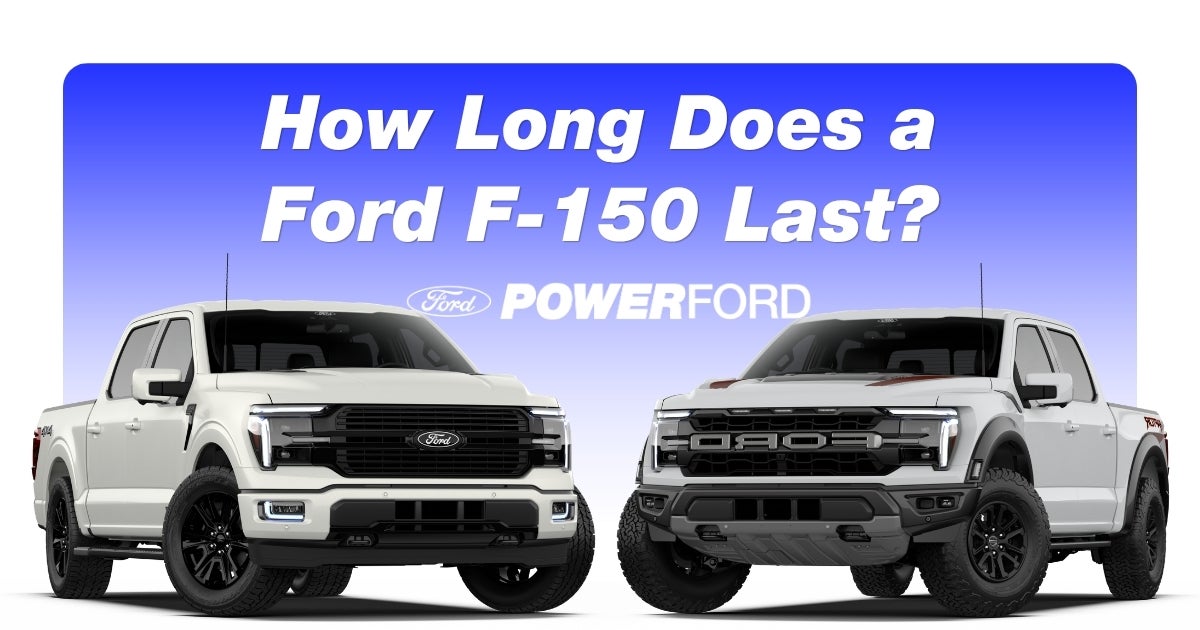
How Long Does a Ford F-150 Last?

How Long Does a Ford F-150 Last? 100K, 200K Miles and Beyond!

How Long Does a Ford F-150 Last? Reliability, Mileage, and Maintenance Can a Ford F-150 last 200,000 miles? Absolutely. But there is no mileage number where every F-150 suddenly becomes old, and there is no guarantee that every truck will reach 200,000 miles. Current vehicle longevity research estimates the F-150’s average lifespan at roughly 164,000 miles, with about one in four reaching at least 200,000 miles. The bigger question is how the truck was maintained and what kind of work those miles involved. Two F-150s can both show 100,000 miles and have lived completely different lives. One may have spent most of those miles cruising on I-25, while another may have spent years towing trailers, idling on job sites, carrying heavy equipment, or driving dusty roads. Ford considers towing, heavy loads, excessive idling, dust, and extreme temperatures severe driving conditions. That means the number on the odometer tells you how far the truck traveled, but it does not tell you how hard it worked to get there. Is 100,000 miles too much for an F-150? There is nothing magical about 100,000 miles that suddenly makes an F-150 a bad truck. A well-maintained F-150 with 120,000 miles may be a much stronger purchase than a neglected truck with 70,000 miles. For a used buyer, maintenance history, towing history, transmission behavior, fluid leaks, tire wear, suspension condition, previous damage and warning lights can tell you more than mileage alone. What helps an F-150 reach high mileage? The best way to help an F-150 reach high mileage is consistent maintenance. Stay on top of oil changes, fluids, filters, tires, brakes, and cooling system service, and pay attention to small issues before they become expensive repairs. If your truck spends a lot of time towing, idling, hauling heavy loads, or driving in hot and dusty conditions, your maintenance schedule should reflect that extra workload. For New Mexico F-150 owners, dust, heat, mountain driving, and rough roads make regular inspections even more important. A high-mileage truck is not automatically a worn-out truck. In many cases, the difference between an F-150 that feels tired at 100,000 miles and one that keeps going well beyond that point comes down to how consistently it was maintained and how quickly small problems were addressed. Does New Mexico Driving Affect F-150 Longevity? New Mexico driving can expose an F-150 to a wide range of conditions. Albuquerque commuting may be easy duty, while towing into the mountains, driving on dusty roads, hauling equipment, or working in extreme heat can place significantly different demands on the same truck. None of those conditions mean an F-150 cannot have a long service life. They simply make it more important to maintain the truck based on how it is actually used rather than treating every mile the same. Conclusion So how long does an F-150 last? There is no single mileage number that determines when a truck is finished. Some F-150s will need major repairs before 200,000 miles, while others can remain useful well beyond that point. The biggest factors are how the truck was maintained, how hard it worked, and whether small problems were handled before they became expensive ones. If you are shopping for a used F-150 in Albuquerque or the surrounding New Mexico area, do not judge the truck by mileage alone. Look at the entire story.

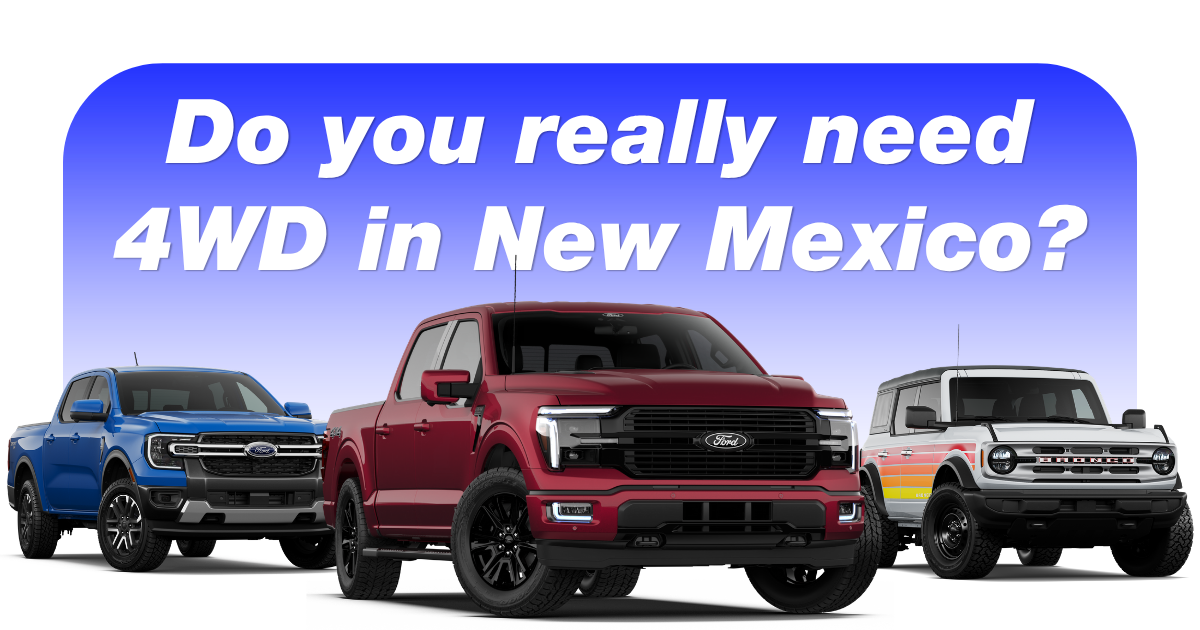
Do You Really Need Four Wheel Drive in New Mexico?

Do You Really Need 4WD in New Mexico?

Living in New Mexico does not automatically mean you need Four Wheel Drive. If most of your driving consists of commuting around Albuquerque, running errands, and traveling on maintained highways, a two-wheel-drive vehicle with good tires may be all you need. However, if your lifestyle regularly takes you into the mountains, onto dirt roads, through snow, or farther off the pavement, Four Wheel Drive can quickly become one of those features you are glad you have. The real question is not whether Four Wheel Drive is better. The question is whether your day-to-day driving gives you a reason to use it. When Does Four Wheel Drive Make Sense in New Mexico? New Mexico has a little bit of everything. Albuquerque can be dry and sunny while roads farther north are dealing with snow and ice. Summer monsoon storms can also turn otherwise manageable roads into muddy or slick conditions very quickly. Four Wheel Drive makes the most sense for drivers who regularly: Go camping or hunting on dirt and forest roads. Travel into the mountains during the winter. Drive through snow, mud, sand, or loose terrain. Tow recreational equipment into areas where road conditions may be unpredictable. Spend time on job sites or rural roads. Want additional off-road capability for weekend recreation. If most of your driving never puts you in those situations, you may not need the additional capability. Four Wheel Drive Does Not Replace Good Tires This might be the most important thing to understand: Four Wheel Drive can help your vehicle gain traction and keep moving, but it does not make snow, ice, or wet pavement disappear. Your tires still play a major role in how well your vehicle accelerates, turns, and stops. The New Mexico Department of Transportation recommends checking your tires before winter travel, reducing your speed in snow and ice, increasing following distance, and checking road conditions before heading out. During monsoon conditions, NMDOT also recommends slowing down, avoiding cruise control on slippery roads, and never attempting to cross a flooded roadway. In other words, Four Wheel Drive is a great tool. It is not a substitute for good tires and good judgment. What Does Ford Four Wheel Drive Give You? The advantage of buying a modern Ford with Four Wheel Drive goes beyond simply sending power to all four wheels. On the 2026 Ford F-150, available Four Wheel Drive configurations can include selectable drive modes for conditions such as Slippery, Deep Snow and Sand, and Mud and Ruts. Models such as the F-150 Tremor take that capability even further with standard Four Wheel Drive, an electronic locking rear differential, off-road suspension, all-terrain tires, and additional trail-focused drive modes. The 2026 Ford Ranger also offers Four Wheel Drive across the lineup, with Four Wheel Drive standard on Ranger Raptor. Depending on the model and equipment, Ranger drivers can access terrain-focused drive modes designed for conditions such as mud, sand, rocks, and other off-road situations. That matters in New Mexico because the road you start on is not always the road you finish on. So Do You Actually Need Four Wheel Drive? If you spend nearly all of your time driving around Albuquerque on paved roads, you probably do not need Four Wheel Drive simply because you live in New Mexico. If your weekends involve camping, hunting, fishing, skiing, mountain roads, forest roads, or exploring places where pavement eventually disappears, Four Wheel Drive becomes much easier to justify. It really comes down to where you drive when you are not commuting. You may only need Four Wheel Drive a handful of times each year, but those handful of times may be exactly why you bought it. At Power Ford, we would rather help you determine how you actually use your vehicle than automatically tell you that you need more equipment. Compare available two-wheel-drive and Four Wheel Drive Ford vehicles at MyFordDealer.com, or visit Power Ford in Albuquerque and let us help you decide which configuration makes the most sense for your lifestyle.

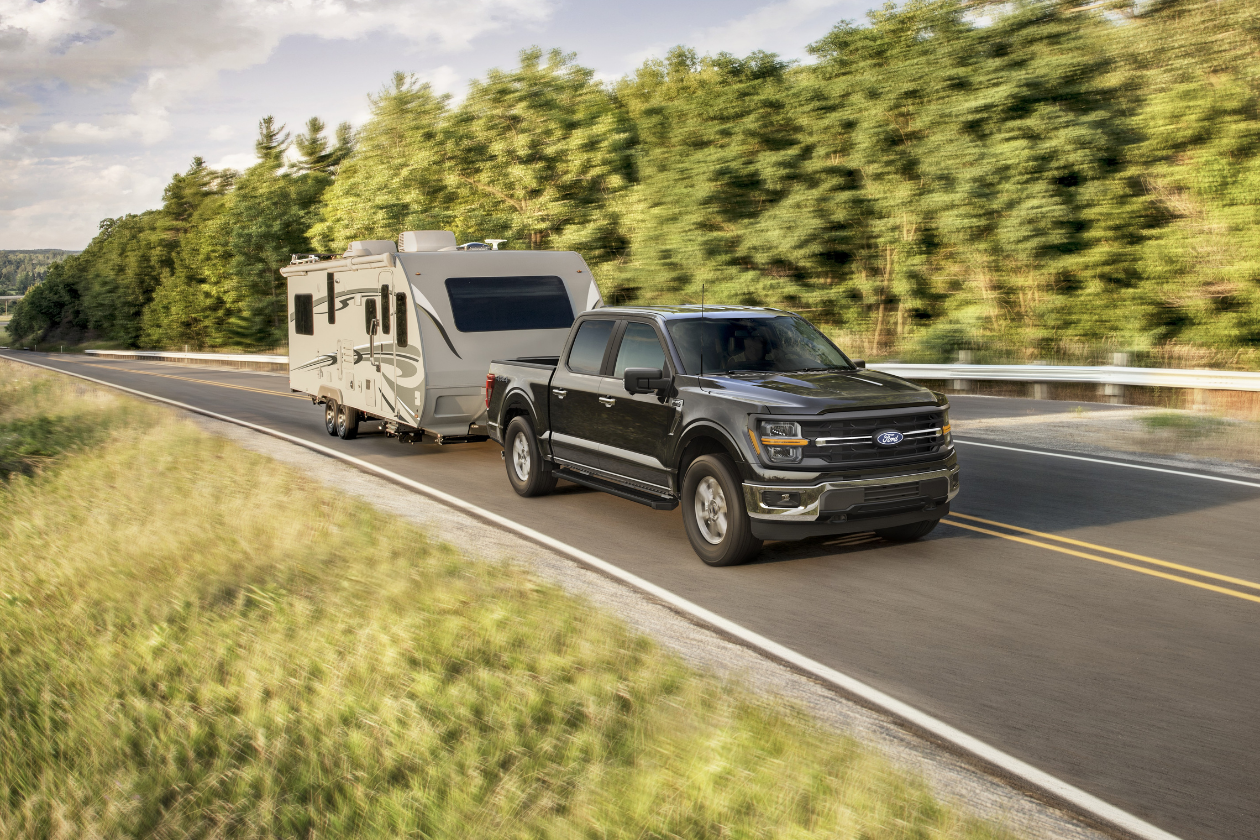
Ford F-150 towing a travel trailer camper on a mountain highway

The Best Ford Truck for Towing a Camper in the Mountains Near Santa Fe, NM

For most campers pulled through the mountains around Santa Fe, the best Ford truck is the 2026 F-150 with the 3.5L EcoBoost V6: up to 13,500 pounds of conventional towing, and turbochargers that hold their power at 7,200 feet where a naturally aspirated V8 gives it up. Fifth-wheels need a Super Duty. Our 2026 Ford F-150 towing capacity guide lists every rating and the equipment each one requires; this page is about what those numbers mean once the road tilts uphill and the air thins out. Which Ford Truck Tows a Camper Best Around Santa Fe Start with the camper, not the truck. Weigh what you actually tow — loaded, water in the tanks, gear in the pass-through — and the right Ford usually picks itself. For the 24- to 30-foot travel trailer most families own, the F-150 with the 3.5L EcoBoost is the answer: it carries the highest half-ton rating in the lineup, its torque arrives low in the rev range where mountain climbing happens, and forced induction means it does not fade above 6,000 feet the way an atmospheric engine does. The dividing line upward is tongue weight, not pulling power. Once a fifth-wheel hitch enters the conversation, pin weight will bury a half-ton's payload long before the engine runs out of pull, and that is when a Super Duty stops being overkill. Downward, a Ranger handles teardrops, pop-ups and single-axle trailers for less money and parks far more easily downtown. Our broader look at choosing a Ford truck or SUV for towing and off-roading in New Mexico covers the SUV side of that same question. Shop F-150s Near Santa Fe 2026 Ford Towing and Payload, Model by Model The figures below are maximums for a properly equipped truck. On the F-150 that means the Tow/Haul Package and the Max Tow Axle upgrade — without them the same engine typically tops out several thousand pounds lower. Read the two number columns separately: max tow and max payload are not achieved in the same cab, bed and drivetrain combination, so no single truck on this chart delivers both figures at once. 2026 Ford Truck Engine Max Conventional Tow Max Payload F-150 3.5L EcoBoost V6 13,500 lbs 2,440 lbs F-150 5.0L Ti-VCT V8 12,800 lbs 2,235 lbs F-150 3.5L PowerBoost Hybrid 11,600 lbs 1,740 lbs F-150 2.7L EcoBoost V6 8,400 lbs 1,775 lbs F-250 Super Duty 6.7L H.O. Power Stroke Diesel 22,000 lbs 4,260 lbs Payload is what actually stops most camper buyers, not the tow rating. Ford's guidance is about 10% of loaded trailer weight on a conventional tongue and 15% on a fifth-wheel pin, and every pound of it lands on your rear axle alongside passengers, dogs, firewood and the weight-distribution hitch itself. A 9,000-pound travel trailer asks for roughly 900 pounds of payload before anyone climbs in the cab — which is why the sticker inside the driver's door jamb, not the brochure, is the number that decides what fits. Browse Super Duty Trucks in Santa Fe What Santa Fe's 7,200 Feet Does to Those Numbers Tow ratings are published for conditions that do not exist in northern New Mexico. Thin air carries less oxygen, so the engine makes less power, the cooling system works harder and the transmission spends longer in lower gears. Ford addresses this directly rather than leaving it to folklore: the 2026 Ford RV & Trailer Towing Guide instructs drivers to “reduce Gross Vehicle Weight (GVW) and Gross Combination Weight (GCW) by 2% per 1,000 ft. elevation” in order to match the driving performance perceived at sea level. Santa Fe sits near 7,200 feet and Glorieta Pass just east of town runs close to 7,500, which works out to roughly a 14% haircut — so treat a 13,500-pound F-150 as an 11,500-pound planning number when the trailer is going uphill. That is a performance guideline, not a change to your truck's legal rating or its GVWR. Why a Turbocharged EcoBoost Holds Power Where a V8 Fades A naturally aspirated engine breathes whatever air the atmosphere hands it, and at 7,200 feet that is roughly a quarter less air than at sea level — the familiar rule of thumb being about 3% of power lost per 1,000 feet, which puts a 5.0L V8 down close to a fifth of its rated output before you even hitch up. A turbocharged engine is not at the mercy of ambient pressure the same way: the turbos spin faster and raise boost to restore intake pressure, so the 3.5L EcoBoost arrives at the top of the pass with far more of its torque intact. You feel it as fewer downshifts, cooler transmission temperatures, and a truck that holds highway speed up La Bajada instead of surrendering to traffic. Equipment carries the rest of the load. Tow/Haul mode sharpens shift logic and adds engine braking on the way back down toward the Rio Grande, and the integrated trailer brake controller, Pro Trailer Backup Assist and Smart Trailer Tow Connector are documented on Ford's F-150 towing and hauling overview. One truck that is not the answer here is the Raptor: its long-travel suspension is tuned to absorb desert whoops at speed, which is the opposite of what a loaded trailer wants, and its ratings come in well below a Tow/Haul-equipped 3.5L EcoBoost. It is a superb truck for other reasons, which we covered in our piece on buying a new Ford F-150 Raptor for off-roading. See What We Offer Santa Fe Drivers Bring Your Camper's Weight Sticker Power Ford is at 1101 Montaño Rd NE in Albuquerque, about an hour south of the Santa Fe Plaza on I-25, and we would rather do this arithmetic with you than have you discover it at a campground. Bring the camper's GVWR sticker and we will check it against tow rating, tongue weight against payload, and verify axle ratio and packages from the VIN of trucks actually on the lot rather than from a configurator — and we will tell you plainly when a half-ton is the right answer and when it is not. Hitch the trailer up and bring it along if you can; a loaded climb tells you more than any spec sheet. Common Questions Santa Fe Campers Ask Us Which Ford truck is best for towing a camper near Santa Fe, NM? For most travel trailers towed around Santa Fe, the 2026 Ford F-150 with the 3.5L EcoBoost V6 is the best match. Properly equipped it tows up to 13,500 pounds, and twin turbochargers hold power at 7,200 feet where a naturally aspirated V8 fades. Campers past roughly 12,000 pounds, and any fifth-wheel, belong behind an F-250 Super Duty instead. How much does Santa Fe's elevation reduce towing capacity? Ford advises reducing gross vehicle weight and gross combination weight by 2% per 1,000 feet of elevation to match the performance you would feel at sea level. At Santa Fe's roughly 7,200 feet that is about 14%, so a 13,500-pound rating is better treated as an 11,500-pound planning number. Your truck's legal rating does not change, only its available power. Do I need a Super Duty to tow a fifth-wheel camper in New Mexico? Usually yes. A fifth-wheel puts roughly 15% of its loaded weight on the king pin, which most half-ton payload ratings cannot absorb once passengers and gear are aboard. A 2026 F-250 Super Duty with the 6.7L Power Stroke is rated up to 22,000 pounds conventional and 23,000 pounds fifth-wheel, with payload up to about 4,260 pounds. Match Your Camper to the Right Truck Numbers on a page only go so far — the test that settles it is hooking your own trailer to a candidate truck and driving it up a grade. We'll beat any Ford deal in New Mexico, or you'll get $1,000 cash in your pocket. Call (505) 933-7883 to set up a towing consultation, and we will have the trucks already carrying the Tow/Haul Package and Max Tow Axle pulled up when you arrive. Schedule a Test Drive Contact Our Team
White Ford F-150 SuperCrew pickup truck

What Your 2018 Ford F-150 Trade-In Value Looks Like Near Los Lunas, NM

What a 2018 Ford F-150 is worth as a trade near Los Lunas comes down to four things more than anything else: engine, cab and bed configuration, drivetrain, and mileage. The spread between the cheapest and the most desirable 2018 F-150 is wide enough that a single average number is useless. The fastest route to a real figure is running your VIN through our trade-in appraisal tool, which prices your specific truck instead of a category. What follows is what that appraisal is reacting to, so you can see roughly where your F-150 sits before the offer comes back. What Moves the Number on a 2018 F-150 2018 was the year Ford reworked the F-150's engine lineup, so the badge on the fender matters more on this model year than on most. The base 3.3L V6 makes 290 horsepower and 265 lb-ft and was the only engine still paired with a six-speed automatic. Above it sit the 2.7L EcoBoost at 325 horsepower and 400 lb-ft, the 5.0L V8 at 395 and 400, and the 3.5L EcoBoost at 375 and 470 — all on the ten-speed automatic. A 3.0L Power Stroke diesel arrived partway through the year, and the Raptor's high-output 3.5L makes 450 horsepower and 510 lb-ft. In practice the 5.0L V8 and the 3.5L EcoBoost draw the deepest used demand; a 3.3L work truck is the floor of the range. Configuration does just as much work. SuperCrew four-wheel drive with the 5.5- or 6.5-foot box is what most New Mexico buyers come in asking for, so it appraises strongest. A regular cab with the eight-foot box sells to a narrower, mostly commercial audience, and two-wheel drive costs you real money here for obvious reasons. Options that are hard to add later — the tow package, the 3.55 or 3.73 limited-slip axle, the 36-gallon tank, factory navigation — all show up in the appraisal because they show up in what the truck retails for afterward. Get an Offer on Your F-150 Mileage, Condition, and What Reconditioning Takes Back Off By 2026 a 2018 F-150 is eight model years old, so a truck that has run 12,000 to 15,000 miles a year lands somewhere around 100,000 to 120,000 on the odometer. That band is the baseline. Meaningfully under it is where the premium lives, because a low-mileage 2018 still has room to be retailed as a certified unit rather than wholesaled. Past roughly 150,000, most trucks stop being retail candidates entirely and get appraised on what they bring at auction, which is a different and lower number. Condition is the part owners underestimate. The F-150's aluminum-alloy body will not rust out on you, which helps, but body repairs on aluminum cost more than steel and an appraiser knows it. Tires below about four thirty-seconds, worn brakes, a cracked windshield, a torn seat, a check-engine light — each is subtracted at roughly what it costs to put right before the truck can go on the line. That is the honest math behind a lower-than-expected offer, and it is also why it is worth deciding deliberately whether to fix something first or let it come out of the trade. Repair It or Trade It? Get Your Number Before You Start Shopping Settle the trade value as its own conversation, separate from whatever you are buying next. Have the truck appraised on its VIN, get the figure in writing, and only then talk about the vehicle replacing it — two clear numbers are much easier to judge than one blended payment. Before you come in, check the VIN for open recalls in NHTSA's free recall database, because unrepaired recalls have to be addressed before a truck can be retailed and they can surface in an appraisal. Gather your service records too; documented maintenance is one of the few things that reliably argues the number upward. It is also worth knowing that the IIHS ratings covering the 2018 F-150 apply to the SuperCrew body style, where it earns Good results across every crashworthiness test — part of why that configuration holds its demand on the used lot. Trading In From Los Lunas Power Ford is at 1101 Montaño Rd NE in Albuquerque, roughly 30 miles north of Los Lunas and a 35- to 40-minute run up I-25. Bring the title, or the lender's name and a current payoff quote if there is still a loan, plus the registration, your license, both key fobs and any records you have kept — with those in hand the appraisal is a same-visit job rather than a return trip. You are also not obligated to buy anything: we appraise and purchase any make or model whether or not you leave in something else. Drivers up in Rio Rancho asked us the loan-approval side of this same question, which we answered separately in our piece on getting approved for a Ford auto loan with less-than-perfect credit. See What We Do for Los Lunas Drivers If You Still Owe More Than the Truck Is Worth It happens often enough that it is worth saying plainly: a payoff higher than the appraised value does not end the trade. The gap is negative equity, and it becomes one more variable in how the next deal is structured rather than a wall. The mechanics of that — rolling it forward, adjusting term or vehicle, or paying the difference down — are laid out in detail in our guide to Ford financing with negative equity on a trade-in, so we will not repeat them here. The one thing worth doing first is the same either way: get the real appraisal number, because you cannot size the gap until you know both halves of it. Common Questions Los Lunas Owners Ask Us How much is a 2018 Ford F-150 worth as a trade-in near Los Lunas, NM? There is no single number, because a 2018 F-150 ranges from a base 3.3L V6 regular cab to a Raptor. Engine, cab and bed configuration, drivetrain, mileage and condition set the figure, and they move it by thousands. Run your VIN through Power Ford's appraisal tool for a market-based offer on your specific truck rather than a category average. What do I need to bring to trade in my F-150? Bring the title or, if there is still a loan, the lender's name and a current payoff quote. Add the registration, your driver's license, both key fobs, and any service records you have kept. Everyone listed on the title should come along if the truck is in more than one name. With that in hand, the appraisal is usually finished in one visit. Can I trade in my F-150 if I still owe money on it? Yes, and most trade-ins still carry a loan. Power Ford handles the payoff with your lender directly. If the truck appraises above what you owe, the difference goes toward your next vehicle. If it appraises below, that shortfall is negative equity, and it becomes part of how the next deal gets structured rather than a reason you cannot trade. Find Out What Your F-150 Is Actually Worth Start the appraisal online to get a market-based figure in a few minutes, then bring the truck up and we will confirm it in person — and tell you honestly if the online number was optimistic. We'll beat any Ford deal in New Mexico, or you'll get $1,000 cash in your pocket. Call (505) 933-7883 to line up an appraisal, or come by and we will walk your F-150 with you and show you what we are seeing. Schedule a Test Drive Contact Our Team
Power Ford parts and service department serving the Albuquerque metro

Where to Find Genuine OEM Ford F-150 Parts Near Rio Rancho

We hear from a lot of Rio Rancho F-150 owners who've been quoted parts from an auto parts store or an independent shop and want to know if genuine Ford parts are really worth the difference. We're Power Ford, and because our own technicians install both genuine and aftermarket parts every day, we've got a clear view of where that difference actually matters on a truck like the F-150, and where you have more flexibility. Here's what we'd tell you, plus how to get genuine parts near Rio Rancho whether you install them yourself or have us handle it. Why Genuine OEM Parts Matter on an F-150 Genuine Ford parts, including Motorcraft components, are engineered to the exact fit and performance specifications your F-150 was built around. That matters more than it sounds like on a truck that regularly tows, hauls, or covers a lot of miles, since components like brakes, filters, and suspension parts see more real-world stress than they would on a typical car. Using the wrong-spec part on those systems is where owners tend to run into premature wear or, in some cases, voided warranty coverage. Shop Genuine Ford Parts Our Parts Department and What We Stock Our parts department keeps a deep inventory of F-150-specific components on hand, from filters and belts to brakes, batteries, and fluids, so most jobs don't require a special order or a long wait. If you're looking to personalize your truck rather than just maintain it, we also carry genuine Ford accessories designed to fit without the guesswork that comes with aftermarket options. Common F-150 Parts and Maintenance Needs Following Ford's recommended maintenance schedule is the simplest way to know when genuine parts actually need replacing instead of guessing. That typically includes brake pads, tires, batteries, cabin air filters, and wiper blades, along with routine oil changes. Keeping these on a genuine-parts schedule is also one of the easier ways to protect resale value if you plan to trade the truck in down the road. Certified Service to Install Them Right A genuine part is only as good as the install, which is why our service department uses factory-trained technicians for every job. Our Quick Lane handles faster routine work like fluid top-offs and filter swaps, and if you want to know more about why our shop specifically is worth trusting with the install, our why service here page covers that in more detail. We've also written about how often you should rotate your tires, which is one of the most overlooked maintenance items on a truck that sees regular highway miles. Schedule Service Online Getting Parts and Service Without the Drive from Rio Rancho We know Rio Rancho is a bit of a haul, so we try to make genuine parts and service as convenient as we can. Our pickup and delivery service and mobile service requests can handle a lot of routine parts installs without you ever making the trip in, and our online scheduler makes it easy to book whichever option works best for you. Common Questions About Genuine F-150 Parts Are genuine Ford parts really necessary, or is aftermarket fine? It depends on the part. For safety and drivetrain-related components, we'd recommend genuine parts to protect fit, performance, and warranty coverage. For cosmetic accessories, aftermarket options are often fine. Do you carry parts for older F-150 model years, not just the newest one? Yes. Our parts department regularly special orders components for older F-150 model years when they're not in stock. Can I get parts installed without driving in from Rio Rancho? For many routine jobs, yes. Our pickup and delivery service and mobile service option can save you the drive. Get the Right Parts for Your F-150 Whether you're maintaining your F-150 yourself or want our certified technicians to handle it, we can get you genuine parts built for your exact truck. Reach out or schedule service, and we'll take it from there. Shop Ford Parts Schedule Service

Ford F-150 built for off-road performance at Power Ford

Buying a New Ford F-150 Raptor for Off-Roading Near Rio Rancho

We're Power Ford, and if you're in Rio Rancho and thinking about a new F-150 Raptor, you already know why: New Mexico has no shortage of mesa trails, arroyos, and backcountry roads that a standard truck just wasn't built to handle. The Raptor is Ford's answer for drivers who actually use that terrain instead of just looking at it, and we want to walk you through what sets it apart, how to build one out further, and where to find yours near Rio Rancho. Why the Raptor Is Built for New Mexico Terrain The Ford Raptor starts from the same platform as a standard F-150 but reinforces nearly everything that matters off-road, including long-travel suspension, wider tires, upgraded skid plates, and a tuned drive mode system built specifically for sand, rock, and desert terrain. That combination matters a lot more here than it would in most parts of the country, given how much of Rio Rancho and the surrounding mesa is genuinely off-road accessible if you have the right truck underneath you. Specs, Trims, and How the Raptor Differs from a Standard F-150 Before you decide the Raptor is the right call over a standard truck, it helps to compare specs side by side. Our full breakdowns of the 2026 F-150 lineup, trim levels, towing capacity, fuel economy, and specs and dimensions cover where the Raptor trades some efficiency and towing capacity for off-road capability. If you regularly tow instead of trail-ride, a Super Duty truck might actually serve you better, and we'd rather steer you toward the right vehicle than just the flashier one. View Raptor Inventory Taking It Further with Ford Custom Garage and Power Performance If a factory Raptor isn't aggressive enough for what you have planned, our Ford Custom Garage F-150 packages let you go further with blackout styling, upgraded wheel and tire setups, and off-road-focused builds through our broader Ford Custom Garage and Power Performance programs. We also work with respected names in the performance space, including Roush, Whipple Superchargers, and Hennessey Performance, if you want to build something even the factory Raptor can't match. Finding and Ordering Yours Near Rio Rancho Raptors move quickly, so if you don't see the exact configuration you want on our lot, we can walk you through a custom factory order or help you understand custom build pricing through our online ordering tool. Once your truck is in, we'll get you set up for a test drive before you make the final call. Start a Custom Order How the Raptor Stacks Up Against the Competition If you're cross-shopping before committing to a Raptor, our comparisons of the 2026 F-150 vs. Chevy Silverado and 2026 F-150 vs. Toyota Tundra break down where Ford's off-road engineering pulls ahead, particularly around suspension travel and factory-backed off-road tuning that most competitors still don't match out of the box. Common Questions About the F-150 Raptor Is the Raptor good for daily driving, or just off-roading? Plenty of our customers daily drive their Raptors. It gives up a little fuel economy and ride comfort compared to a standard F-150, but it's still a fully capable daily truck when you're not on the trail. Can I order a Raptor with additional performance upgrades? Yes. Our Ford Custom Garage team can add upgrades on top of the factory Raptor package before or after you take delivery. Do you have Raptors in stock, or do most buyers order them? It varies by month. We'd recommend checking our current Raptor inventory first, and if nothing fits, a custom factory order is usually straightforward. Ready to Take One Off-Road? Whether you're set on a factory Raptor or want to build something more aggressive through Ford Custom Garage, we'd rather get you into the right truck than just any truck. Come see what's on our lot or start a custom order today. View Raptor Inventory Schedule a Test Drive

Is a Ford Blue Advantage Certified F-150 Worth It Near Rio Rancho?

We get this question often from truck shoppers in Rio Rancho: is a certified pre-owned F-150 actually worth paying more for, or should you just buy a regular used truck and save the difference? We're Power Ford, and because we sell and service both new and certified pre-owned Fords every day, we've got a pretty clear view of where Ford Blue Advantage certification earns its keep on a truck like the F-150, and where it doesn't matter as much. Here's what we'd want you to know before you decide, plus where to actually find one near Rio Rancho. What Ford Blue Advantage Certification Actually Covers Not every certified pre-owned program is the same, so it helps to know what you're actually paying for. A gas-powered F-150 typically qualifies for Ford's Gold Certified tier, which covers vehicles up to 6 years or 80,000 miles, requires a 172-point inspection, and adds a 7-year or 100,000-mile powertrain warranty on top of what's left of the original coverage. Ford also backs every Blue Advantage purchase with a money-back guarantee and a detailed vehicle history from CARFAX, so you're not relying on our word alone. See Ford Blue Advantage Details Why Certification Matters More on a Truck Than You'd Think An F-150 works harder than most vehicles on the road, whether that means towing, hauling, or just logging a lot of highway miles between Rio Rancho and job sites around the metro. That means drivetrain and suspension components see more stress than they would on a typical sedan, which is exactly what the 172-point inspection is designed to catch before the truck ever reaches our lot. If you're comparing trims, our breakdowns of F-150 trim levels, towing capacity, and specs and dimensions can help you figure out which certified truck actually fits what you need it to do. If a gas F-150 isn't the right fit, the same certification framework extends to Super Duty trucks and, for electrified shoppers, an EV Certified tier that applies to trucks like the F-150 Lightning. What's Included After You Drive It Home A certified F-150 doesn't just come with a longer warranty, it comes with support built for a truck that's actually going to get used. That includes 24/7 roadside assistance, and if you'd like to extend protection even further once the certified warranty runs its course, we can walk you through Ford Protect options as well. Add in Ford's ownership rewards program and the value gap between certified and non-certified starts to look a lot smaller once you total it up. Finding a Certified F-150 Near Rio Rancho We keep our certified inventory searchable so you don't have to guess what's actually on the lot. You can filter directly for certified pre-owned inventory, browse our broader selection of used trucks priced for Rio Rancho shoppers, or use Find My Car to get notified the moment a certified F-150 matching what you want comes in. If budget is the main driver, our under $30k inventory is worth a look too. Search Certified Pre-Owned Inventory Financing and Trading In for Your Certified F-150 Once you've found the right truck, our finance team can get you pre-approved online before you make the trip in from Rio Rancho, and if you have a vehicle to put toward it, we can handle your trade-in or a straightforward appraisal at the same visit. Common Questions About Certified F-150s Is a certified pre-owned F-150 worth the extra cost over a regular used truck? For most buyers, yes. The 172-point inspection, extended powertrain warranty, and money-back guarantee reduce a lot of the risk that comes with buying a heavily used work truck, which is exactly where the extra cost tends to pay for itself. How old can a certified F-150 be and still qualify? Gold Certified F-150s can be up to 6 years old or 80,000 miles, whichever comes first, and still qualify for the program's inspection and warranty coverage. Can I get pre-approved for a certified F-150 before visiting from Rio Rancho? Yes. You can start with our online pre-approval and use Find My Car to confirm availability before making the drive. Ready to See Our Certified F-150 Inventory? Whether you land on a certified F-150 or decide a different truck fits better, we'd rather you make that call with all the facts in front of you. Come see what's on our lot, take one for a drive, and let our team walk you through exactly what's covered. Browse Certified F-150s Schedule a Test Drive

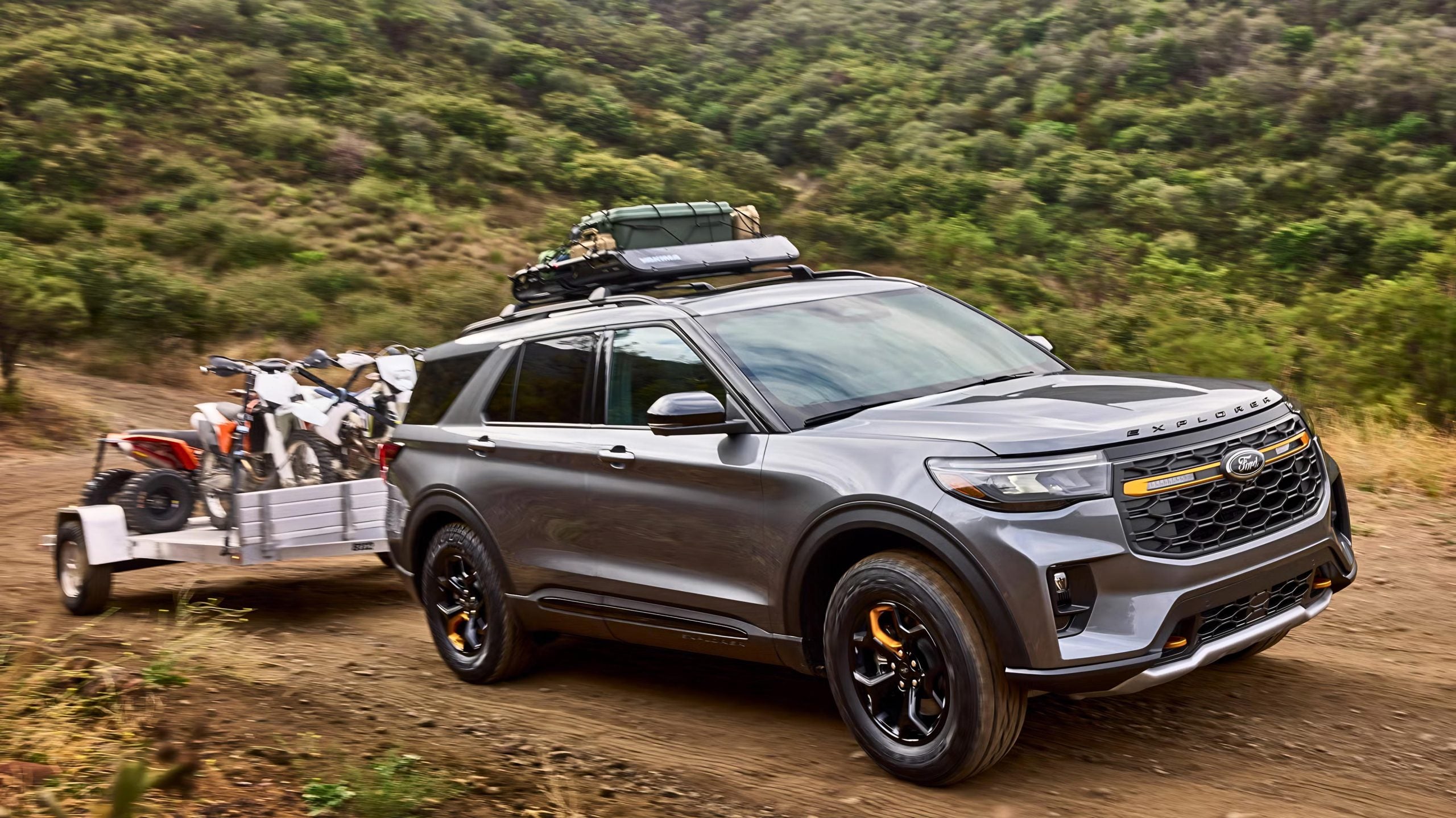
Ford Explorer Tremor SUV parked in Albuquerque, New Mexico

How to Choose a Ford Truck or SUV for Towing, Off-Road, and Performance in New Mexico

Between the high-desert mesas around Albuquerque, the mountain grades leading up to Santa Fe, and the backroads out toward Rio Rancho and the Sandias, we know that New Mexico asks a lot of a vehicle. Whether we're helping a customer haul a horse trailer out to Edgewood, tow a boat to Cochiti Lake, or find a rig that can handle a rutted forest road without breaking a sweat, we've found that the right Ford makes all the difference. That's why we keep a deep lineup on our lot built specifically for towing, off-roading, and outright performance, from workhorse F-150 and Super Duty trucks to trail-ready Bronco and Raptor models, plus a full slate of factory-backed custom builds for buyers who want even more capability and attitude under the hood. Which Ford Trucks Tow the Most Around Albuquerque and Santa Fe When customers ask us which truck can handle serious towing, we usually start with the F-150. It's the truck we sell the most of, and for good reason: the EcoBoost, PowerBoost Hybrid, and V8 engine choices give buyers a way to match power and efficiency to how they actually tow, whether that's a weekend camper up to the Jemez Mountains or a work trailer around the metro every day. We walk buyers through cab styles, bed lengths, and axle and package choices because those details change what a specific truck can pull, and we always confirm the exact rating for the configuration someone is considering. For buyers who need to go beyond what a half-ton truck offers, we point them toward our Super Duty lineup. These trucks are built for the heaviest fifth-wheel trailers, equipment haulers, and gooseneck loads we see moving through New Mexico, and the diesel powertrain options give them the low-end torque that makes climbing out of the Rio Grande valley or over a mountain pass feel effortless even with a full load behind them. If towing capacity is the deciding factor in your next truck, we're happy to run the numbers with you on a specific build. See F-150 Towing Details Best Off-Road Ford SUVs and Trucks for New Mexico Terrain Towing isn't the only thing New Mexico demands. Plenty of our customers want a rig that can leave the pavement behind entirely, and our Bronco lineup is where we usually send them first. Between the available locking differentials, G.O.A.T. Modes, and removable doors and roof, it's built for exactly the kind of rocky, sandy, and washboard terrain we have all around Albuquerque, Rio Rancho, and the mesas outside Santa Fe. If someone wants that same trail-ready attitude in a smaller, more efficient package, we also carry the Bronco Sport, which brings a surprising amount of capability into a compact footprint that's easier to park and easier on fuel. For buyers who want a family-friendly SUV that still handles rougher roads with confidence, our Explorer lineup includes the Tremor package, which adds off-road tuned suspension, all-terrain tires, and skid plates to the Explorer's spacious three-row layout. It's a favorite for families who split their time between school runs in the city and weekend trips up into the mountains. And when someone wants the ultimate desert-runner experience, we bring out the F-150 Raptor, a truck engineered from the ground up to soak up whoops and rough terrain at speed, with the wide stance and long-travel suspension to prove it. View Raptor Inventory Want Even More Power? Explore Our Performance Builds For buyers who feel like a stock truck or SUV just isn't enough, we've built out a full performance program under our Power Performance banner. We consider ourselves the performance headquarters for this part of the Southwest, and we bring in builds from some of the biggest names in the aftermarket world so our customers don't have to go looking for them elsewhere. Through our Ford Custom Garage program, we offer factory-designed, warranty-backed packages on the Bronco and F-150 that add bold styling and real capability without voiding factory coverage. Beyond that, we carry Roush for track-bred handling and supercharged power on Mustangs, F-150s, and Super Duty trucks; Saleen for iconic styling and track pedigree; Sherrod for lifted, luxury-leaning custom trucks; Whipple for serious supercharger gains; and Hennessey for some of the highest-output builds we offer, including modified Raptors. Every one of these programs is installed and supported locally by our own team, so buyers get the performance they want with the service backup they need. Explore Custom Garage Frequently Asked Questions Which Ford truck is best for towing in New Mexico? The F-150 is the best all-around choice for most towing needs thanks to its range of engine options, while the Super Duty lineup is the better fit for buyers who regularly haul heavier trailers, equipment, or livestock and need the added strength of a heavy-duty platform. What is the best off-road Ford SUV for the Albuquerque and Santa Fe area? The Bronco is our top recommendation for serious off-road driving thanks to its available locking differentials and terrain modes, while the Explorer Tremor offers a family-friendly option with off-road tuned suspension for buyers who still want three-row seating. What is Ford Custom Garage? Ford Custom Garage is a factory-backed program that lets buyers choose from pre-designed styling and performance packages for the Bronco and F-150, each built with genuine Ford Performance parts and backed by a supplemental warranty. Do you install performance upgrades like Roush or Hennessey locally? Yes, we install and service Roush, Saleen, Sherrod, Whipple, and Hennessey builds locally in Albuquerque, so buyers throughout New Mexico can get factory-integrated performance upgrades with dealership support close to home. Find the Right Ford for Your Towing, Trails, or Top-End Power Whatever New Mexico throws at you, from steep grades and heavy trailers to rocky trails and open highway, we can match you with a Ford built to handle it. Stop by our showroom in Albuquerque or reach out to our team to talk through the right F-150, Super Duty, Bronco, Raptor, or custom performance build for the way you actually drive. Schedule a Test Drive Serving Santa Fe Drivers

Discover which Ford models rank among the cheapest vehicles to insure in 2025, including the Escape, F-150, and F-150 Lightning.

Ford Models Among the Cheapest Vehicles to Insure in 2025

Looking for an Affordable Vehicle to Insure? Ford Has You Covered It’s no secret that car insurance costs have risen sharply in recent years thanks to higher repair costs, inflation, and more expensive vehicle parts. That’s why many Albuquerque drivers are now factoring insurance rates into their buying decisions. Luckily, Ford owners have some great news. Several Ford models are currently recognized among the cheapest vehicles to insure in 2025, making them smart picks for value-minded drivers who don’t want to compromise on performance or safety. Ford Escape: Among the Top 10 Cheapest SUVs to Insure According to Insurify, the Ford Escape ranks fifth overall among the least expensive SUVs to insure in 2025, with an average monthly full-coverage quote of just $171. That places the Escape ahead of the Chevrolet Suburban, Toyota Highlander, Chevrolet Equinox, and Mazda CX-5. 👉 Key Takeaway: The Ford Escape continues to deliver outstanding value with its blend of efficiency, safety, and low ownership costs, including insurance. 🔗 Learn more about the Ford Escape at Power Ford in Albuquerque. Ford Ranger: One of the Cheapest Vehicles Overall to Insure In the same Insurify report, the Ford Ranger ranked seventh cheapest vehicle to insure overall, across all vehicle types. With an average monthly quote of $163, the midsize pickup proves that capability and affordability can go hand in hand. That makes the Ranger an appealing option for drivers who need truck utility without high ongoing costs. 🔗 Explore the Ford Ranger lineup available now at Power Ford. Ford F-150: Still a Leader in Affordable Insurance The legendary Ford F-150 was recognized by Mercury Insurance as one of the cheapest trucks and SUVs to insure in 2025. While exact premium averages weren’t disclosed, Mercury noted that the F-150 consistently lands near the top of affordability rankings thanks to its strong safety ratings, wide availability of parts, and long-standing reliability record. 🔗 Discover current offers on the 2025 Ford F-150. F-150 Lightning: One of the Least Expensive EVs to Insure Electric vehicles typically cost more to insure, averaging about $44 higher per month, according to Mercury, but the Ford F-150 Lightning breaks the trend. It was listed among the top ten cheapest EVs to insure in 2025, thanks in part to its robust safety systems and trusted truck platform. That’s great news for drivers exploring the EV transition who still want to keep long-term costs in check. 🔗 Interested in going electric? Check out the Ford F-150 Lightning. Why Insurance Companies Favor Ford Insurance rates depend on more than just the sticker price. Insurers evaluate factors such as: Safety ratings and driver-assist features Repair and parts costs Accident frequency and claims history Ford vehicles, equipped with advanced safety tech like Ford Co-Pilot360™, tend to perform well in these areas. That translates to lower risk and lower premiums for owners. Smart Savings, Smart Choice With insurance costs continuing to climb, vehicles like the Ford Escape, Ranger, F-150, and F-150 Lightning prove that you can drive confidently without overpaying. Whether you’re looking for a fuel-efficient crossover, a rugged truck, or a future-ready EV, Ford delivers a strong combination of performance, protection, and value. Ready to find your next affordable-to-insure Ford? 👉 Visit Power Ford in Albuquerque or schedule a test drive today. FAQs: Cheapest Ford Vehicles to Insure Which Ford model is the cheapest to insure? The Ford Ranger ranks among the cheapest overall, with an average monthly premium around $163, according to Insurify. Is the Ford Escape expensive to insure? Not at all! It’s currently one of the top 10 cheapest SUVs to insure, with rates averaging around $171 per month. Do Ford trucks have high insurance rates? No — both the Ford F-150 and F-150 Lightning are recognized for low insurance costs compared to other trucks and EVs.

Contact Us

Fill out this form below and we'll contact you shortly
*Required Fields