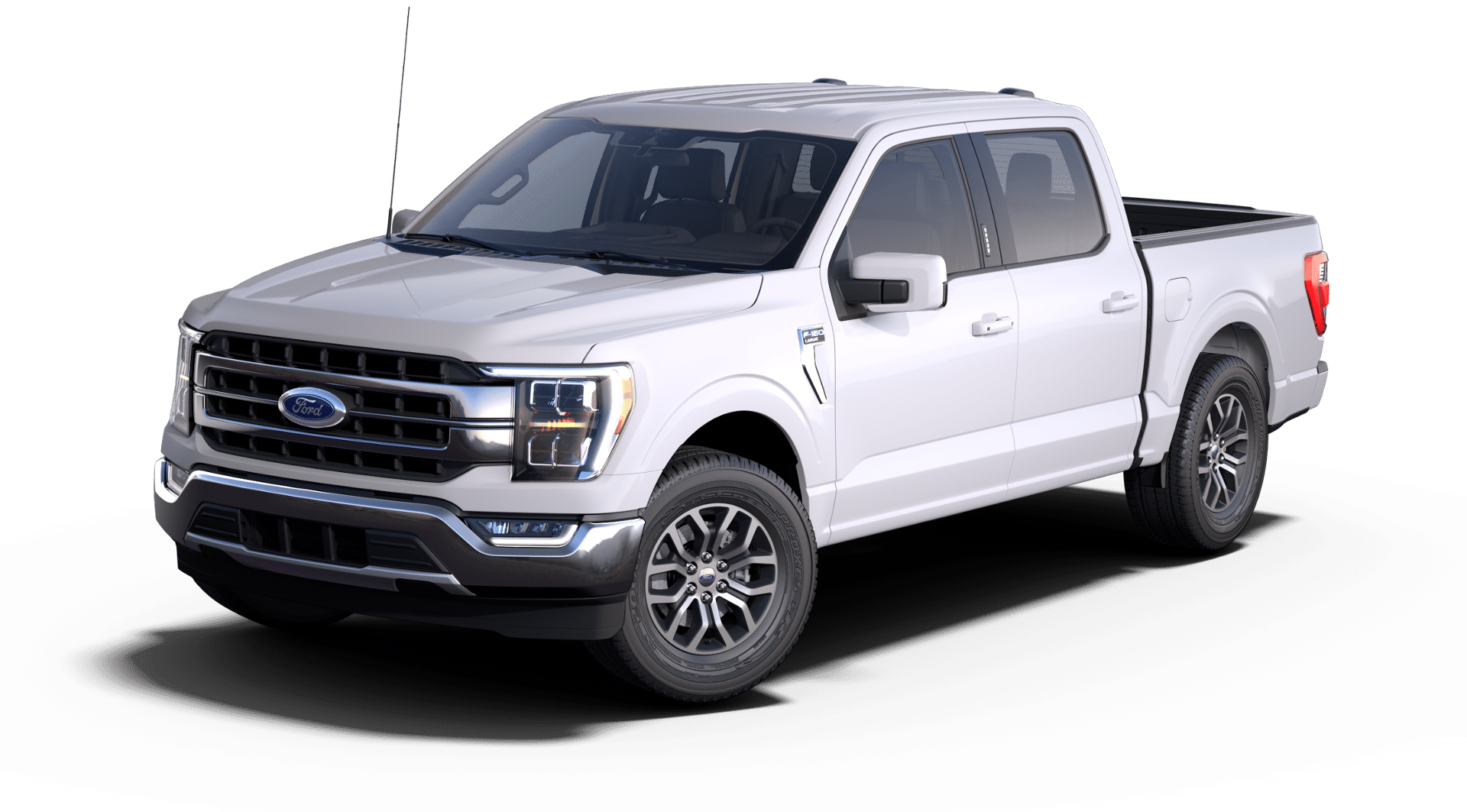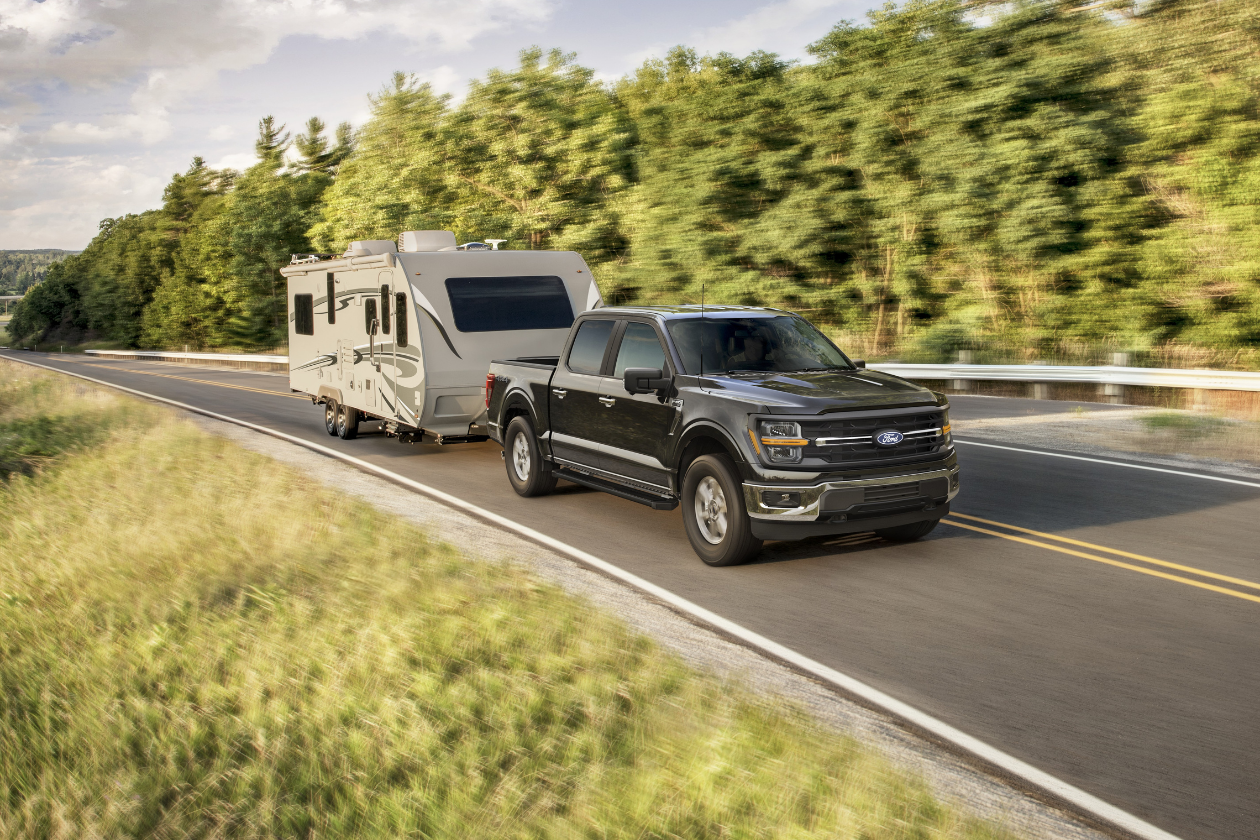
For most campers pulled through the mountains around Santa Fe, the best Ford truck is the 2026 F-150 with the 3.5L EcoBoost V6: up to 13,500 pounds of conventional towing, and turbochargers that hold their power at 7,200 feet where a naturally aspirated V8 gives it up. Fifth-wheels need a Super Duty. Our 2026 Ford F-150 towing capacity guide lists every rating and the equipment each one requires; this page is about what those numbers mean once the road tilts uphill and the air thins out.
Which Ford Truck Tows a Camper Best Around Santa Fe
Start with the camper, not the truck. Weigh what you actually tow — loaded, water in the tanks, gear in the pass-through — and the right Ford usually picks itself. For the 24- to 30-foot travel trailer most families own, the F-150 with the 3.5L EcoBoost is the answer: it carries the highest half-ton rating in the lineup, its torque arrives low in the rev range where mountain climbing happens, and forced induction means it does not fade above 6,000 feet the way an atmospheric engine does.
The dividing line upward is tongue weight, not pulling power. Once a fifth-wheel hitch enters the conversation, pin weight will bury a half-ton's payload long before the engine runs out of pull, and that is when a Super Duty stops being overkill. Downward, a Ranger handles teardrops, pop-ups and single-axle trailers for less money and parks far more easily downtown. Our broader look at choosing a Ford truck or SUV for towing and off-roading in New Mexico covers the SUV side of that same question.
2026 Ford Towing and Payload, Model by Model
The figures below are maximums for a properly equipped truck. On the F-150 that means the Tow/Haul Package and the Max Tow Axle upgrade — without them the same engine typically tops out several thousand pounds lower. Read the two number columns separately: max tow and max payload are not achieved in the same cab, bed and drivetrain combination, so no single truck on this chart delivers both figures at once.
| 2026 Ford Truck | Engine | Max Conventional Tow | Max Payload |
|---|---|---|---|
| F-150 | 3.5L EcoBoost V6 | 13,500 lbs | 2,440 lbs |
| F-150 | 5.0L Ti-VCT V8 | 12,800 lbs | 2,235 lbs |
| F-150 | 3.5L PowerBoost Hybrid | 11,600 lbs | 1,740 lbs |
| F-150 | 2.7L EcoBoost V6 | 8,400 lbs | 1,775 lbs |
| F-250 Super Duty | 6.7L H.O. Power Stroke Diesel | 22,000 lbs | 4,260 lbs |
Payload is what actually stops most camper buyers, not the tow rating. Ford's guidance is about 10% of loaded trailer weight on a conventional tongue and 15% on a fifth-wheel pin, and every pound of it lands on your rear axle alongside passengers, dogs, firewood and the weight-distribution hitch itself. A 9,000-pound travel trailer asks for roughly 900 pounds of payload before anyone climbs in the cab — which is why the sticker inside the driver's door jamb, not the brochure, is the number that decides what fits.
What Santa Fe's 7,200 Feet Does to Those Numbers
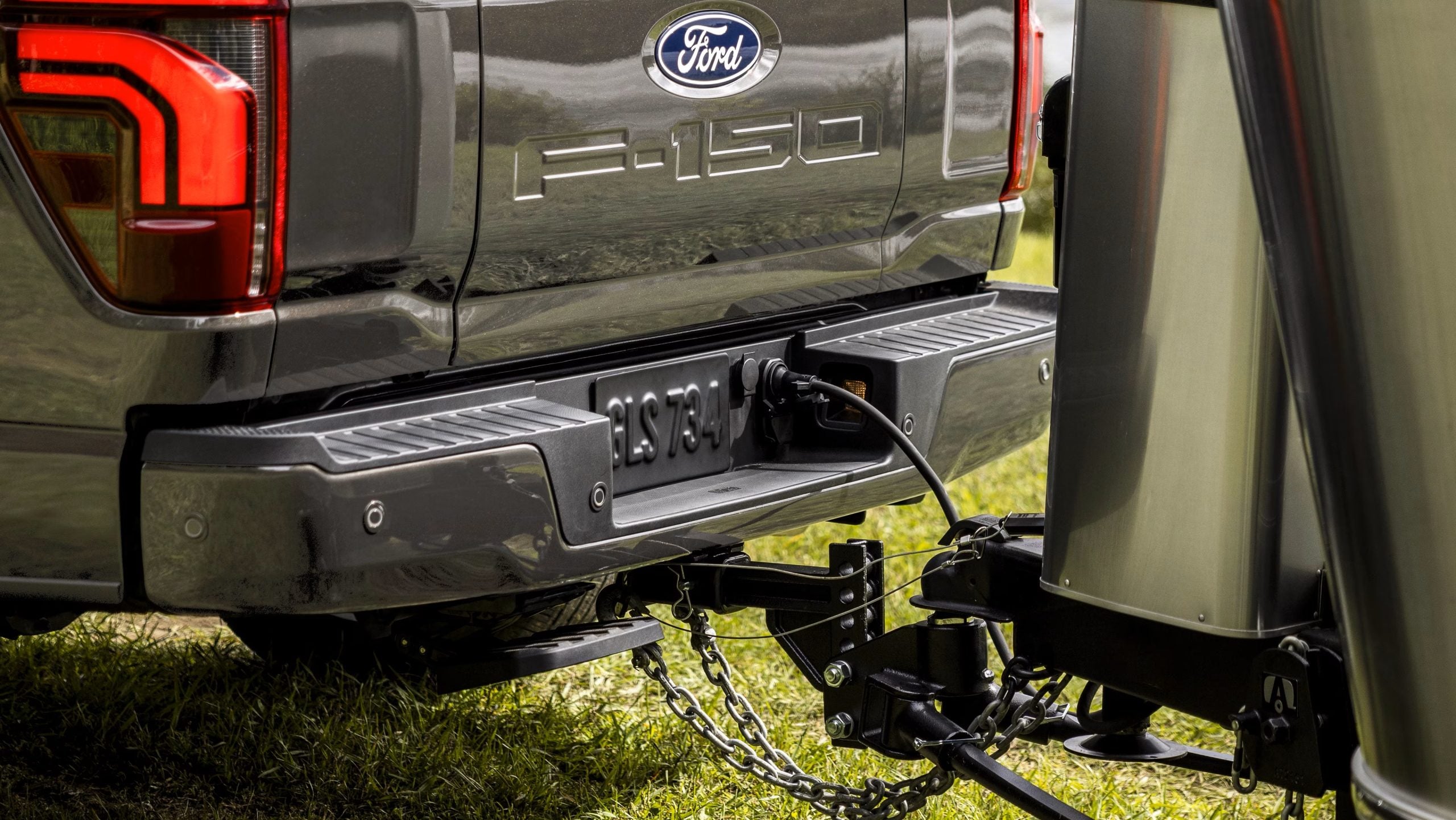
Tow ratings are published for conditions that do not exist in northern New Mexico. Thin air carries less oxygen, so the engine makes less power, the cooling system works harder and the transmission spends longer in lower gears. Ford addresses this directly rather than leaving it to folklore: the 2026 Ford RV & Trailer Towing Guide instructs drivers to “reduce Gross Vehicle Weight (GVW) and Gross Combination Weight (GCW) by 2% per 1,000 ft. elevation” in order to match the driving performance perceived at sea level. Santa Fe sits near 7,200 feet and Glorieta Pass just east of town runs close to 7,500, which works out to roughly a 14% haircut — so treat a 13,500-pound F-150 as an 11,500-pound planning number when the trailer is going uphill. That is a performance guideline, not a change to your truck's legal rating or its GVWR.
Why a Turbocharged EcoBoost Holds Power Where a V8 Fades
A naturally aspirated engine breathes whatever air the atmosphere hands it, and at 7,200 feet that is roughly a quarter less air than at sea level — the familiar rule of thumb being about 3% of power lost per 1,000 feet, which puts a 5.0L V8 down close to a fifth of its rated output before you even hitch up. A turbocharged engine is not at the mercy of ambient pressure the same way: the turbos spin faster and raise boost to restore intake pressure, so the 3.5L EcoBoost arrives at the top of the pass with far more of its torque intact. You feel it as fewer downshifts, cooler transmission temperatures, and a truck that holds highway speed up La Bajada instead of surrendering to traffic.
Equipment carries the rest of the load. Tow/Haul mode sharpens shift logic and adds engine braking on the way back down toward the Rio Grande, and the integrated trailer brake controller, Pro Trailer Backup Assist and Smart Trailer Tow Connector are documented on Ford's F-150 towing and hauling overview. One truck that is not the answer here is the Raptor: its long-travel suspension is tuned to absorb desert whoops at speed, which is the opposite of what a loaded trailer wants, and its ratings come in well below a Tow/Haul-equipped 3.5L EcoBoost. It is a superb truck for other reasons, which we covered in our piece on buying a new Ford F-150 Raptor for off-roading.
Bring Your Camper's Weight Sticker
Power Ford is at 1101 Montaño Rd NE in Albuquerque, about an hour south of the Santa Fe Plaza on I-25, and we would rather do this arithmetic with you than have you discover it at a campground. Bring the camper's GVWR sticker and we will check it against tow rating, tongue weight against payload, and verify axle ratio and packages from the VIN of trucks actually on the lot rather than from a configurator — and we will tell you plainly when a half-ton is the right answer and when it is not. Hitch the trailer up and bring it along if you can; a loaded climb tells you more than any spec sheet.
Common Questions Santa Fe Campers Ask Us
Which Ford truck is best for towing a camper near Santa Fe, NM?
For most travel trailers towed around Santa Fe, the 2026 Ford F-150 with the 3.5L EcoBoost V6 is the best match. Properly equipped it tows up to 13,500 pounds, and twin turbochargers hold power at 7,200 feet where a naturally aspirated V8 fades. Campers past roughly 12,000 pounds, and any fifth-wheel, belong behind an F-250 Super Duty instead.
How much does Santa Fe's elevation reduce towing capacity?
Ford advises reducing gross vehicle weight and gross combination weight by 2% per 1,000 feet of elevation to match the performance you would feel at sea level. At Santa Fe's roughly 7,200 feet that is about 14%, so a 13,500-pound rating is better treated as an 11,500-pound planning number. Your truck's legal rating does not change, only its available power.
Do I need a Super Duty to tow a fifth-wheel camper in New Mexico?
Usually yes. A fifth-wheel puts roughly 15% of its loaded weight on the king pin, which most half-ton payload ratings cannot absorb once passengers and gear are aboard. A 2026 F-250 Super Duty with the 6.7L Power Stroke is rated up to 22,000 pounds conventional and 23,000 pounds fifth-wheel, with payload up to about 4,260 pounds.
Match Your Camper to the Right Truck
Numbers on a page only go so far — the test that settles it is hooking your own trailer to a candidate truck and driving it up a grade. We'll beat any Ford deal in New Mexico, or you'll get $1,000 cash in your pocket. Call (505) 933-7883 to set up a towing consultation, and we will have the trucks already carrying the Tow/Haul Package and Max Tow Axle pulled up when you arrive.