Blog / Ford

2026 Ford F-150 Engines Compared: EcoBoost, V8 or PowerBoost?

2026 Ford F-150 Engines Compared: EcoBoost, V8 or PowerBoost?
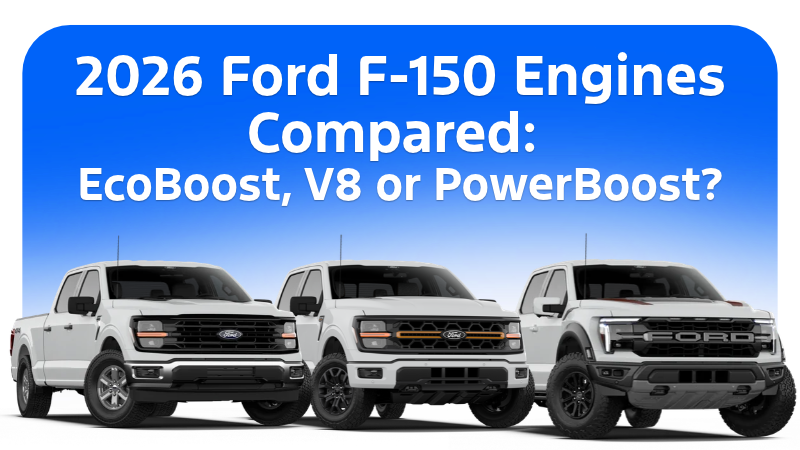
Choosing a 2026 Ford F-150 engine is less about finding one “best” option and more about matching the truck to the work you actually do. The 2.7-liter EcoBoost V6 is a strong everyday choice. The 3.5-liter EcoBoost V6 is the towing leader. The 5.0-liter V8 combines traditional V8 character with serious capability. The available PowerBoost full hybrid adds strong performance and useful onboard power.

For New Mexico drivers, the right answer also depends on elevation, trailer weight, passengers, cargo, and how often the truck will work near its limits. Here is how the four mainstream F-150 powertrains compare.

2026 Ford F-150 Engines Compared: EcoBoost, V8 or PowerBoost?

Start With Your Real Workload


Before choosing an engine, write down what the truck needs to carry and tow on its busiest day, not just during a normal commute.

For towing, consider the trailer’s loaded weight rather than its empty weight. Include water, fuel, tools, recreational equipment and anything else that will travel inside it. Trailer tongue weight, people and cargo in the truck all use part of the F-150’s available payload.

Engine choice matters, but it does not determine capability by itself. Cab, bed, drivetrain, axle ratio, equipment and other factors can change a truck’s rating. Maximum towing and payload figures are separate ratings and should not be treated as if one configuration achieves every maximum at the same time. Always confirm the exact truck’s specifications and check the payload label on the driver-side doorjamb.

Is the 2.7-Liter EcoBoost V6 Enough?  


For many F-150 shoppers, yes. The 2.7-liter EcoBoost V6 produces 325 horsepower and 400 lb-ft of torque. When properly equipped, it can tow up to 8,400 pounds.

That makes it a practical fit for drivers who primarily commute, handle home projects and occasionally tow a smaller boat, utility trailer or recreational trailer. It offers substantially more torque than its displacement might suggest, without requiring shoppers to step up to one of the higher-output engines.

Choose the 2.7-liter EcoBoost if your priorities are:

- Everyday driving with useful truck capability
- Occasional light or moderate towing
- A lower engine requirement than a maximum-towing build
- Strong low-end torque in a practical configuration

The limitation is straightforward. If your trailer and cargo regularly approach the truck’s rating, a higher-capacity configuration can provide more operating margin.

2026 Ford F-150 Engines Compared: EcoBoost, V8 or PowerBoost?

Which F-150 Engine Is Best for Maximum Towing?


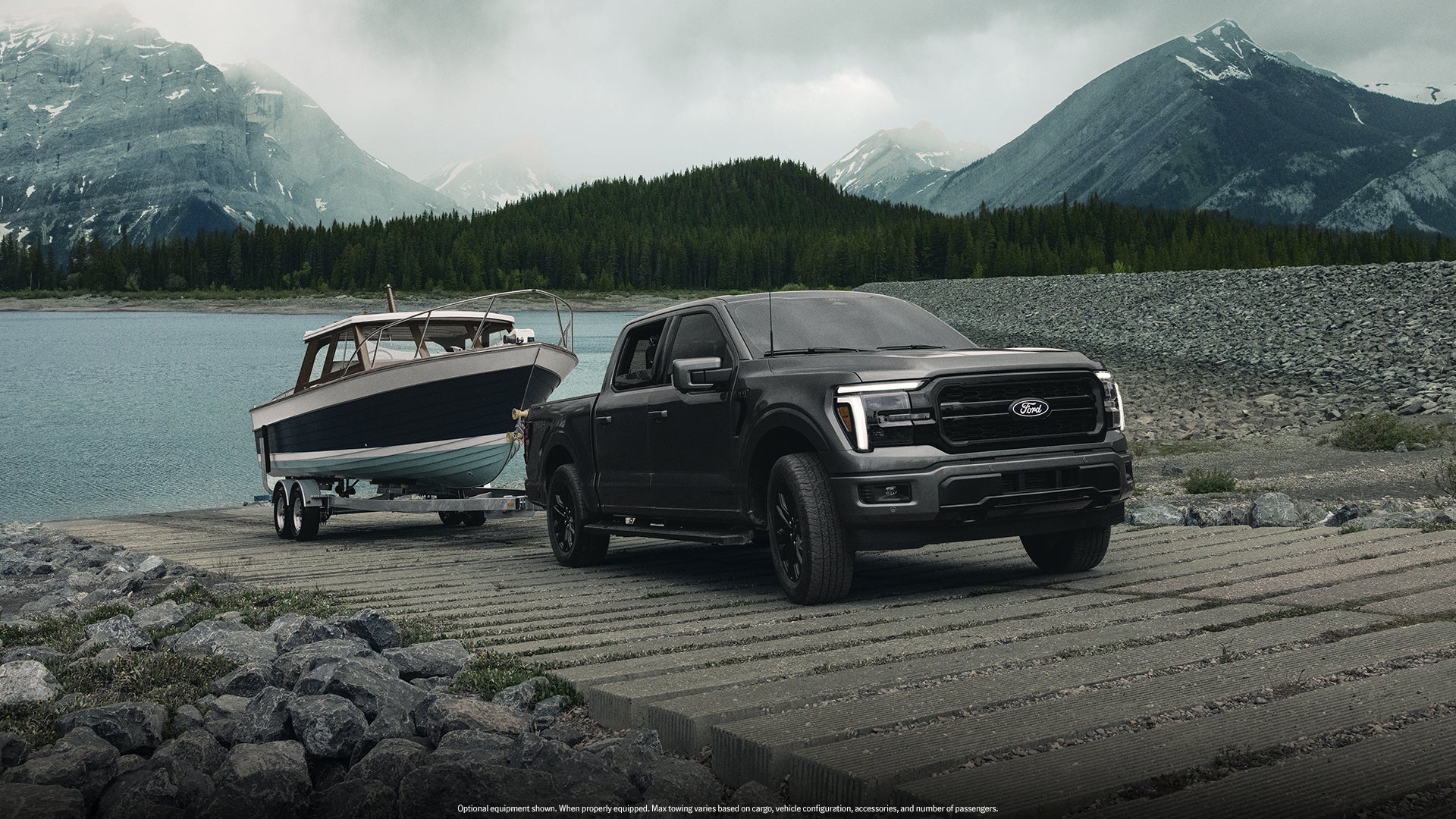
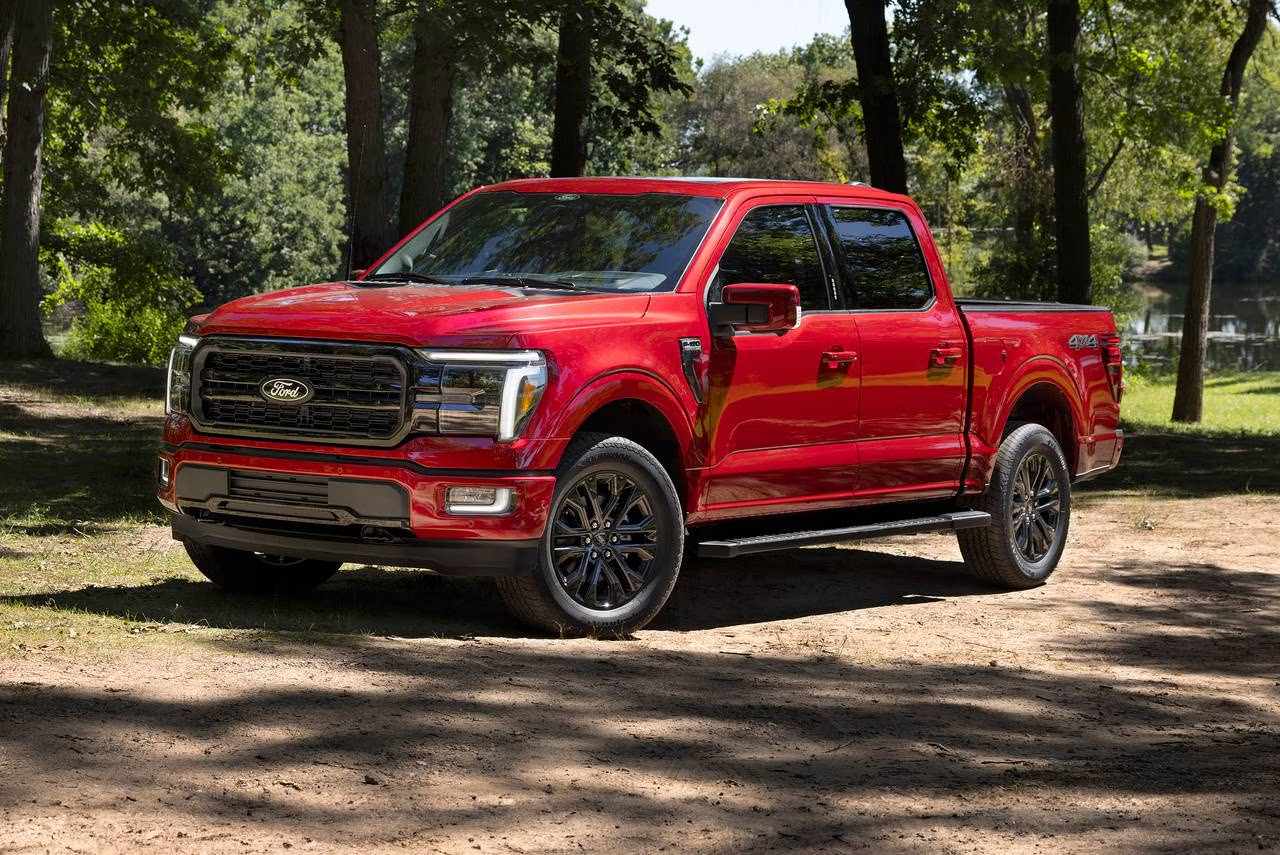
The available 3.5-liter EcoBoost V6 is the conventional towing leader in the 2026 F-150 lineup. It produces 400 horsepower and 500 lb-ft of torque. Properly equipped configurations can tow up to 13,500 pounds, and the highest available F-150 payload rating of 2,440 pounds is also associated with a properly configured 3.5-liter EcoBoost truck.

Those two maximum figures are not a promise that one truck will deliver both at once. Shoppers should compare the doorjamb label, axle ratio, towing equipment and Ford’s rating for the exact cab, bed and drivetrain under consideration.

The 3.5-liter EcoBoost is the strongest starting point for buyers who regularly tow larger travel trailers, equipment or other heavy loads. It is also worth considering when future needs may be more demanding than today’s trailer.

Choose the 3.5-liter EcoBoost if your priorities are:

- The highest available conventional towing capacity
- Strong torque for loaded driving and grades
- More capability margin for frequent towing
- A gas powertrain with broad work-truck flexibility

2026 Ford F-150 Engines Compared: EcoBoost, V8 or PowerBoost?

Why Choose the 5.0-Liter V8?


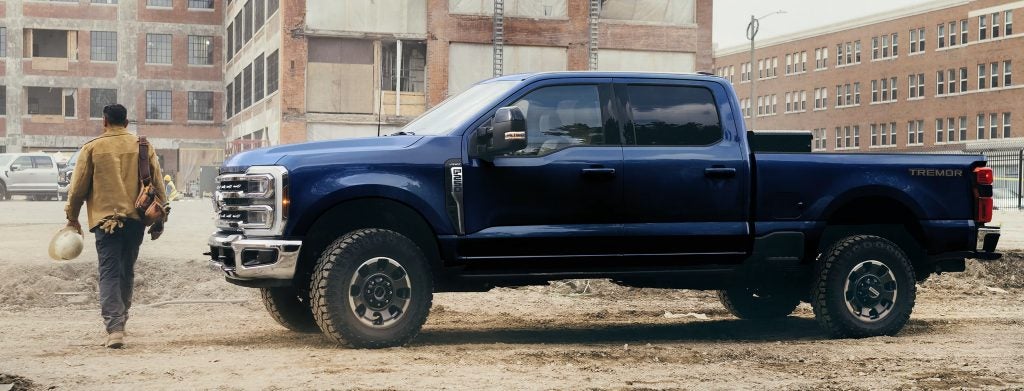
The available 5.0-liter V8 produces 400 horsepower and 410 lb-ft of torque. When properly equipped, it can tow up to 12,800 pounds.

Its appeal is not limited to the specification sheet. Some truck buyers simply prefer the response, sound and driving character of a naturally aspirated V8. The 5.0-liter also offers capability that sits close to the top of the conventional F-150 range without using a turbocharged engine.

Choose the 5.0-liter V8 if your priorities are:

- Traditional V8 feel and sound
- Strong towing and hauling capability
- Naturally aspirated power delivery
- A familiar choice for work, recreation and long-term truck ownership

Availability varies by trim and configuration, so confirm that the V8 can be ordered with the cab, bed, drivetrain and equipment you want.

2026 Ford F-150 Engines Compared: EcoBoost, V8 or PowerBoost?

What Makes the PowerBoost Full Hybrid Different?


The available 3.5-liter PowerBoost full hybrid combines a twin-turbocharged V6 with an electric motor. It produces 430 horsepower and offers the strongest torque output among the four mainstream F-150 powertrains.

Its clearest advantage is versatility. PowerBoost includes Pro Power Onboard, which can supply electrical power for tools, recreation and other compatible equipment. Available output depends on the truck’s equipment, with Ford listing a 2.4-kW system and an available 7.2-kW system for PowerBoost configurations.

Properly equipped PowerBoost trucks are rated to tow up to 12,400 pounds in certain 4x2 configurations or up to 11,600 pounds with 4x4. The hybrid equipment can also affect available payload, making the exact truck’s doorjamb label especially important.

Choose PowerBoost if your priorities are:

- Strong acceleration and towing capability
- Built-in electrical power at a jobsite, campsite or tailgate
- A hybrid powertrain without giving up full-size-truck utility
- One truck that supports work and recreation in different ways

Fuel use will vary with configuration, weather, terrain, driving habits and load. Buyers should compare the EPA label on the exact truck rather than assuming the hybrid will deliver the same result in every use case.


2026 Ford F-150 Engines Compared: EcoBoost, V8 or PowerBoost?

What About the F-150 Raptor Engines?


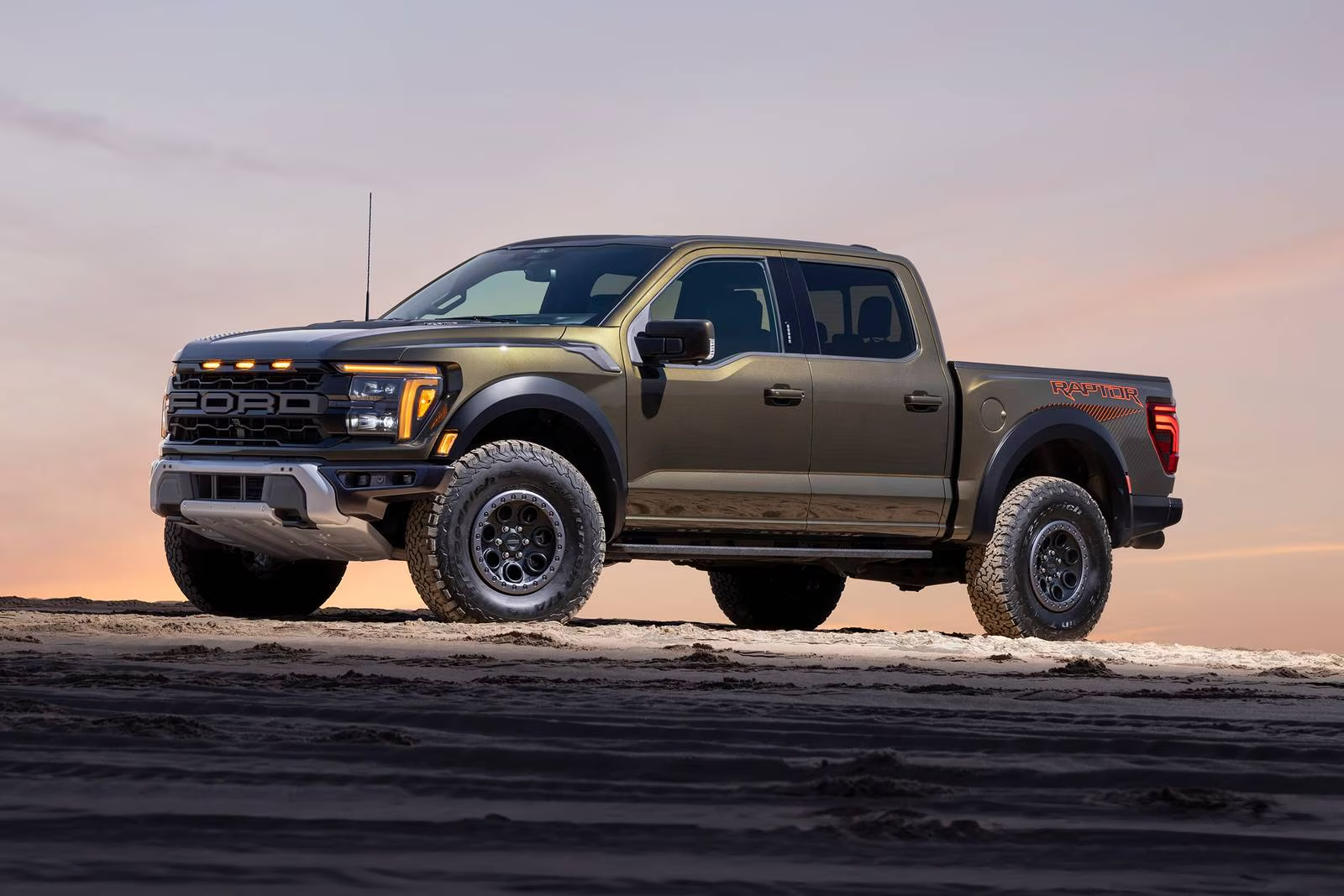
F-150 Raptor and Raptor R use specialized high-output powertrains designed around off-road performance. The Raptor’s high-output 3.5-liter EcoBoost V6 produces 450 horsepower, while the Raptor R’s supercharged 5.2-liter V8 produces 720 horsepower.

These are compelling choices for performance-focused buyers, but they are not the route to the F-150’s maximum towing or payload ratings. If your main objective is hauling a heavy trailer, begin with the mainstream 3.5-liter EcoBoost, 5.0-liter V8 or PowerBoost configurations.


How Does New Mexico Elevation Affect the Decision?


Elevation deserves attention when a truck will tow through northern New Mexico, mountain passes or other high-altitude routes. Ford notes that vehicle performance can decrease at higher elevations when a truck is heavily loaded or towing. To match sea-level performance, Ford’s 2026 towing guidance recommends reducing gross vehicle weight and gross combined weight by 2 percent for every 1,000 feet of elevation.

That does not automatically mean every Albuquerque driver needs the largest engine. It does mean buyers who tow near a truck’s limits should calculate for the routes they actually travel. Extra capability margin can be more valuable than selecting a configuration that only works on paper at sea level.

Which 2026 F-150 Engine Should You Choose?


For a quick starting point:

- Choose the **2.7-liter EcoBoost** for daily driving and occasional light or moderate towing.
- Choose the **3.5-liter EcoBoost** when maximum conventional towing is the main goal.
- Choose the **5.0-liter V8** for strong capability with traditional V8 character.
- Choose the **PowerBoost full hybrid** for strong performance plus useful onboard electrical power.
- Consider **Raptor or Raptor R** when specialized off-road performance matters more than maximum towing or payload.

The final decision should be made at the configuration level, not just the engine level. Power Ford can help you compare window stickers, payload labels and towing ratings across available 2026 F-150 configurations. Bring the weight and type of trailer you plan to tow, along with an estimate of passengers and cargo, so the conversation starts with the truck’s real job.

Shop new Ford vehicles at Power Ford or contact Power Ford to compare 2026 F-150 powertrains in Albuquerque 



Posted in:

Related Posts

2026 Ford Explorer Trim Levels: Which One Fits Your Life in New Mexico?

2026 Ford Explorer Trim Levels: Which One Fits Your Life in New Mexico?

2026 Ford Explorer Trim Levels: Which One Fits Your Life in New Mexico? The right 2026 Ford Explorer trim depends on what you want your SUV to do beyond carrying passengers. Active 100A covers the essentials. Active adds useful everyday comfort. ST-Line gives you a sportier look and more technology without moving to the performance engine. Tremor is the trail-focused choice. ST delivers the strongest on-road performance, while Platinum puts comfort and premium features first. All six Explorer models share the same basic strengths: three-row flexibility, a practical amount of cargo room, useful towing capability, and technology designed for everyday driving. The differences become important when you decide how much comfort, performance, off-pavement capability, and equipment you will actually use. What Every 2026 Explorer Gives You The 2026 Explorer lineup includes Active 100A, Active, ST-Line, Tremor, ST, and Platinum. Every model has three rows and can tow up to 5,000 pounds when properly equipped. Ford includes a Class III Trailer Tow Package across the lineup, although passengers, cargo, trailer setup, and other operating conditions still affect how much you can safely tow. Passenger capacity depends on the seating configuration. Most Explorer models come with second-row captain's chairs and seating for six, while a second-row bench can increase capacity to seven on eligible models. ST-Line uses the bench as its standard second-row arrangement. Tremor is configured for six passengers. With all three rows in use, the Explorer provides 16.3 cubic feet of cargo space. Folding the rear seats expands maximum cargo capacity to as much as 85.8 cubic feet, depending on the model. That makes the trim decision less about basic space and more about how you want the vehicle to feel and function. Active: More Everyday Comfort Explorer Active builds on that foundation with features that matter during daily use, including heated front seats, a heated steering wheel, a power liftgate, active noise cancellation, roof-rack side rails, and a ten-way power driver's seat. For many Albuquerque drivers, Active may be the lineup's most balanced configuration. The extra comfort is easy to appreciate on cold mornings, longer drives, school runs, and weekend trips, but the vehicle still stays focused on everyday usability rather than specialized performance or luxury. ST-Line: Sporty Design Without the Performance Engine Visit Power Ford in Albuquerque to compare current Explorer options and find the configuration that fits the way you drive in New Mexico. Visit Power Ford in Albuquerque to compare current Explorer options and find the configuration that fits the way you drive in New Mexico. ST-Line is for someone who likes the Explorer ST's visual attitude but does not need its more powerful V6. It keeps the 2.3L EcoBoost engine while adding black exterior accents, 20-inch wheels, Explorer hood lettering, red interior stitching, a 360-Degree Camera, and a ten-speaker B&O Sound System. Available BlueCruise hands-free highway driving also makes ST-Line worth considering for drivers who spend significant time on compatible stretches of I-25 or I-40. BlueCruise remains a driver-assist feature, so the driver must stay attentive and be ready to take control. Choose ST-Line when appearance and technology matter more to you than maximum acceleration or trail-focused hardware. Tremor: The Explorer for Rougher Routes The new Explorer Tremor is the most trail-oriented model in the 2026 lineup. It adds all-terrain tires, a Torsen limited-slip rear axle, off-road-tuned suspension with increased ride height, underbody protection, tow hooks, and auxiliary lighting. A 3.0L EcoBoost V6 is available for drivers who also want more power. That equipment gives Tremor a clear purpose. It is designed for families whose recreation regularly takes them beyond pavement, such as reaching trailheads, campsites, mountain property, or rough access roads. It is not automatically the best choice simply because New Mexico has snow, dirt roads, and changing elevations. If most of your driving stays on pavement, an Explorer with available Intelligent 4WD may meet your needs with fewer specialized features. Tremor is the right upgrade when off-pavement driving is a meaningful part of how you use the vehicle, not just an occasional possibility. ST: Performance Comes First Explorer ST is the on-road performance model. Its 3.0L EcoBoost V6 produces 385 horsepower and 415 lb-ft of torque, and Ford pairs it with a sport-tuned suspension. Rear-wheel drive is standard, while Intelligent 4WD is available. The important distinction is that ST is not simply a more powerful ST-Line. ST-Line emphasizes sporty appearance and technology with the standard 2.3L engine. ST changes the driving experience with the V6 and performance-focused suspension while retaining three-row seating and up to 5,000 pounds of towing capability when properly equipped. Choose ST if acceleration and a more athletic road feel are priorities you will appreciate every day. If you mainly want the look, ST-Line is the more direct fit. Platinum: Comfort and Premium Features Explorer Platinum is built around a more premium cabin rather than maximum performance. It uses the 2.3L EcoBoost engine and offers features such as the Lux Leather Package with quilted seating surfaces, heated and ventilated front seats, available massaging front seats, heated second-row seating, a 14-speaker B&O Sound System, and available BlueCruise. Platinum makes the strongest case for drivers who take frequent highway trips, carry adult passengers, or simply want their family SUV to feel quieter and more refined. It is also a reminder not to assume the highest trim automatically has the strongest engine. For 2026, the 3.0L V6 is reserved for ST and available on Tremor, while Platinum focuses on comfort. Which 2026 Explorer Trim Is Right for You? - Choose Active 100A for the essential three-row Explorer experience. - Choose Active for added daily comfort and convenience. - Choose ST-Line for sport-inspired design and upgraded technology. - Choose Tremor for regular off-pavement travel and trail-focused hardware. - Choose ST for V6 performance and a sport-tuned driving experience. - Choose Platinum for premium comfort and long-distance refinement. Do not make the decision from a feature list alone. Seating configuration, drivetrain, packages, and options can change how an Explorer fits your family and how it feels on the road. Compare the window stickers, sit in the second and third rows, and drive the trims that match your priorities back-to-back. Visit Power Ford in Albuquerque to compare current Explorer options and find the configuration that fits the way you drive in New Mexico.

What Ford Is Right for You?

What Ford Is Right for You?

What Ford Is Right for You? 2026 Ford Buyer’s Guide for New Mexico One of the best things about shopping for a Ford is that there is no single answer for every driver. Some buyers need a truck that can tow and haul. Others need a family SUV, something capable off-road, a fuel-conscious hybrid, an electric vehicle for daily commuting, or a Mustang that makes the drive itself more enjoyable. The better question is not, “What is the best Ford?” It is, “What Ford fits the way I actually live?” For New Mexico drivers, that can mean thinking about everything from Albuquerque commuting and I-25 travel to mountain roads, camping, towing, family space, fuel costs, charging, and weekend recreation. The right Ford is the one that gives you the capability you will actually use. If You Need a Truck If towing, hauling, work, or outdoor recreation are a regular part of your life, Ford gives you several very different truck choices. The Maverick is the place to start if you want pickup utility without moving into a traditional midsize or full-size truck. Ford offers a hybrid powertrain across the 2026 Maverick lineup, making it especially interesting for buyers who want a truck bed and everyday efficiency. The Ranger makes sense for drivers who want more traditional truck capability in a midsize package. It is easier to maneuver than a full-size truck while still offering meaningful towing, available four-wheel drive, and off-road capability. The F-150 is the better fit when you need more towing, payload, cabin choices, bed choices, and powertrain flexibility. Ford also continues to offer the available 3.5L PowerBoost Full Hybrid V6 in the 2026 F-150, giving buyers a hybrid option without giving up full-size truck capability. And if your truck is primarily a work tool and your towing or payload requirements go beyond what an F-150 is designed to handle, Super Duty is where the conversation should move next. Maverick is for the buyer who wants some truck. Ranger is for the buyer who needs a truck. F-150 is for the buyer who needs more truck. Super Duty is for the buyer whose truck is part of the job. If You Need an SUV for Everyday Life The Bronco Sport works well for someone who wants a manageable everyday SUV with standard four-wheel drive and enough capability for camping, snow, dirt roads, and weekend recreation. The Explorer is the stronger choice when passenger space becomes a priority. It gives buyers three-row seating and more family-oriented versatility. The Expedition moves into full-size SUV territory for drivers who want more passenger room, cargo space, towing capability, and long-distance family flexibility. Bronco Sport is the everyday adventure SUV. Explorer is the family SUV. Expedition is the full-size family and towing SUV. If You Want a Hybrid Ford currently offers hybrid options in both the Maverick and F-150 lineups. The Maverick hybrid is geared toward drivers who want pickup versatility while keeping efficiency and daily usability high. The F-150 PowerBoost is a very different proposition. It is a full-size truck first, with hybrid technology added to deliver strong torque, towing capability, and features such as available Pro Power Onboard. Maverick hybrid is about doing truck things more efficiently. F-150 PowerBoost is about adding hybrid technology to a truck that still needs to work like an F-150. If You Are Ready for an Electric Vehicle The 2026 Mustang Mach-E is currently Ford’s primary all-electric consumer vehicle, with rear-wheel-drive and electric all-wheel-drive configurations available depending on trim. Ford lists Select, Premium, and GT series for 2026. The Mustang Mach-E makes sense for someone whose daily driving fits electric ownership well and who wants an SUV with strong acceleration, modern technology, and no gasoline stops. For an Albuquerque commuter with reliable home charging, an EV can be particularly convenient because the vehicle can start each morning with a charged battery instead of requiring regular trips to the gas station. If you frequently take long rural trips, tow, travel in areas where charging access may be limited, or cannot charge reliably at home or work, an EV may require more planning than a gas or hybrid vehicle. The right answer depends less on whether EVs are “good” and more on whether charging fits your routine. If You Want Something Fun Then we get to Mustang. Not every vehicle decision needs to be justified by towing capacity, cargo volume, or fuel economy. The 2026 Mustang is for the buyer who wants the vehicle itself to be part of the experience. The current lineup includes EcoBoost models for buyers who want Mustang styling and performance in a more approachable package, along with V8-powered GT and higher-performance versions for buyers who specifically want the sound and character of a traditional Mustang. Ford continues to list the 2026 Mustang alongside its core current lineup. Conclusion Choosing the right Ford should not start with horsepower, trim levels, or the biggest vehicle on the lot. It should start with what you actually need your vehicle to do. If you commute around Albuquerque and occasionally need a bed, Maverick may make more sense than an F-150. If you need serious towing and hauling capability, F-150 or Super Duty may be worth the extra size. If your priorities are family space, outdoor recreation, electric driving, or simply enjoying the road, Ford has completely different vehicles designed around those needs. The right Ford is not the one with the most capability. It is the one with the right capability for your life. That is the decision Power Ford should help you make. Compare current Ford trucks, SUVs, hybrids, electric vehicles, and Mustangs at MyFordDealer.com, or visit Power Ford in Albuquerque and drive a few different options back-to-back before deciding.

How Long Does a Ford F-150 Last?

How Long Does a Ford F-150 Last? 100K, 200K Miles and Beyond!

How Long Does a Ford F-150 Last? Reliability, Mileage, and Maintenance Can a Ford F-150 last 200,000 miles? Absolutely. But there is no mileage number where every F-150 suddenly becomes old, and there is no guarantee that every truck will reach 200,000 miles. Current vehicle longevity research estimates the F-150’s average lifespan at roughly 164,000 miles, with about one in four reaching at least 200,000 miles. The bigger question is how the truck was maintained and what kind of work those miles involved. Two F-150s can both show 100,000 miles and have lived completely different lives. One may have spent most of those miles cruising on I-25, while another may have spent years towing trailers, idling on job sites, carrying heavy equipment, or driving dusty roads. Ford considers towing, heavy loads, excessive idling, dust, and extreme temperatures severe driving conditions. That means the number on the odometer tells you how far the truck traveled, but it does not tell you how hard it worked to get there. Is 100,000 miles too much for an F-150? There is nothing magical about 100,000 miles that suddenly makes an F-150 a bad truck. A well-maintained F-150 with 120,000 miles may be a much stronger purchase than a neglected truck with 70,000 miles. For a used buyer, maintenance history, towing history, transmission behavior, fluid leaks, tire wear, suspension condition, previous damage and warning lights can tell you more than mileage alone. What helps an F-150 reach high mileage? The best way to help an F-150 reach high mileage is consistent maintenance. Stay on top of oil changes, fluids, filters, tires, brakes, and cooling system service, and pay attention to small issues before they become expensive repairs. If your truck spends a lot of time towing, idling, hauling heavy loads, or driving in hot and dusty conditions, your maintenance schedule should reflect that extra workload. For New Mexico F-150 owners, dust, heat, mountain driving, and rough roads make regular inspections even more important. A high-mileage truck is not automatically a worn-out truck. In many cases, the difference between an F-150 that feels tired at 100,000 miles and one that keeps going well beyond that point comes down to how consistently it was maintained and how quickly small problems were addressed. Does New Mexico Driving Affect F-150 Longevity? New Mexico driving can expose an F-150 to a wide range of conditions. Albuquerque commuting may be easy duty, while towing into the mountains, driving on dusty roads, hauling equipment, or working in extreme heat can place significantly different demands on the same truck. None of those conditions mean an F-150 cannot have a long service life. They simply make it more important to maintain the truck based on how it is actually used rather than treating every mile the same. Conclusion So how long does an F-150 last? There is no single mileage number that determines when a truck is finished. Some F-150s will need major repairs before 200,000 miles, while others can remain useful well beyond that point. The biggest factors are how the truck was maintained, how hard it worked, and whether small problems were handled before they became expensive ones. If you are shopping for a used F-150 in Albuquerque or the surrounding New Mexico area, do not judge the truck by mileage alone. Look at the entire story.