Blog / F150

What Your 2018 Ford F-150 Trade-In Value Looks Like Near Los Lunas, NM

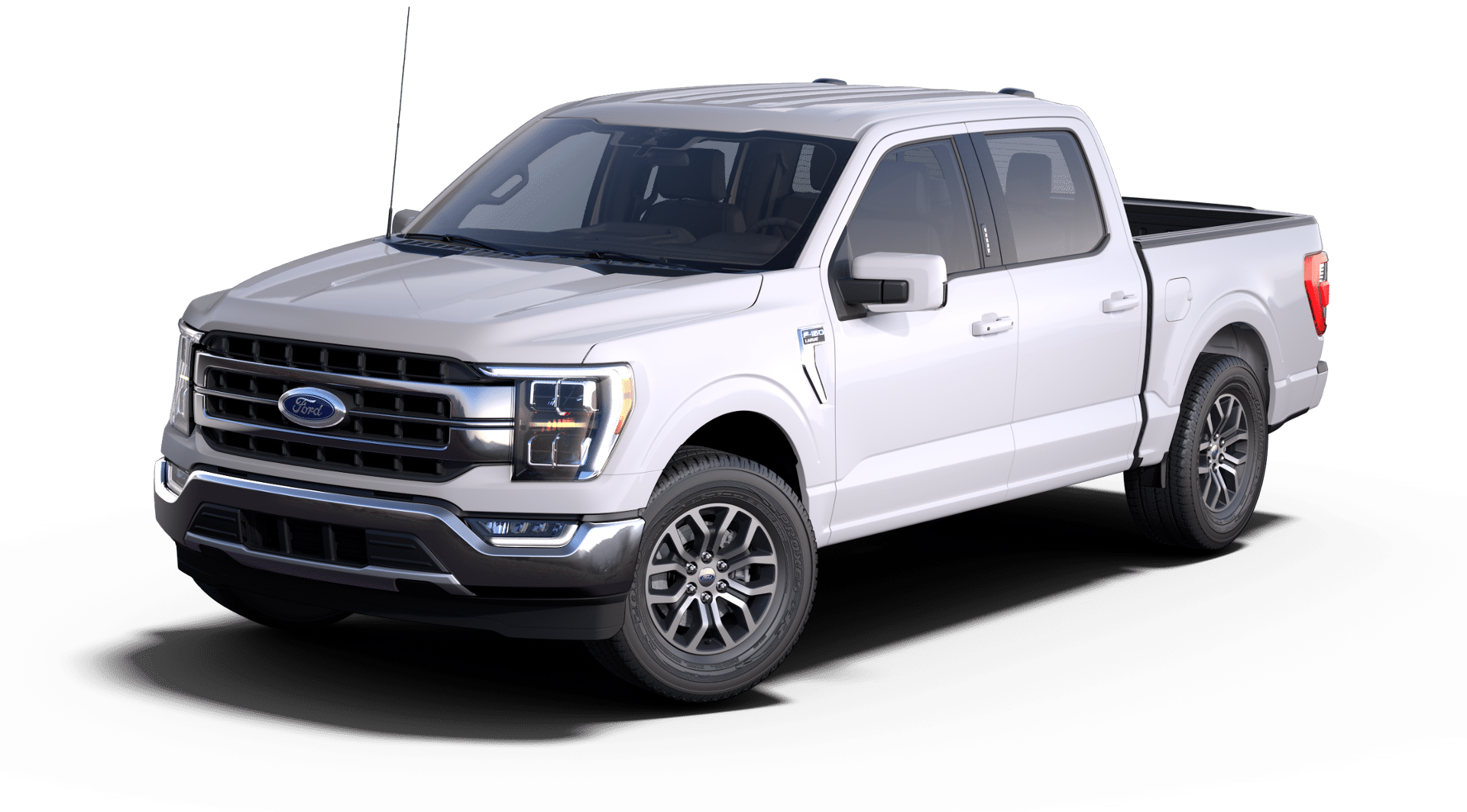
White Ford F-150 SuperCrew pickup truck

What a 2018 Ford F-150 is worth as a trade near Los Lunas comes down to four things more than anything else: engine, cab and bed configuration, drivetrain, and mileage. The spread between the cheapest and the most desirable 2018 F-150 is wide enough that a single average number is useless. The fastest route to a real figure is running your VIN through our trade-in appraisal tool, which prices your specific truck instead of a category. What follows is what that appraisal is reacting to, so you can see roughly where your F-150 sits before the offer comes back.

What Moves the Number on a 2018 F-150

2018 was the year Ford reworked the F-150's engine lineup, so the badge on the fender matters more on this model year than on most. The base 3.3L V6 makes 290 horsepower and 265 lb-ft and was the only engine still paired with a six-speed automatic. Above it sit the 2.7L EcoBoost at 325 horsepower and 400 lb-ft, the 5.0L V8 at 395 and 400, and the 3.5L EcoBoost at 375 and 470 — all on the ten-speed automatic. A 3.0L Power Stroke diesel arrived partway through the year, and the Raptor's high-output 3.5L makes 450 horsepower and 510 lb-ft. In practice the 5.0L V8 and the 3.5L EcoBoost draw the deepest used demand; a 3.3L work truck is the floor of the range.

Configuration does just as much work. SuperCrew four-wheel drive with the 5.5- or 6.5-foot box is what most New Mexico buyers come in asking for, so it appraises strongest. A regular cab with the eight-foot box sells to a narrower, mostly commercial audience, and two-wheel drive costs you real money here for obvious reasons. Options that are hard to add later — the tow package, the 3.55 or 3.73 limited-slip axle, the 36-gallon tank, factory navigation — all show up in the appraisal because they show up in what the truck retails for afterward.

Mileage, Condition, and What Reconditioning Takes Back Off

By 2026 a 2018 F-150 is eight model years old, so a truck that has run 12,000 to 15,000 miles a year lands somewhere around 100,000 to 120,000 on the odometer. That band is the baseline. Meaningfully under it is where the premium lives, because a low-mileage 2018 still has room to be retailed as a certified unit rather than wholesaled. Past roughly 150,000, most trucks stop being retail candidates entirely and get appraised on what they bring at auction, which is a different and lower number.

Condition is the part owners underestimate. The F-150's aluminum-alloy body will not rust out on you, which helps, but body repairs on aluminum cost more than steel and an appraiser knows it. Tires below about four thirty-seconds, worn brakes, a cracked windshield, a torn seat, a check-engine light — each is subtracted at roughly what it costs to put right before the truck can go on the line. That is the honest math behind a lower-than-expected offer, and it is also why it is worth deciding deliberately whether to fix something first or let it come out of the trade.

Get Your Number Before You Start Shopping
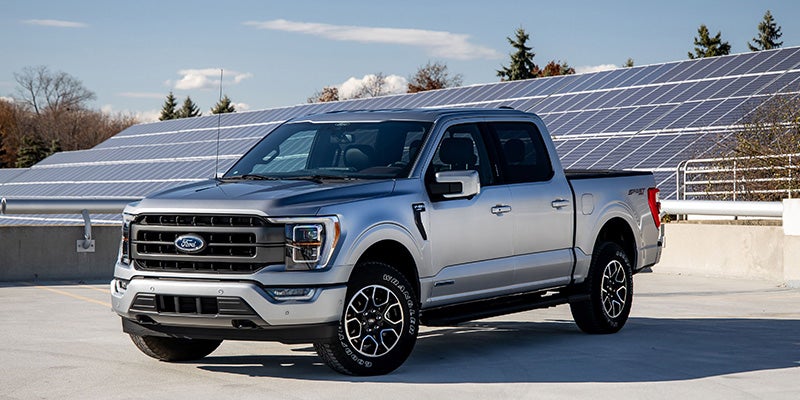
Appraising a 2018 Ford F-150 trade-in at Power Ford, serving Los Lunas, NM

Settle the trade value as its own conversation, separate from whatever you are buying next. Have the truck appraised on its VIN, get the figure in writing, and only then talk about the vehicle replacing it — two clear numbers are much easier to judge than one blended payment. Before you come in, check the VIN for open recalls in NHTSA's free recall database, because unrepaired recalls have to be addressed before a truck can be retailed and they can surface in an appraisal. Gather your service records too; documented maintenance is one of the few things that reliably argues the number upward. It is also worth knowing that the IIHS ratings covering the 2018 F-150 apply to the SuperCrew body style, where it earns Good results across every crashworthiness test — part of why that configuration holds its demand on the used lot.

Trading In From Los Lunas

Power Ford is at 1101 Montaño Rd NE in Albuquerque, roughly 30 miles north of Los Lunas and a 35- to 40-minute run up I-25. Bring the title, or the lender's name and a current payoff quote if there is still a loan, plus the registration, your license, both key fobs and any records you have kept — with those in hand the appraisal is a same-visit job rather than a return trip. You are also not obligated to buy anything: we appraise and purchase any make or model whether or not you leave in something else. Drivers up in Rio Rancho asked us the loan-approval side of this same question, which we answered separately in our piece on getting approved for a Ford auto loan with less-than-perfect credit.

If You Still Owe More Than the Truck Is Worth

It happens often enough that it is worth saying plainly: a payoff higher than the appraised value does not end the trade. The gap is negative equity, and it becomes one more variable in how the next deal is structured rather than a wall. The mechanics of that — rolling it forward, adjusting term or vehicle, or paying the difference down — are laid out in detail in our guide to Ford financing with negative equity on a trade-in, so we will not repeat them here. The one thing worth doing first is the same either way: get the real appraisal number, because you cannot size the gap until you know both halves of it.

Common Questions Los Lunas Owners Ask Us

How much is a 2018 Ford F-150 worth as a trade-in near Los Lunas, NM?

There is no single number, because a 2018 F-150 ranges from a base 3.3L V6 regular cab to a Raptor. Engine, cab and bed configuration, drivetrain, mileage and condition set the figure, and they move it by thousands. Run your VIN through Power Ford's appraisal tool for a market-based offer on your specific truck rather than a category average.

What do I need to bring to trade in my F-150?

Bring the title or, if there is still a loan, the lender's name and a current payoff quote. Add the registration, your driver's license, both key fobs, and any service records you have kept. Everyone listed on the title should come along if the truck is in more than one name. With that in hand, the appraisal is usually finished in one visit.

Can I trade in my F-150 if I still owe money on it?

Yes, and most trade-ins still carry a loan. Power Ford handles the payoff with your lender directly. If the truck appraises above what you owe, the difference goes toward your next vehicle. If it appraises below, that shortfall is negative equity, and it becomes part of how the next deal gets structured rather than a reason you cannot trade.

Find Out What Your F-150 Is Actually Worth

Start the appraisal online to get a market-based figure in a few minutes, then bring the truck up and we will confirm it in person — and tell you honestly if the online number was optimistic. We'll beat any Ford deal in New Mexico, or you'll get $1,000 cash in your pocket. Call (505) 933-7883 to line up an appraisal, or come by and we will walk your F-150 with you and show you what we are seeing.
Posted in:

Related Posts

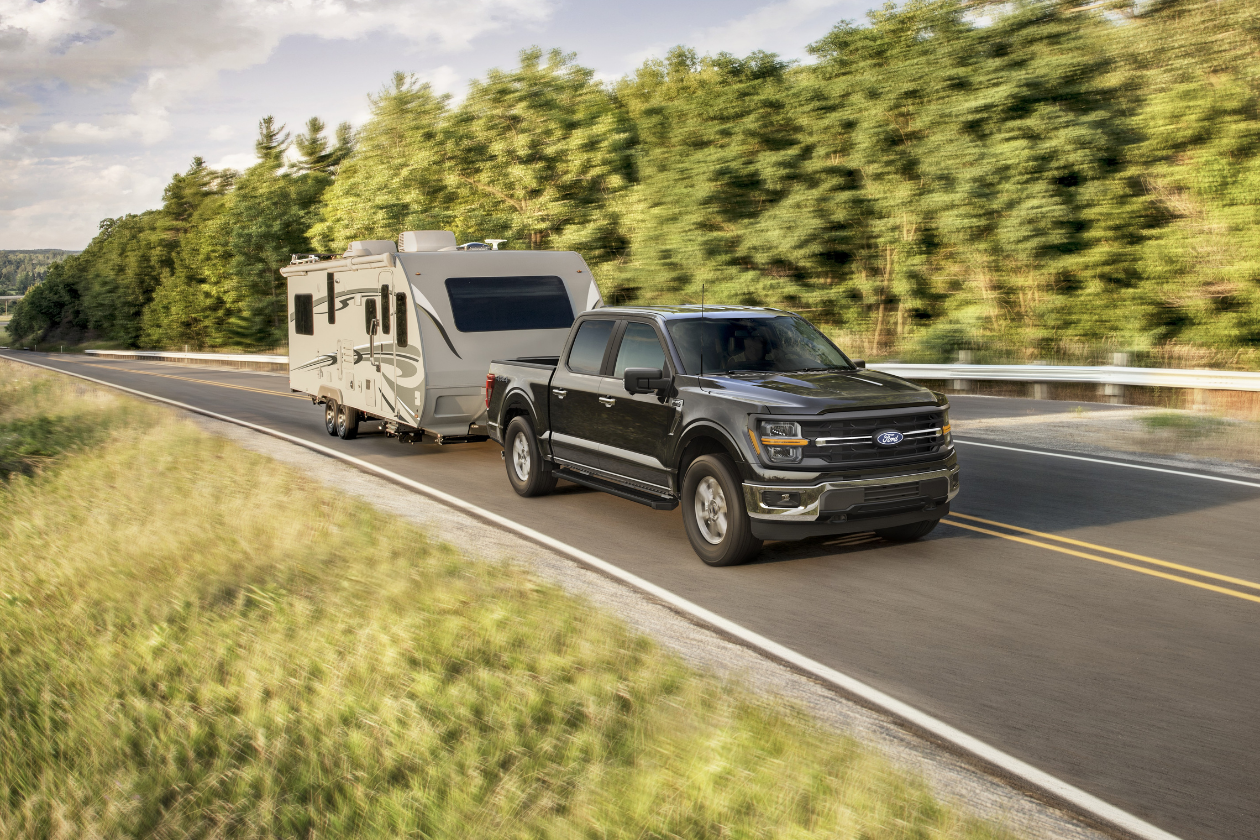
Ford F-150 towing a travel trailer camper on a mountain highway

The Best Ford Truck for Towing a Camper in the Mountains Near Santa Fe, NM

For most campers pulled through the mountains around Santa Fe, the best Ford truck is the 2026 F-150 with the 3.5L EcoBoost V6: up to 13,500 pounds of conventional towing, and turbochargers that hold their power at 7,200 feet where a naturally aspirated V8 gives it up. Fifth-wheels need a Super Duty. Our 2026 Ford F-150 towing capacity guide lists every rating and the equipment each one requires; this page is about what those numbers mean once the road tilts uphill and the air thins out. Which Ford Truck Tows a Camper Best Around Santa Fe Start with the camper, not the truck. Weigh what you actually tow — loaded, water in the tanks, gear in the pass-through — and the right Ford usually picks itself. For the 24- to 30-foot travel trailer most families own, the F-150 with the 3.5L EcoBoost is the answer: it carries the highest half-ton rating in the lineup, its torque arrives low in the rev range where mountain climbing happens, and forced induction means it does not fade above 6,000 feet the way an atmospheric engine does. The dividing line upward is tongue weight, not pulling power. Once a fifth-wheel hitch enters the conversation, pin weight will bury a half-ton's payload long before the engine runs out of pull, and that is when a Super Duty stops being overkill. Downward, a Ranger handles teardrops, pop-ups and single-axle trailers for less money and parks far more easily downtown. Our broader look at choosing a Ford truck or SUV for towing and off-roading in New Mexico covers the SUV side of that same question. Shop F-150s Near Santa Fe 2026 Ford Towing and Payload, Model by Model The figures below are maximums for a properly equipped truck. On the F-150 that means the Tow/Haul Package and the Max Tow Axle upgrade — without them the same engine typically tops out several thousand pounds lower. Read the two number columns separately: max tow and max payload are not achieved in the same cab, bed and drivetrain combination, so no single truck on this chart delivers both figures at once. 2026 Ford Truck Engine Max Conventional Tow Max Payload F-150 3.5L EcoBoost V6 13,500 lbs 2,440 lbs F-150 5.0L Ti-VCT V8 12,800 lbs 2,235 lbs F-150 3.5L PowerBoost Hybrid 11,600 lbs 1,740 lbs F-150 2.7L EcoBoost V6 8,400 lbs 1,775 lbs F-250 Super Duty 6.7L H.O. Power Stroke Diesel 22,000 lbs 4,260 lbs Payload is what actually stops most camper buyers, not the tow rating. Ford's guidance is about 10% of loaded trailer weight on a conventional tongue and 15% on a fifth-wheel pin, and every pound of it lands on your rear axle alongside passengers, dogs, firewood and the weight-distribution hitch itself. A 9,000-pound travel trailer asks for roughly 900 pounds of payload before anyone climbs in the cab — which is why the sticker inside the driver's door jamb, not the brochure, is the number that decides what fits. Browse Super Duty Trucks in Santa Fe What Santa Fe's 7,200 Feet Does to Those Numbers Tow ratings are published for conditions that do not exist in northern New Mexico. Thin air carries less oxygen, so the engine makes less power, the cooling system works harder and the transmission spends longer in lower gears. Ford addresses this directly rather than leaving it to folklore: the 2026 Ford RV & Trailer Towing Guide instructs drivers to “reduce Gross Vehicle Weight (GVW) and Gross Combination Weight (GCW) by 2% per 1,000 ft. elevation” in order to match the driving performance perceived at sea level. Santa Fe sits near 7,200 feet and Glorieta Pass just east of town runs close to 7,500, which works out to roughly a 14% haircut — so treat a 13,500-pound F-150 as an 11,500-pound planning number when the trailer is going uphill. That is a performance guideline, not a change to your truck's legal rating or its GVWR. Why a Turbocharged EcoBoost Holds Power Where a V8 Fades A naturally aspirated engine breathes whatever air the atmosphere hands it, and at 7,200 feet that is roughly a quarter less air than at sea level — the familiar rule of thumb being about 3% of power lost per 1,000 feet, which puts a 5.0L V8 down close to a fifth of its rated output before you even hitch up. A turbocharged engine is not at the mercy of ambient pressure the same way: the turbos spin faster and raise boost to restore intake pressure, so the 3.5L EcoBoost arrives at the top of the pass with far more of its torque intact. You feel it as fewer downshifts, cooler transmission temperatures, and a truck that holds highway speed up La Bajada instead of surrendering to traffic. Equipment carries the rest of the load. Tow/Haul mode sharpens shift logic and adds engine braking on the way back down toward the Rio Grande, and the integrated trailer brake controller, Pro Trailer Backup Assist and Smart Trailer Tow Connector are documented on Ford's F-150 towing and hauling overview. One truck that is not the answer here is the Raptor: its long-travel suspension is tuned to absorb desert whoops at speed, which is the opposite of what a loaded trailer wants, and its ratings come in well below a Tow/Haul-equipped 3.5L EcoBoost. It is a superb truck for other reasons, which we covered in our piece on buying a new Ford F-150 Raptor for off-roading. See What We Offer Santa Fe Drivers Bring Your Camper's Weight Sticker Power Ford is at 1101 Montaño Rd NE in Albuquerque, about an hour south of the Santa Fe Plaza on I-25, and we would rather do this arithmetic with you than have you discover it at a campground. Bring the camper's GVWR sticker and we will check it against tow rating, tongue weight against payload, and verify axle ratio and packages from the VIN of trucks actually on the lot rather than from a configurator — and we will tell you plainly when a half-ton is the right answer and when it is not. Hitch the trailer up and bring it along if you can; a loaded climb tells you more than any spec sheet. Common Questions Santa Fe Campers Ask Us Which Ford truck is best for towing a camper near Santa Fe, NM? For most travel trailers towed around Santa Fe, the 2026 Ford F-150 with the 3.5L EcoBoost V6 is the best match. Properly equipped it tows up to 13,500 pounds, and twin turbochargers hold power at 7,200 feet where a naturally aspirated V8 fades. Campers past roughly 12,000 pounds, and any fifth-wheel, belong behind an F-250 Super Duty instead. How much does Santa Fe's elevation reduce towing capacity? Ford advises reducing gross vehicle weight and gross combination weight by 2% per 1,000 feet of elevation to match the performance you would feel at sea level. At Santa Fe's roughly 7,200 feet that is about 14%, so a 13,500-pound rating is better treated as an 11,500-pound planning number. Your truck's legal rating does not change, only its available power. Do I need a Super Duty to tow a fifth-wheel camper in New Mexico? Usually yes. A fifth-wheel puts roughly 15% of its loaded weight on the king pin, which most half-ton payload ratings cannot absorb once passengers and gear are aboard. A 2026 F-250 Super Duty with the 6.7L Power Stroke is rated up to 22,000 pounds conventional and 23,000 pounds fifth-wheel, with payload up to about 4,260 pounds. Match Your Camper to the Right Truck Numbers on a page only go so far — the test that settles it is hooking your own trailer to a candidate truck and driving it up a grade. We'll beat any Ford deal in New Mexico, or you'll get $1,000 cash in your pocket. Call (505) 933-7883 to set up a towing consultation, and we will have the trucks already carrying the Tow/Haul Package and Max Tow Axle pulled up when you arrive. Schedule a Test Drive Contact Our Team

Power Ford parts and service department serving the Albuquerque metro

Where to Find Genuine OEM Ford F-150 Parts Near Rio Rancho

We hear from a lot of Rio Rancho F-150 owners who've been quoted parts from an auto parts store or an independent shop and want to know if genuine Ford parts are really worth the difference. We're Power Ford, and because our own technicians install both genuine and aftermarket parts every day, we've got a clear view of where that difference actually matters on a truck like the F-150, and where you have more flexibility. Here's what we'd tell you, plus how to get genuine parts near Rio Rancho whether you install them yourself or have us handle it. Why Genuine OEM Parts Matter on an F-150 Genuine Ford parts, including Motorcraft components, are engineered to the exact fit and performance specifications your F-150 was built around. That matters more than it sounds like on a truck that regularly tows, hauls, or covers a lot of miles, since components like brakes, filters, and suspension parts see more real-world stress than they would on a typical car. Using the wrong-spec part on those systems is where owners tend to run into premature wear or, in some cases, voided warranty coverage. Shop Genuine Ford Parts Our Parts Department and What We Stock Our parts department keeps a deep inventory of F-150-specific components on hand, from filters and belts to brakes, batteries, and fluids, so most jobs don't require a special order or a long wait. If you're looking to personalize your truck rather than just maintain it, we also carry genuine Ford accessories designed to fit without the guesswork that comes with aftermarket options. Common F-150 Parts and Maintenance Needs Following Ford's recommended maintenance schedule is the simplest way to know when genuine parts actually need replacing instead of guessing. That typically includes brake pads, tires, batteries, cabin air filters, and wiper blades, along with routine oil changes. Keeping these on a genuine-parts schedule is also one of the easier ways to protect resale value if you plan to trade the truck in down the road. Certified Service to Install Them Right A genuine part is only as good as the install, which is why our service department uses factory-trained technicians for every job. Our Quick Lane handles faster routine work like fluid top-offs and filter swaps, and if you want to know more about why our shop specifically is worth trusting with the install, our why service here page covers that in more detail. We've also written about how often you should rotate your tires, which is one of the most overlooked maintenance items on a truck that sees regular highway miles. Schedule Service Online Getting Parts and Service Without the Drive from Rio Rancho We know Rio Rancho is a bit of a haul, so we try to make genuine parts and service as convenient as we can. Our pickup and delivery service and mobile service requests can handle a lot of routine parts installs without you ever making the trip in, and our online scheduler makes it easy to book whichever option works best for you. Common Questions About Genuine F-150 Parts Are genuine Ford parts really necessary, or is aftermarket fine? It depends on the part. For safety and drivetrain-related components, we'd recommend genuine parts to protect fit, performance, and warranty coverage. For cosmetic accessories, aftermarket options are often fine. Do you carry parts for older F-150 model years, not just the newest one? Yes. Our parts department regularly special orders components for older F-150 model years when they're not in stock. Can I get parts installed without driving in from Rio Rancho? For many routine jobs, yes. Our pickup and delivery service and mobile service option can save you the drive. Get the Right Parts for Your F-150 Whether you're maintaining your F-150 yourself or want our certified technicians to handle it, we can get you genuine parts built for your exact truck. Reach out or schedule service, and we'll take it from there. Shop Ford Parts Schedule Service

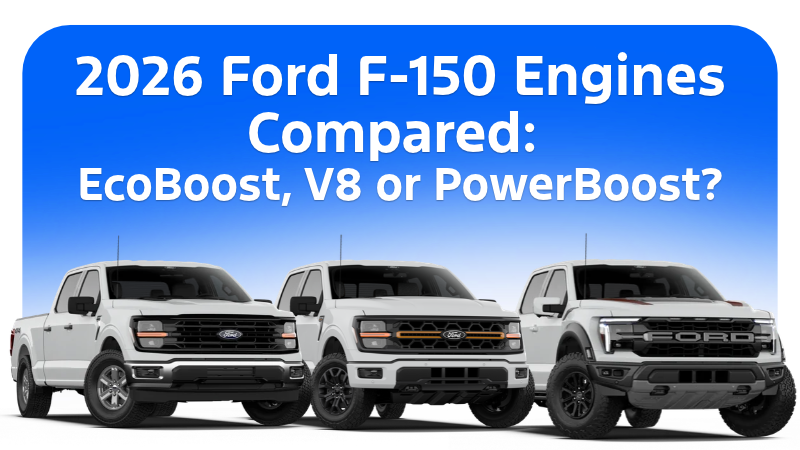
2026 Ford F-150 Engines Compared: EcoBoost, V8 or PowerBoost?

2026 Ford F-150 Engines Compared: EcoBoost, V8 or PowerBoost?

Choosing a 2026 Ford F-150 engine is less about finding one “best” option and more about matching the truck to the work you actually do. The 2.7-liter EcoBoost V6 is a strong everyday choice. The 3.5-liter EcoBoost V6 is the towing leader. The 5.0-liter V8 combines traditional V8 character with serious capability. The available PowerBoost full hybrid adds strong performance and useful onboard power. For New Mexico drivers, the right answer also depends on elevation, trailer weight, passengers, cargo, and how often the truck will work near its limits. Here is how the four mainstream F-150 powertrains compare. Start With Your Real Workload Before choosing an engine, write down what the truck needs to carry and tow on its busiest day, not just during a normal commute. For towing, consider the trailer’s loaded weight rather than its empty weight. Include water, fuel, tools, recreational equipment and anything else that will travel inside it. Trailer tongue weight, people and cargo in the truck all use part of the F-150’s available payload. Engine choice matters, but it does not determine capability by itself. Cab, bed, drivetrain, axle ratio, equipment and other factors can change a truck’s rating. Maximum towing and payload figures are separate ratings and should not be treated as if one configuration achieves every maximum at the same time. Always confirm the exact truck’s specifications and check the payload label on the driver-side doorjamb. Is the 2.7-Liter EcoBoost V6 Enough? For many F-150 shoppers, yes. The 2.7-liter EcoBoost V6 produces 325 horsepower and 400 lb-ft of torque. When properly equipped, it can tow up to 8,400 pounds. That makes it a practical fit for drivers who primarily commute, handle home projects and occasionally tow a smaller boat, utility trailer or recreational trailer. It offers substantially more torque than its displacement might suggest, without requiring shoppers to step up to one of the higher-output engines. Choose the 2.7-liter EcoBoost if your priorities are: - Everyday driving with useful truck capability - Occasional light or moderate towing - A lower engine requirement than a maximum-towing build - Strong low-end torque in a practical configuration The limitation is straightforward. If your trailer and cargo regularly approach the truck’s rating, a higher-capacity configuration can provide more operating margin. Which F-150 Engine Is Best for Maximum Towing? The available 3.5-liter EcoBoost V6 is the conventional towing leader in the 2026 F-150 lineup. It produces 400 horsepower and 500 lb-ft of torque. Properly equipped configurations can tow up to 13,500 pounds, and the highest available F-150 payload rating of 2,440 pounds is also associated with a properly configured 3.5-liter EcoBoost truck. Those two maximum figures are not a promise that one truck will deliver both at once. Shoppers should compare the doorjamb label, axle ratio, towing equipment and Ford’s rating for the exact cab, bed and drivetrain under consideration. The 3.5-liter EcoBoost is the strongest starting point for buyers who regularly tow larger travel trailers, equipment or other heavy loads. It is also worth considering when future needs may be more demanding than today’s trailer. Choose the 3.5-liter EcoBoost if your priorities are: - The highest available conventional towing capacity - Strong torque for loaded driving and grades - More capability margin for frequent towing - A gas powertrain with broad work-truck flexibility Why Choose the 5.0-Liter V8? The available 5.0-liter V8 produces 400 horsepower and 410 lb-ft of torque. When properly equipped, it can tow up to 12,800 pounds. Its appeal is not limited to the specification sheet. Some truck buyers simply prefer the response, sound and driving character of a naturally aspirated V8. The 5.0-liter also offers capability that sits close to the top of the conventional F-150 range without using a turbocharged engine. Choose the 5.0-liter V8 if your priorities are: - Traditional V8 feel and sound - Strong towing and hauling capability - Naturally aspirated power delivery - A familiar choice for work, recreation and long-term truck ownership Availability varies by trim and configuration, so confirm that the V8 can be ordered with the cab, bed, drivetrain and equipment you want. What Makes the PowerBoost Full Hybrid Different? The available 3.5-liter PowerBoost full hybrid combines a twin-turbocharged V6 with an electric motor. It produces 430 horsepower and offers the strongest torque output among the four mainstream F-150 powertrains. Its clearest advantage is versatility. PowerBoost includes Pro Power Onboard, which can supply electrical power for tools, recreation and other compatible equipment. Available output depends on the truck’s equipment, with Ford listing a 2.4-kW system and an available 7.2-kW system for PowerBoost configurations. Properly equipped PowerBoost trucks are rated to tow up to 12,400 pounds in certain 4x2 configurations or up to 11,600 pounds with 4x4. The hybrid equipment can also affect available payload, making the exact truck’s doorjamb label especially important. Choose PowerBoost if your priorities are: - Strong acceleration and towing capability - Built-in electrical power at a jobsite, campsite or tailgate - A hybrid powertrain without giving up full-size-truck utility - One truck that supports work and recreation in different ways Fuel use will vary with configuration, weather, terrain, driving habits and load. Buyers should compare the EPA label on the exact truck rather than assuming the hybrid will deliver the same result in every use case. What About the F-150 Raptor Engines? F-150 Raptor and Raptor R use specialized high-output powertrains designed around off-road performance. The Raptor’s high-output 3.5-liter EcoBoost V6 produces 450 horsepower, while the Raptor R’s supercharged 5.2-liter V8 produces 720 horsepower. These are compelling choices for performance-focused buyers, but they are not the route to the F-150’s maximum towing or payload ratings. If your main objective is hauling a heavy trailer, begin with the mainstream 3.5-liter EcoBoost, 5.0-liter V8 or PowerBoost configurations. How Does New Mexico Elevation Affect the Decision? Elevation deserves attention when a truck will tow through northern New Mexico, mountain passes or other high-altitude routes. Ford notes that vehicle performance can decrease at higher elevations when a truck is heavily loaded or towing. To match sea-level performance, Ford’s 2026 towing guidance recommends reducing gross vehicle weight and gross combined weight by 2 percent for every 1,000 feet of elevation. That does not automatically mean every Albuquerque driver needs the largest engine. It does mean buyers who tow near a truck’s limits should calculate for the routes they actually travel. Extra capability margin can be more valuable than selecting a configuration that only works on paper at sea level. Which 2026 F-150 Engine Should You Choose? For a quick starting point: - Choose the **2.7-liter EcoBoost** for daily driving and occasional light or moderate towing. - Choose the **3.5-liter EcoBoost** when maximum conventional towing is the main goal. - Choose the **5.0-liter V8** for strong capability with traditional V8 character. - Choose the **PowerBoost full hybrid** for strong performance plus useful onboard electrical power. - Consider **Raptor or Raptor R** when specialized off-road performance matters more than maximum towing or payload. The final decision should be made at the configuration level, not just the engine level. Power Ford can help you compare window stickers, payload labels and towing ratings across available 2026 F-150 configurations. Bring the weight and type of trailer you plan to tow, along with an estimate of passengers and cargo, so the conversation starts with the truck’s real job. Shop new Ford vehicles at Power Ford or contact Power Ford to compare 2026 F-150 powertrains in Albuquerque