Blog

How Long Does a Ford F-150 Last? 100K, 200K Miles and Beyond!

How Long Does a Ford F-150 Last?

How Long Does a Ford F-150 Last? Reliability, Mileage, and Maintenance


Can a Ford F-150 last 200,000 miles? Absolutely. But there is no mileage number where every F-150 suddenly becomes old, and there is no guarantee that every truck will reach 200,000 miles. Current vehicle longevity research estimates the F-150’s average lifespan at roughly 164,000 miles, with about one in four reaching at least 200,000 miles. The bigger question is how the truck was maintained and what kind of work those miles involved.

Two F-150s can both show 100,000 miles and have lived completely different lives. One may have spent most of those miles cruising on I-25, while another may have spent years towing trailers, idling on job sites, carrying heavy equipment, or driving dusty roads. Ford considers towing, heavy loads, excessive idling, dust, and extreme temperatures severe driving conditions. That means the number on the odometer tells you how far the truck traveled, but it does not tell you how hard it worked to get there.
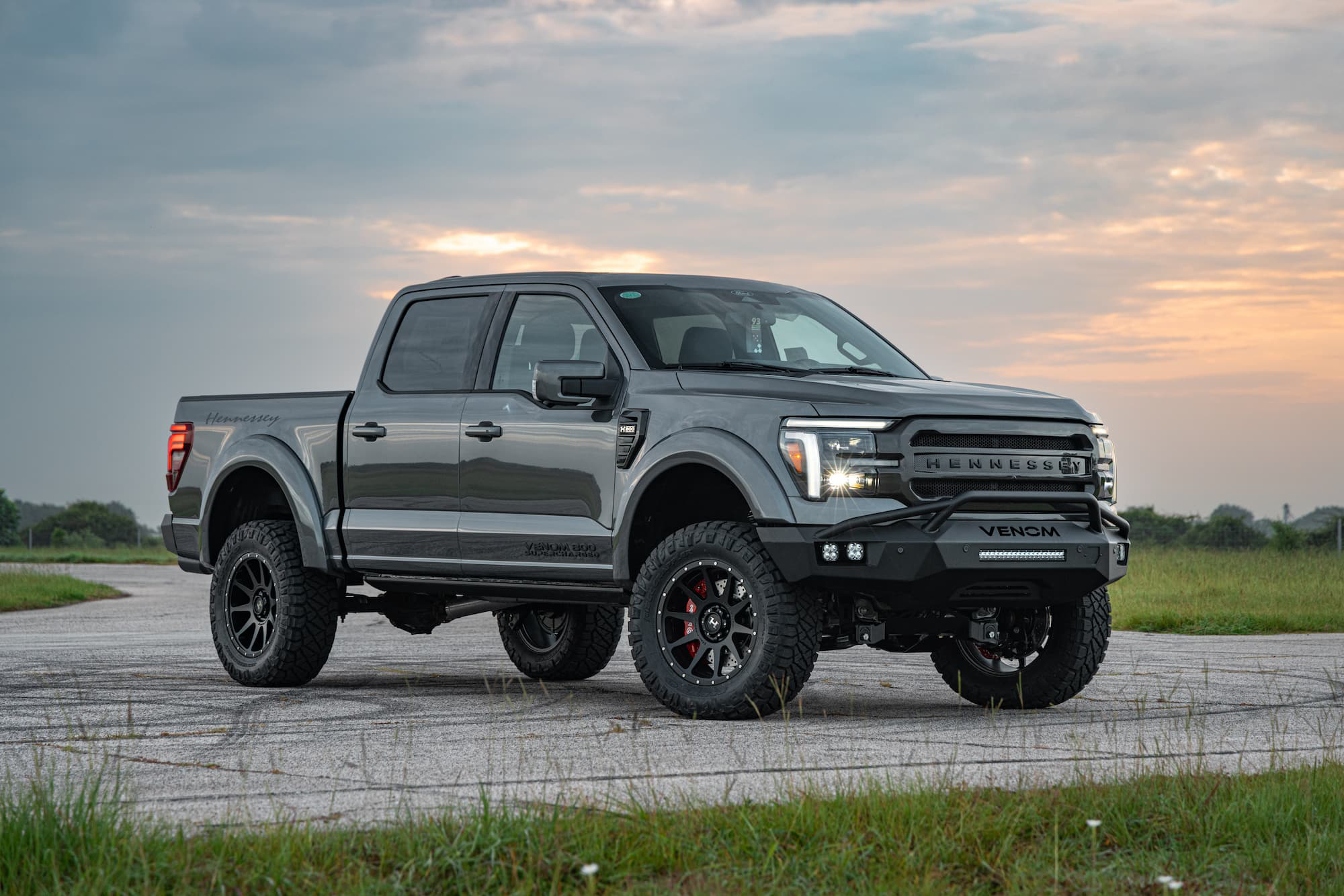

F-150

Is 100,000 miles too much for an F-150?


There is nothing magical about 100,000 miles that suddenly makes an F-150 a bad truck. A well-maintained F-150 with 120,000 miles may be a much stronger purchase than a neglected truck with 70,000 miles. For a used buyer, maintenance history, towing history, transmission behavior, fluid leaks, tire wear, suspension condition, previous damage and warning lights can tell you more than mileage alone.


What helps an F-150 reach high mileage?

The best way to help an F-150 reach high mileage is consistent maintenance. Stay on top of oil changes, fluids, filters, tires, brakes, and cooling system service, and pay attention to small issues before they become expensive repairs. If your truck spends a lot of time towing, idling, hauling heavy loads, or driving in hot and dusty conditions, your maintenance schedule should reflect that extra workload.

For New Mexico F-150 owners, dust, heat, mountain driving, and rough roads make regular inspections even more important. A high-mileage truck is not automatically a worn-out truck. In many cases, the difference between an F-150 that feels tired at 100,000 miles and one that keeps going well beyond that point comes down to how consistently it was maintained and how quickly small problems were addressed.
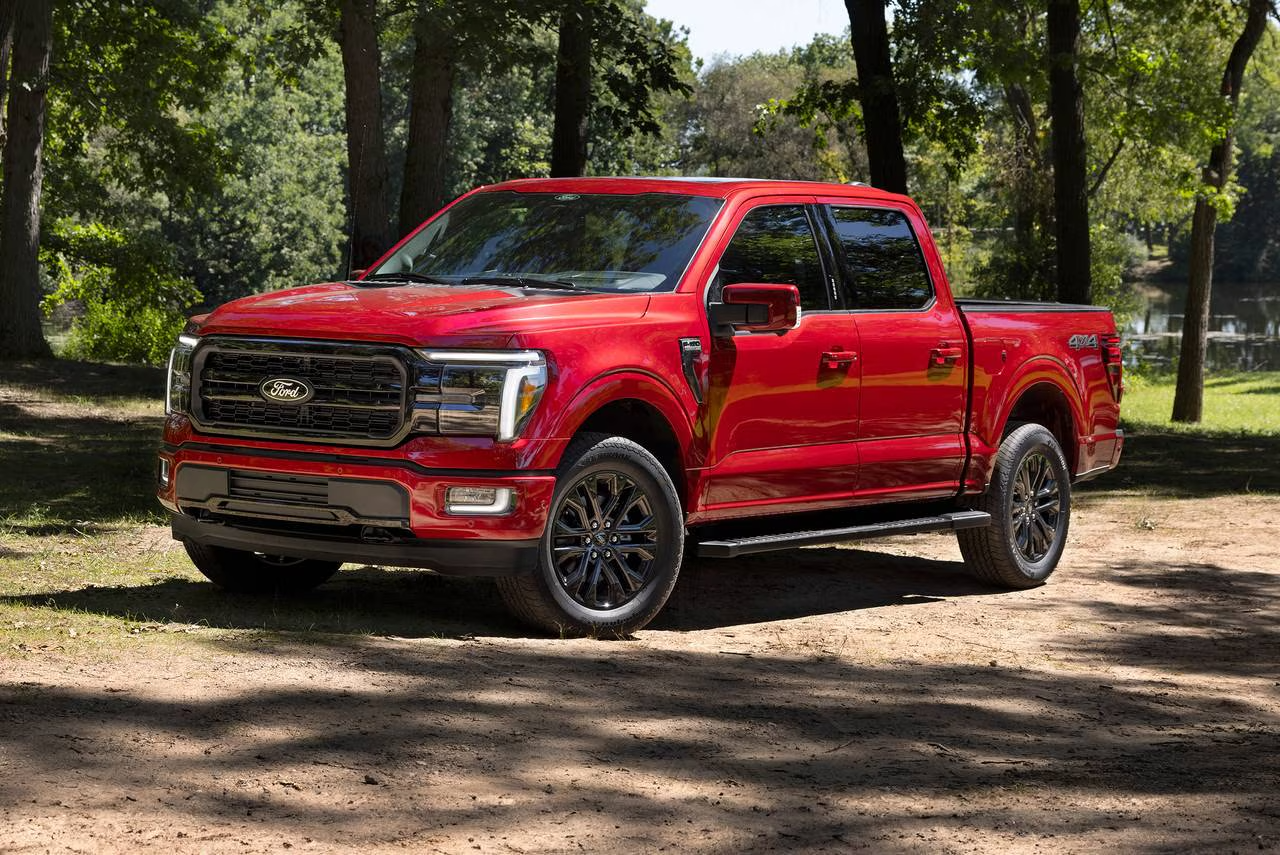


F-150-LARIAT

Does New Mexico Driving Affect F-150 Longevity?


New Mexico driving can expose an F-150 to a wide range of conditions. Albuquerque commuting may be easy duty, while towing into the mountains, driving on dusty roads, hauling equipment, or working in extreme heat can place significantly different demands on the same truck. None of those conditions mean an F-150 cannot have a long service life. They simply make it more important to maintain the truck based on how it is actually used rather than treating every mile the same.


Conclusion


So how long does an F-150 last? There is no single mileage number that determines when a truck is finished. Some F-150s will need major repairs before 200,000 miles, while others can remain useful well beyond that point. The biggest factors are how the truck was maintained, how hard it worked, and whether small problems were handled before they became expensive ones. If you are shopping for a used F-150 in Albuquerque or the surrounding New Mexico area, do not judge the truck by mileage alone. Look at the entire story.
F-150-POWERFORD

Recommended Posts

Bronco vs. Bronco Sport

2026 Ford Bronco vs. Bronco Sport: Which Is Better for New Mexico?

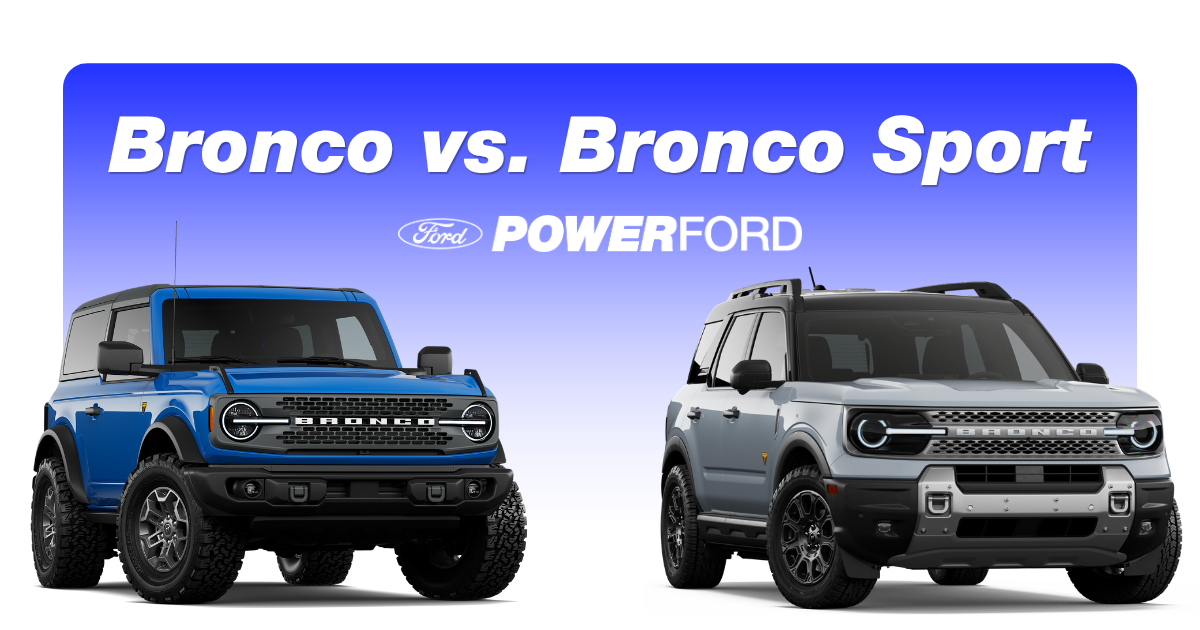
Bronco vs. Bronco Sport The 2026 Ford Bronco and Bronco Sport may share a name, but they are built for two very different types of drivers. The Bronco Sport is the better fit for someone who wants a comfortable everyday SUV with standard Four Wheel Drive and enough capability for camping, dirt roads, snow, and weekend adventures. The Bronco takes things further with body-on-frame construction, available serious off-road equipment, removable doors and roof options, and considerably more customization. The easiest way to think about it is this: the Bronco Sport is an everyday SUV that is ready for adventure, while the Bronco is an adventure vehicle that can still handle everyday life. Bronco Sport Capability Do not let the Bronco Sport name fool you into thinking it is simply a smaller Bronco with less capability. Every 2026 Bronco Sport comes standard with Four Wheel Drive, which already makes it an interesting choice for New Mexico drivers. Step up to the Bronco Sport Badlands, and you get a 2.0L EcoBoost engine, Advanced 4x4 with a twin-clutch rear drive unit, seven G.O.A.T. Modes, underbody protection, and available Sasquatch equipment. For someone who spends Monday through Friday driving around Albuquerque but wants to reach a campsite, trailhead, ski area, or forest road on the weekend, that may be more capability than they actually need. Bronco Capability The full-size Bronco is where the conversation changes from getting to the trail to actually taking on the trail. Buyers can choose more powerful EcoBoost engines, serious suspension and Four Wheel Drive hardware, available locking front and rear differentials with the Sasquatch Package, and even a manual transmission on certain configurations. You can also remove the doors and roof, which is something the Bronco Sport simply is not designed to do. If exploring difficult terrain is one of the reasons you are buying the vehicle in the first place, the Bronco gives you considerably more room to grow into that lifestyle. Daily Driving Bronco Sport There is also the part of ownership that happens when you are not climbing rocks. If most of your mileage comes from commuting around Albuquerque, highway driving, school runs, or errands, the Bronco Sport makes a strong case for itself. The 1.5L models are EPA-estimated at 25 MPG city and 30 MPG highway, while still giving you standard Four Wheel Drive. That combination makes the Bronco Sport particularly appealing for someone who wants outdoor capability without driving a more specialized off-road vehicle every day. Which Bronco is best for New Mexico? New Mexico is also a good place to appreciate the difference between these two SUVs because our driving conditions can change quickly. You can leave Albuquerque on dry pavement and find snow, mud, loose dirt, or rough roads as you gain elevation or head farther away from the city. For most drivers who occasionally encounter those conditions, the Bronco Sport provides a very useful combination of Four Wheel Drive capability and everyday comfort. For drivers who actively seek out tougher trails, deeper terrain, and more challenging off-road situations, that is where the additional hardware available on the Bronco begins to make sense. Bronco vs. Bronco Sport: Conclusion When choosing between the 2026 Ford Bronco and Bronco Sport, do not just ask which SUV is better. Ask how you actually spend your time behind the wheel. If most of your driving happens on pavement around Albuquerque, with occasional camping, dirt roads, snow, or weekend trips into the mountains, the Bronco Sport offers a strong balance of everyday comfort, standard Four Wheel Drive, fuel efficiency, and off-road capability. If off-road driving is a major part of your lifestyle and you want more ground clearance, stronger trail-focused hardware, removable doors and roof options, and greater customization, the full-size Bronco is likely the better fit. For New Mexico drivers, the right choice between the Bronco and Bronco Sport comes down to how much of your life happens on pavement and how much of it starts when the pavement ends.

Do You Really Need Four Wheel Drive in New Mexico?

Do You Really Need 4WD in New Mexico?

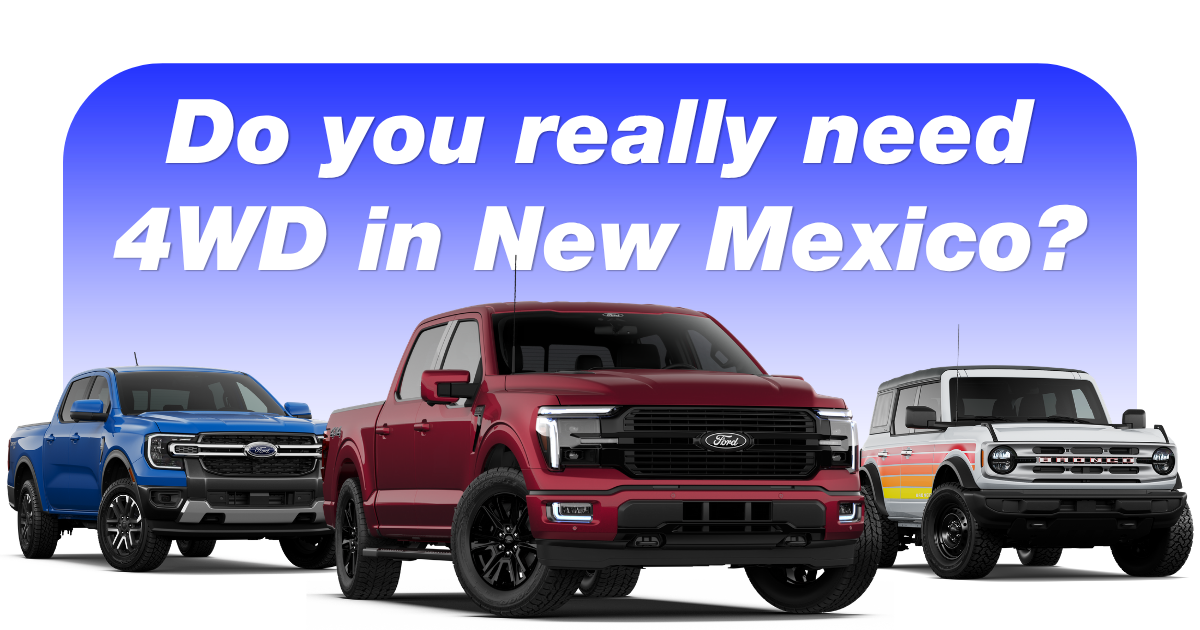
Living in New Mexico does not automatically mean you need Four Wheel Drive. If most of your driving consists of commuting around Albuquerque, running errands, and traveling on maintained highways, a two-wheel-drive vehicle with good tires may be all you need. However, if your lifestyle regularly takes you into the mountains, onto dirt roads, through snow, or farther off the pavement, Four Wheel Drive can quickly become one of those features you are glad you have. The real question is not whether Four Wheel Drive is better. The question is whether your day-to-day driving gives you a reason to use it. When Does Four Wheel Drive Make Sense in New Mexico? New Mexico has a little bit of everything. Albuquerque can be dry and sunny while roads farther north are dealing with snow and ice. Summer monsoon storms can also turn otherwise manageable roads into muddy or slick conditions very quickly. Four Wheel Drive makes the most sense for drivers who regularly: Go camping or hunting on dirt and forest roads. Travel into the mountains during the winter. Drive through snow, mud, sand, or loose terrain. Tow recreational equipment into areas where road conditions may be unpredictable. Spend time on job sites or rural roads. Want additional off-road capability for weekend recreation. If most of your driving never puts you in those situations, you may not need the additional capability. Four Wheel Drive Does Not Replace Good Tires This might be the most important thing to understand: Four Wheel Drive can help your vehicle gain traction and keep moving, but it does not make snow, ice, or wet pavement disappear. Your tires still play a major role in how well your vehicle accelerates, turns, and stops. The New Mexico Department of Transportation recommends checking your tires before winter travel, reducing your speed in snow and ice, increasing following distance, and checking road conditions before heading out. During monsoon conditions, NMDOT also recommends slowing down, avoiding cruise control on slippery roads, and never attempting to cross a flooded roadway. In other words, Four Wheel Drive is a great tool. It is not a substitute for good tires and good judgment. What Does Ford Four Wheel Drive Give You? The advantage of buying a modern Ford with Four Wheel Drive goes beyond simply sending power to all four wheels. On the 2026 Ford F-150, available Four Wheel Drive configurations can include selectable drive modes for conditions such as Slippery, Deep Snow and Sand, and Mud and Ruts. Models such as the F-150 Tremor take that capability even further with standard Four Wheel Drive, an electronic locking rear differential, off-road suspension, all-terrain tires, and additional trail-focused drive modes. The 2026 Ford Ranger also offers Four Wheel Drive across the lineup, with Four Wheel Drive standard on Ranger Raptor. Depending on the model and equipment, Ranger drivers can access terrain-focused drive modes designed for conditions such as mud, sand, rocks, and other off-road situations. That matters in New Mexico because the road you start on is not always the road you finish on. So Do You Actually Need Four Wheel Drive? If you spend nearly all of your time driving around Albuquerque on paved roads, you probably do not need Four Wheel Drive simply because you live in New Mexico. If your weekends involve camping, hunting, fishing, skiing, mountain roads, forest roads, or exploring places where pavement eventually disappears, Four Wheel Drive becomes much easier to justify. It really comes down to where you drive when you are not commuting. You may only need Four Wheel Drive a handful of times each year, but those handful of times may be exactly why you bought it. At Power Ford, we would rather help you determine how you actually use your vehicle than automatically tell you that you need more equipment. Compare available two-wheel-drive and Four Wheel Drive Ford vehicles at MyFordDealer.com, or visit Power Ford in Albuquerque and let us help you decide which configuration makes the most sense for your lifestyle.

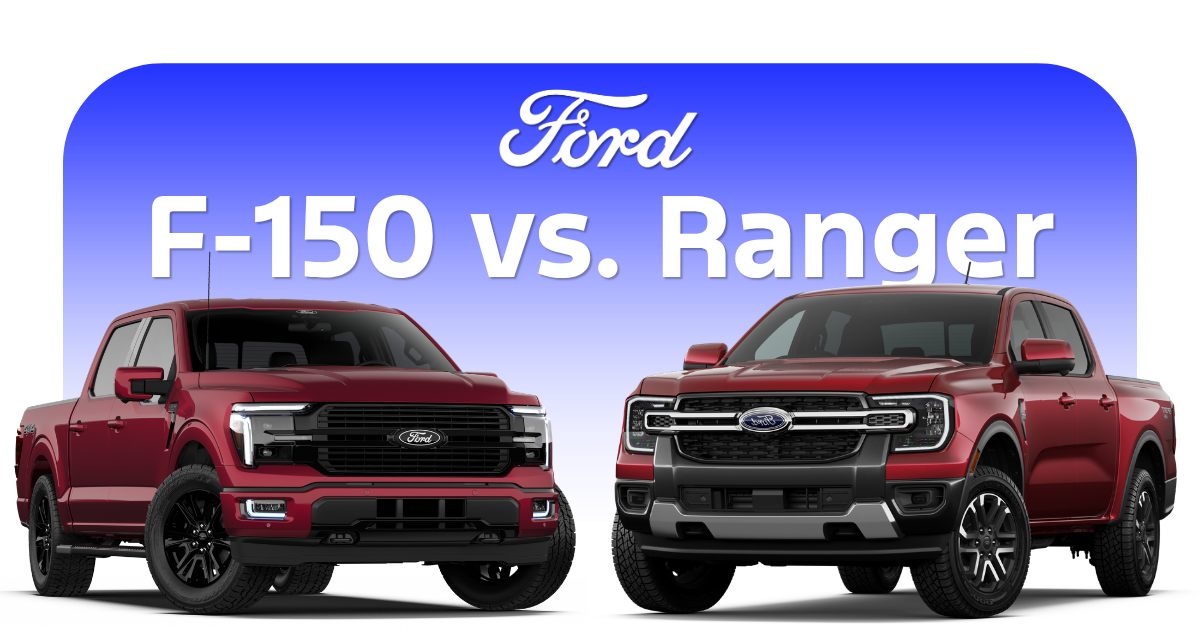
F-150 VS. Ranger

2026 Ford F-150 vs. Ranger : Best Truck for New Mexico?

If you want a more agile midsize truck for daily Albuquerque driving, navigating city parking, exploring off-road trails, and handling moderate towing without routinely needing full-size capability, the 2026 Ford Ranger may be the better truck for you. Its smaller footprint makes it easier to maneuver while still giving you genuine truck capability for weekday driving and weekend adventures throughout New Mexico. If you regularly tow larger trailers, carry heavier payloads, or need one truck to handle work, family, and recreation, the 2026 Ford F-150 starts to become the stronger choice. When properly equipped, the F-150 offers up to 13,500 pounds of available towing capacity, compared with up to 7,500 pounds for most properly equipped Ranger configurations. That additional capability can make a major difference when pulling a larger travel trailer, boat, or work trailer. F-150 vs. Ranger Size: Does Bigger Always Mean Better? Towing capacity is not the only number to consider. Payload is just as important, especially when you are loading the truck with passengers, camping equipment, tools, or recreational gear while also pulling a trailer. The 2026 F-150 offers up to 2,440 pounds of available payload capacity when properly configured, while the Ranger offers up to 1,767 pounds. That doesn’t automatically make the F-150 the better truck. It comes back to how much capability you actually need. The Ranger gives many drivers plenty of useful towing and hauling capability in a smaller package, while the F150 gives buyers considerably more room for heavier loads and larger trailers. What Trim Level Suits You? If you like having options, the 2026 F-150 has the advantage. Buyers can choose from eight trim levels: XL, STX, XLT, Lariat, Tremor, King Ranch, Platinum, and Raptor. The lineup ranges from practical work trucks and comfortable daily drivers to luxury and serious off-road performance. Depending on the trim and configuration, buyers can also choose from EcoBoost engines, the traditional 5.0L V8, or the available 3.5L PowerBoost Full Hybrid V6. This gives F-150 buyers more flexibility to prioritize towing, performance, efficiency, comfort, or off-road capability. The 2026 Ranger keeps things simpler with four trim levels: XL, XLT, Lariat, and Raptor. XL focuses on capability and value, XLT adds more everyday comfort and technology, Lariat brings a more premium experience, and Raptor is built for high-performance off-road driving. Ranger buyers can choose from the 2.3L EcoBoost, the available 2.7L EcoBoost V6 on select trims, or the 3.0L EcoBoost V6 in the Ranger Raptor. The Ranger doesn’t offer a V8 or hybrid option, but its more focused lineup makes it easier for buyers who want genuine truck capability without needing the size or extensive configuration choices of the F-150. So Which Truck Is Best for You? Both the 2026 Ford Ranger and 2026 Ford F-150 are well suited for life in New Mexico. Both offer available Four Wheel Drive, strong towing and hauling capability, off-road options, and the versatility to handle changing road conditions, mountain trips, rougher terrain, and everyday driving around Albuquerque. Depending on the trim you choose, both trucks can also offer impressive interior technology, comfort, driver assistance features, and premium amenities. The biggest differences ultimately come down to size, maximum capability, powertrain choices, and the number of configurations available. Choosing between them really comes back to one question: "How much truck do you actually need"? If your week consists of commuting around Albuquerque and your weekends involve camping, trails, hunting, fishing, outdoor recreation, and occasional towing, the Ranger may give you everything you need in a more manageable midsize package. If your day-to-day life includes heavier towing, larger payloads, more passengers, work equipment, or simply wanting more capability available when you need it, the F-150 may be the better fit. Neither truck is universally better. The right truck is the one that fits what you actually do every day and where you want to go next. Visit Power Ford in Albuquerque to drive the 2026 Ranger and F-150 back-to-back, or explore our current Ford truck inventory at MyFordDealer.com and decide which one fits your lifestyle.