Blog

All Albuquerque Ford Dealer Albuquerque Area Ford Albuquerque Ford Service Power Ford Service Albuquerque Used Cars Bronco F150 Ford Trucks & SUVs Explorer EV Safety Awards Performance Bronco Sport Finance Ford Blue Advantage Certified Maverick Mustang Rio Rancho Expedition Ranger Super Duty Comfort Fleet Interior Tires Mustang Mach-E
2026 Ford Super Duty

2026 Ford Super Duty: Capability for Demanding Work

The 2026 Ford Super Duty lineup starts where lighter-duty truck needs end. F-250, F-350 and F-450 configurations give buyers different combinations of towing, payload, body style and axle capability for work that demands more than an F-150 is designed to handle. Gas and Power Stroke diesel engine choices let you build around the job. A properly configured Super Duty can tow up to 40,000 pounds with a gooseneck trailer, while another specific configuration provides up to 8,000 pounds of available payload. Features such as available Onboard Scales with Smart Hitch and trailer-assist technology can make complex work easier to manage. The right Super Duty starts with real weights and operating needs. Explore current Ford trucks at Power Ford and compare the exact F-250, F-350 or F-450 configuration your work requires.

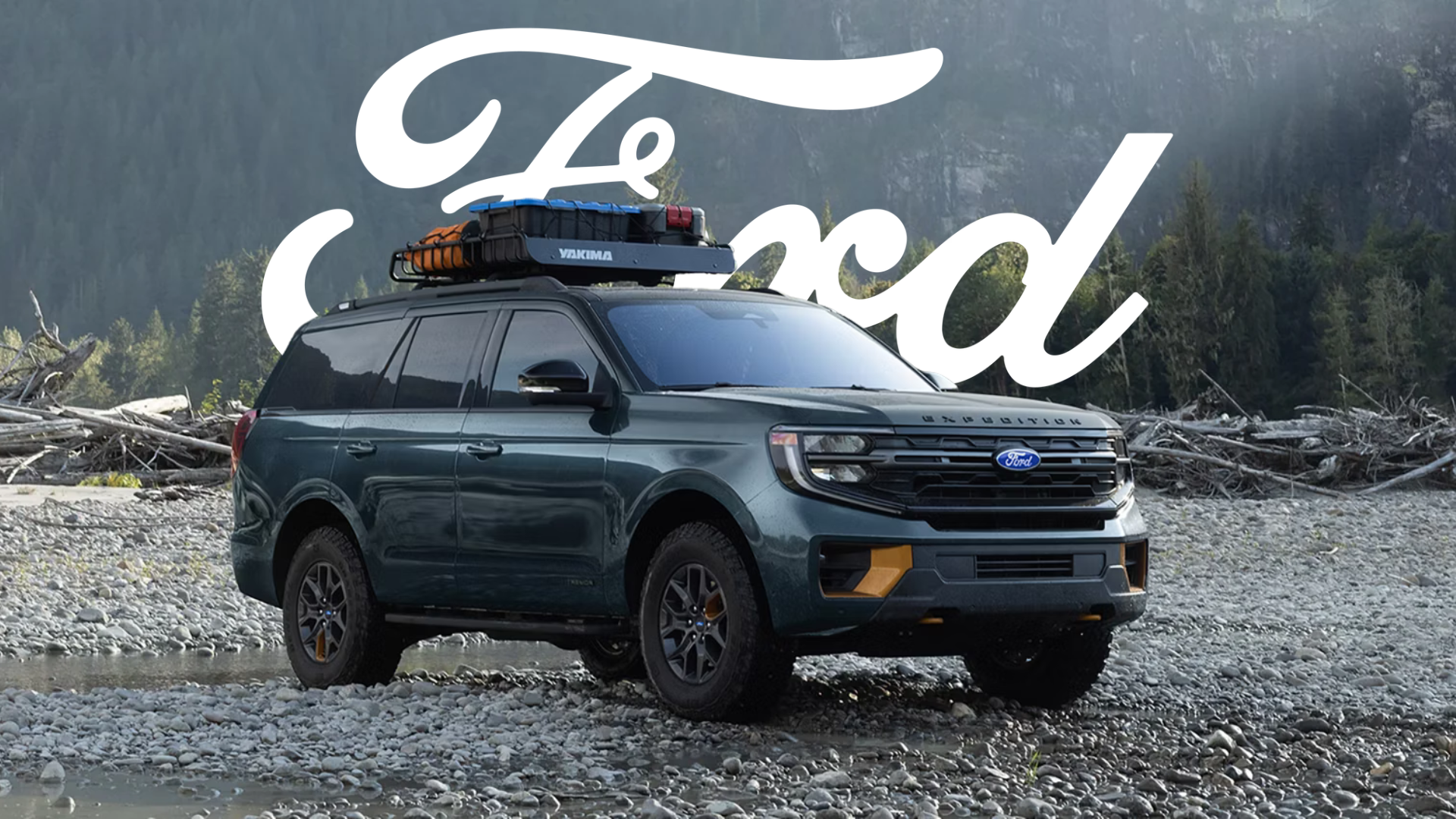
2025 Ford Expedition

2026 Ford Expedition: When Your Family Needs More SUV

The 2026 Ford Expedition is for families whose passengers, cargo, and trailers have outgrown a smaller three-row SUV. It offers seating for seven or eight, depending on configuration, plus a choice between the standard-length body and the longer Expedition MAX. Expedition MAX provides up to 37.4 cubic feet of cargo room behind the third row, making it especially useful when every seat and the luggage area are needed at the same time. Properly equipped Expedition configurations offer up to 9,600 pounds of available towing capacity, while the Ford Split Gate creates a useful loading surface at the rear. Choose Expedition when full-size space will solve a recurring need, not just an occasional one. Explore current Ford vehicles at Power Ford and compare standard and MAX configurations in person.

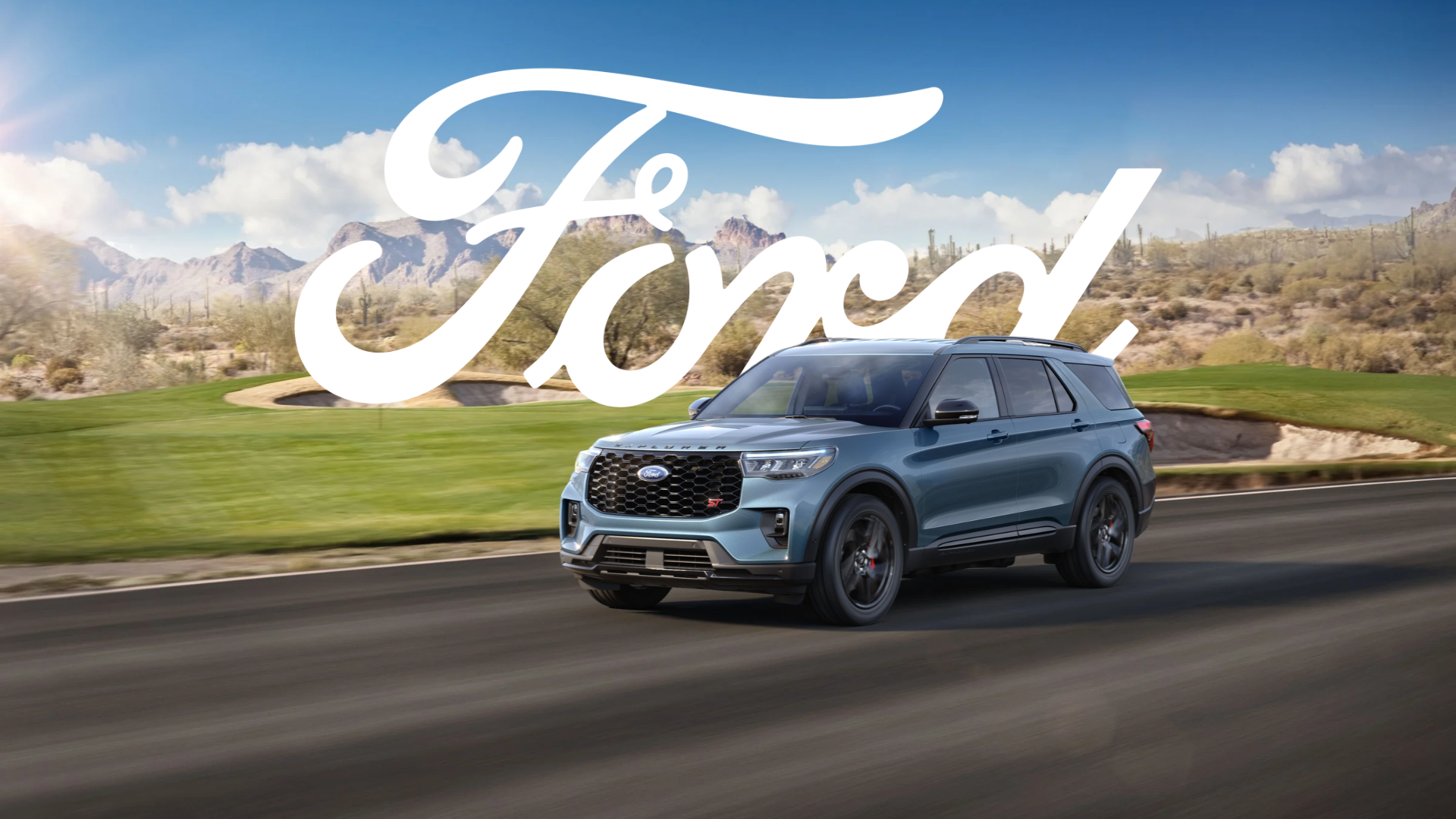
2026 Ford Explorer

2026 Ford Explorer: Three Rows Without Full-Size Bulk

The 2026 Ford Explorer is a strong fit for families that need three rows but do not want the size of a full-size SUV. Depending on the seating configuration, it carries six or seven people and provides up to 85.8 cubic feet of cargo space. Every Explorer includes a Class III Trailer Tow Package and can tow up to 5,000 pounds when properly equipped. The lineup also lets you choose a clear personality: Active for everyday comfort, ST-Line for sport-inspired design, Tremor for trail-focused hardware, ST for stronger performance or Platinum for premium features. Explorer works because it can adapt as the day changes from commuting to school pickup to a weekend trip. Compare current Ford options at Power Ford and find the seating, drivetrain and trim that fit your family.

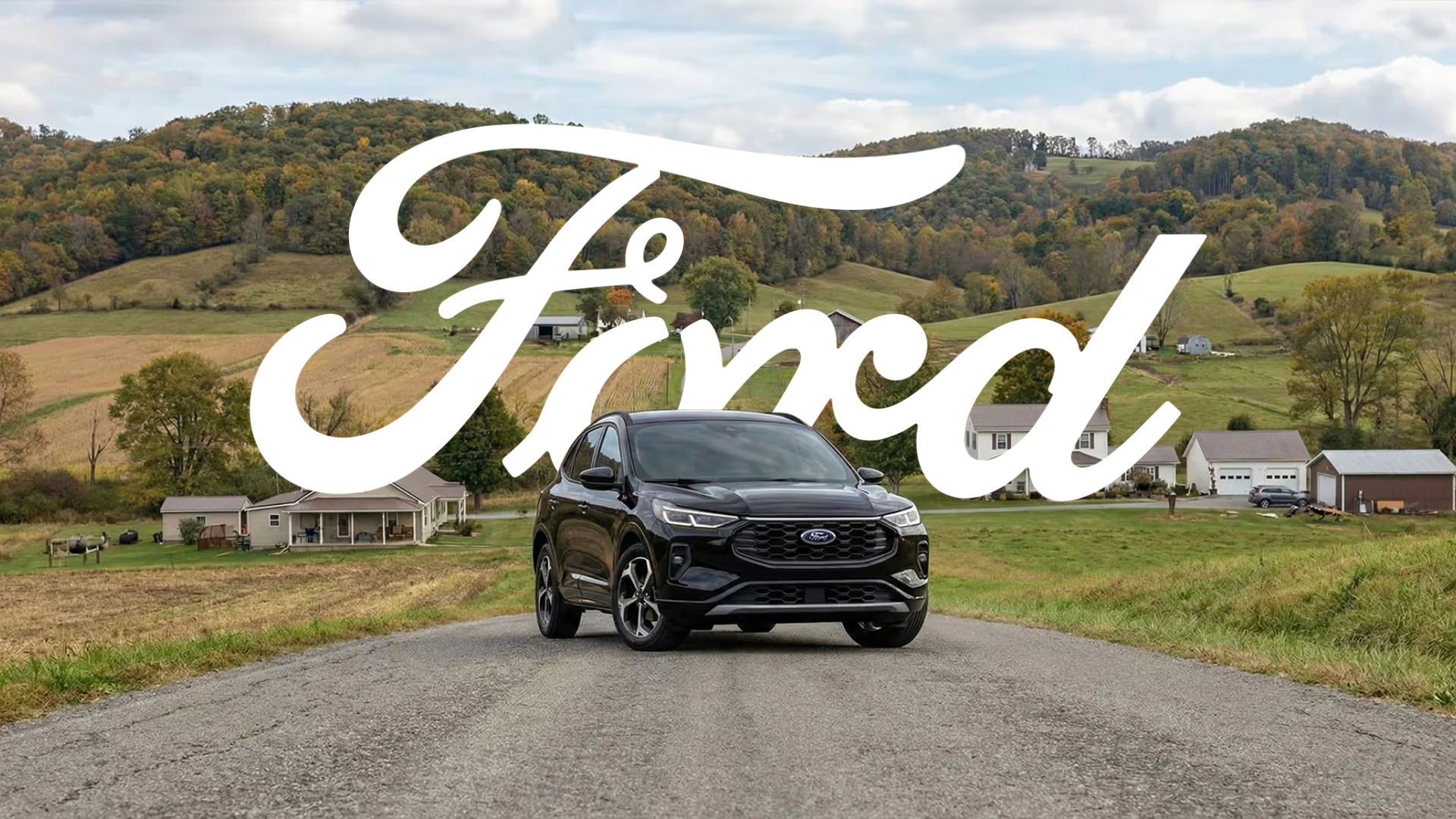
2026 Ford Escape

2026 Ford Escape: Four Powertrain Choices, One Flexible SUV

The 2026 Ford Escape gives you something many compact SUVs do not: several very different ways to power the same practical vehicle. The lineup includes 1.5-liter and 2.0-liter EcoBoost engines, a hybrid, and a plug-in hybrid, so you can prioritize simplicity, performance, fuel-conscious driving, or electric commuting capability. EcoBoost models provide up to 65.4 cubic feet of cargo space with the rear seats folded. Hybrid and plug-in hybrid models offer up to 60.8 cubic feet. Available all-wheel drive on eligible configurations adds another option for drivers who regularly face changing road or weather conditions. Escape makes sense when you want useful cargo room and an easy-to-live-with size without buying more SUV than you need. Explore current Ford vehicles at Power Ford and compare the powertrains that fit your routine.

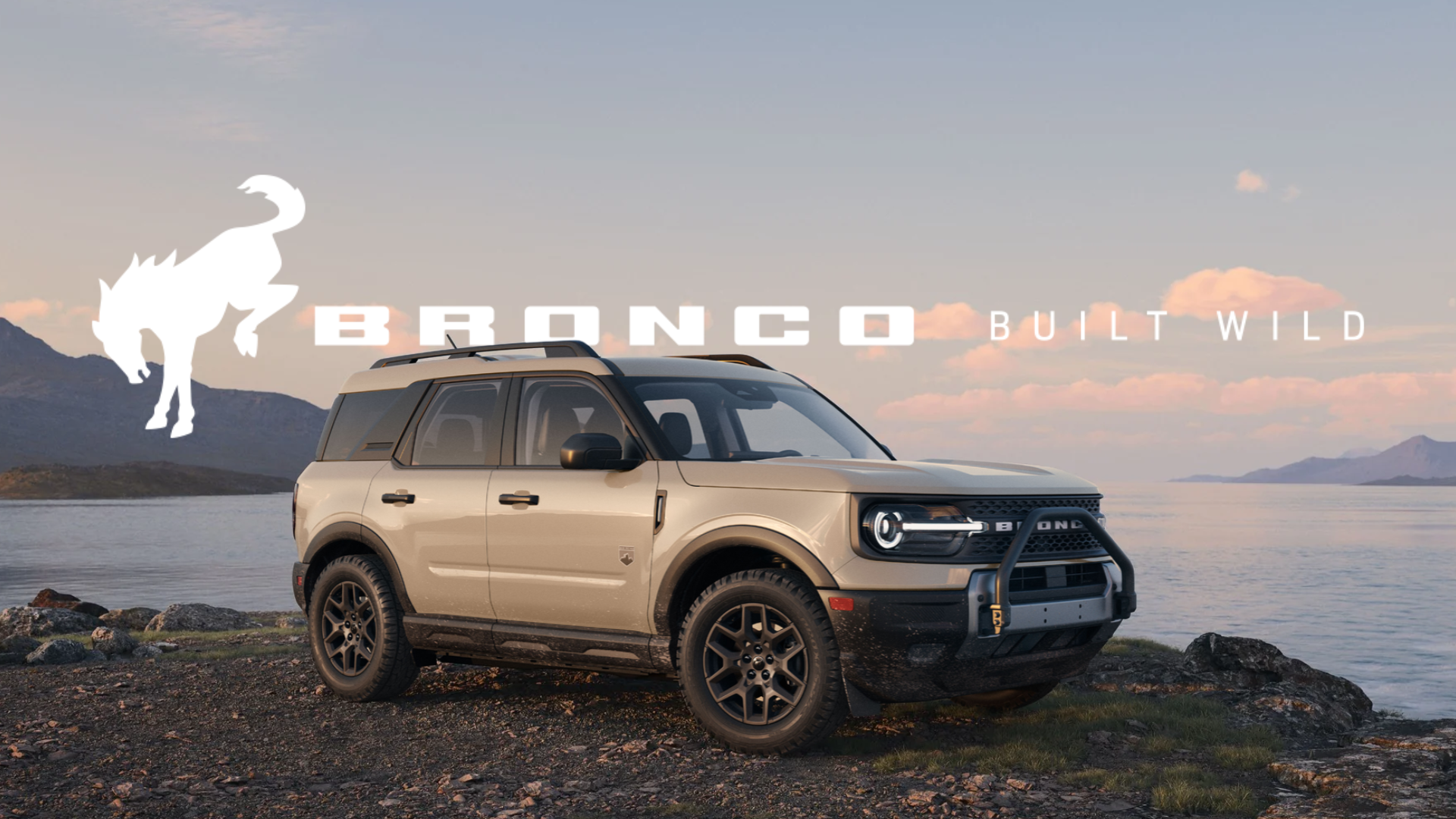
2026 Ford Bronco Sport

2026 Ford Bronco Sport: Everyday Size, Weekend Capability

The 2026 Ford Bronco Sport is built for drivers who want an SUV that feels manageable during the week but is ready for more adventurous plans. Every model comes with four-wheel drive, and its upright design creates useful passenger and cargo space without becoming a full-size vehicle. Big Bend, Heritage and Outer Banks balance daily comfort with five G.O.A.T. Modes for changing conditions. Badlands adds a 2.0-liter EcoBoost engine, advanced 4x4, seven G.O.A.T. Modes and additional trail-focused hardware. The right choice depends on how often your travel actually leaves pavement. If you want an SUV for commuting, camping, and exploring New Mexico, the Bronco Sport deserves a closer look. Compare current Ford options at Power Ford and choose the equipment that matches your plans.

2026 Ford F-150

2026 Ford F-150: Built Around the Job You Actually Do

The 2026 Ford F-150 is not one truck with a few trim choices. It is a wide range of cabs, beds, drivetrains, engines, and equipment packages that can be shaped around commuting, towing, work, or recreation. Powertrain choices include EcoBoost V6 engines, an available 5.0-liter V8 and the available 3.5-liter PowerBoost full hybrid. Properly equipped configurations can tow up to 13,500 pounds, while available Pro Power Onboard can supply electricity for compatible tools, equipment or recreation. The important step is matching those features to the exact truck rather than choosing from the maximum numbers alone. Start with what you carry, what you tow, and how often the truck works. Compare current Ford options at Power Ford and verify the window sticker and payload label before deciding.

2026 Ford Maverick Hybrid vs. EcoBoost: Which Should You Choose?

2026 Ford Maverick Hybrid vs. EcoBoost: Which Should You Choose?

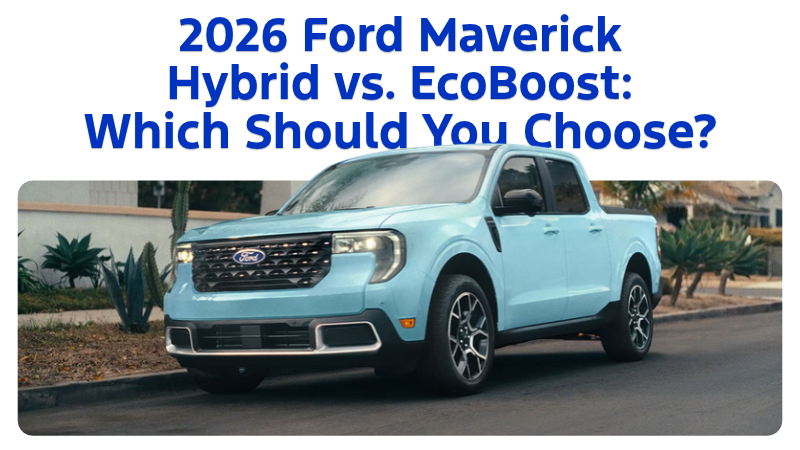
Choose the 2026 Ford Maverick Hybrid if everyday fuel efficiency is your priority. Choose the available 2.0-liter EcoBoost if you want stronger acceleration or one of the Maverick’s specialized performance and off-road models. If towing is the deciding factor, either powertrain can reach 4,000 pounds in the right all-wheel-drive configuration with the available 4K Tow Package. The engine is only one part of the decision. Front-wheel drive, all-wheel drive, trim, towing equipment and how you actually use the truck can change which Maverick makes more sense. Why Choose the 2026 Maverick Hybrid? The 2.5-liter hybrid is standard on Maverick XL, XLT and Lariat. Ford rates the front-wheel-drive version at an EPA-estimated 42 mpg city, 35 mpg highway and 38 mpg combined. Actual mileage varies, but the city figure shows why the hybrid is an appealing fit for commuting, errands and frequent stop-and-go driving. The hybrid uses a Power-Split Electric CVT rather than the EcoBoost model’s conventional automatic transmission. Its electric motor can assist the gasoline engine during low-speed driving and acceleration, which gives the truck a different feel from a traditional gas powertrain. Hybrid no longer means front-wheel drive only. The 2026 Maverick offers hybrid all-wheel drive, although availability depends on trim. That gives buyers a way to combine the hybrid powertrain with additional traction for changing road and weather conditions. Choose the hybrid if your priorities are: Fuel-conscious daily driving A truck bed without moving to a larger pickup Front-wheel-drive or all-wheel-drive flexibility, depending on trim Occasional towing within the exact configuration’s rating All-wheel drive can help the truck distribute power when traction is limited, but it does not replace suitable tires, safe speed or winter-driving judgment. Why Choose the 2.0-Liter EcoBoost? The available 2.0-liter EcoBoost is a turbocharged gas engine producing 250 horsepower and 280 lb-ft of torque. It uses an eight-speed automatic transmission in mainstream XL, XLT and Lariat configurations. Compared with the hybrid, the EcoBoost is the better starting point for drivers who put stronger acceleration ahead of maximum city fuel economy. It is also the required engine for the Maverick Lobo and Tremor, two models designed around very different uses. Lobo pairs the EcoBoost with advanced four-wheel drive, a seven-speed quick-shift transmission, torque-vectoring capability and street-performance tuning. Tremor uses the EcoBoost with advanced four-wheel drive, an eight-speed automatic transmission, off-road-tuned suspension and additional trail-focused hardware. Choose the EcoBoost if your priorities are: Stronger horsepower and torque A more traditional automatic-transmission driving feel The street-performance focus of Maverick Lobo The off-road hardware of Maverick Tremor Do not choose EcoBoost only because you assume the hybrid cannot tow or use all-wheel drive. For 2026, both powertrains can support those needs in specific configurations. Can the Maverick Hybrid Tow as Much as the EcoBoost? Yes, when properly equipped. The 2026 Maverick has a standard maximum towing capacity of 2,000 pounds. Hybrid AWD and EcoBoost AWD configurations can tow up to 4,000 pounds when equipped with the available 4K Tow Package. The package adds more than a hitch. Ford lists a Class III receiver, four- and seven-pin connections, a trailer brake controller, an upgraded cooling fan, and powertrain-specific cooling equipment. The hybrid receives an auxiliary transmission oil cooler, while the gas model receives a higher-capacity radiator. This is why shoppers should verify the window sticker rather than assuming any AWD Maverick can tow 4,000 pounds. Lobo and Tremor are rated for up to 2,000 pounds, even though both use the EcoBoost engine and advanced four-wheel drive. Their hardware is aimed at street performance or off-road use, not maximum trailer weight. Trailer weight must include the trailer and everything loaded into it. Passengers, cargo, and tongue weight also consume the truck’s available payload. Confirm the exact truck’s towing specification and driver-side doorjamb payload label before choosing a trailer. Is Hybrid or EcoBoost Better for New Mexico? For an Albuquerque commuter who wants a bed for weekend projects, bikes or camping equipment, the hybrid’s city efficiency is the stronger advantage. Hybrid AWD adds traction flexibility for buyers whose travel includes winter weather, unpaved roads, or regular elevation changes. EcoBoost makes more sense when faster power delivery is part of the appeal or when Lobo, Tremor or an available off-road package matches the intended use. A buyer who regularly travels rougher routes should compare complete hardware, including tires, suspension, underbody protection and drivetrain, instead of treating engine choice as a substitute for vehicle setup. Elevation also matters when towing. Ford notes that performance can decrease at high altitude when a vehicle is heavily loaded or pulling a trailer. To match performance as perceived at sea level, Ford’s towing guidance recommends reducing gross vehicle weight and gross combined weight by 2 percent for every 1,000 feet of elevation. Buyers who plan to tow through mountain routes should leave operating margin rather than selecting a configuration that only works at its limit on paper. Which 2026 Maverick Powertrain Is Right for You? The hybrid is the practical recommendation for most efficiency-focused Maverick buyers. It is especially well suited to daily driving, and AWD is available for shoppers who need more traction flexibility. The EcoBoost is the better choice when stronger output, Lobo’s street-performance setup or Tremor’s off-road hardware is the reason for buying the truck. If towing is the deciding factor, focus on drivetrain and equipment rather than engine alone. A properly equipped hybrid AWD can match the EcoBoost AWD’s 4,000-pound maximum, while certain EcoBoost models remain limited to 2,000 pounds. Compare the window stickers and drive both powertrains before deciding. View current Ford Maverick options at Power Ford, or contact Power Ford to compare configurations in Albuquerque.

2026 Ford Bronco Sport G.O.A.T. Modes Explained

2026 Ford Bronco Sport G.O.A.T. Modes Explained

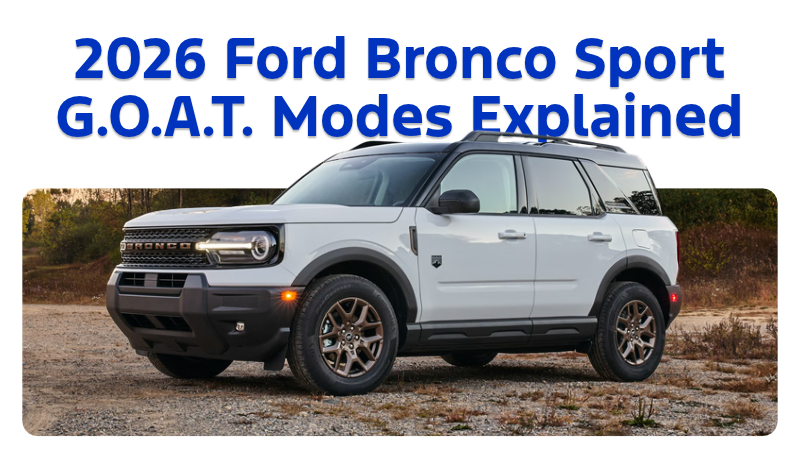
The 2026 Ford Bronco Sport uses G.O.A.T. Modes, short for Goes Over Any Type of Terrain, to adjust how the vehicle responds to different driving conditions. Big Bend, Heritage, and Outer Banks include five modes: Normal, ECO, Sport, Slippery, and Off-Road. Badlands adds Rock Crawl and Rally for seven modes total. These settings can change accelerator response, transmission behavior, traction and stability controls, and aspects of the four-wheel-drive system. They do not create more tire grip, ground clearance or underbody protection. The right mode helps the Bronco Sport use its existing hardware more effectively, but the driver still has to choose a safe speed and a route that fits the vehicle. What Does Each Bronco Sport G.O.A.T. Mode Do? Each mode gives the Bronco Sport a different set of responses. The useful question is not which mode sounds most capable. It is which one matches the surface under the tires. Normal Mode: The Everyday Setting Normal is the starting point for ordinary paved-road driving. It balances accelerator response, shifting and vehicle controls for typical commuting and highway travel. For most drives around Albuquerque, Normal is the mode to leave selected. There is no need to choose a specialized setting simply because the Bronco Sport has standard 4x4. ECO Mode: A Calmer Response ECO adjusts vehicle operation to prioritize fuel efficiency. Drivers may notice a less aggressive response than Sport mode because the vehicle is trying to make smoother use of power. ECO does not guarantee a particular fuel-economy result. Speed, acceleration, traffic, temperature, elevation, tires, and cargo still affect fuel use. Think of it as a setting that supports efficient driving habits, not a substitute for them. Sport Mode: Quicker On-Road Response Sport increases accelerator responsiveness and holds lower transmission gears longer to provide stronger acceleration. It is designed to make on-road driving feel more immediate and engaging. That can be useful when a driver wants sharper response, but it is not an off-road mode, and it does not increase the vehicle’s traction limits. More responsive controls still require smooth inputs, especially on wet, snowy or loose surfaces. Slippery Mode: Snow, Ice and Slick Surfaces Slippery mode lowers accelerator responsiveness, changes transmission shift points, and adjusts traction and stability controls to help reduce wheel spin. Ford identifies snow, ice, and firm surfaces covered by loose or slippery material as appropriate conditions. This mode can be useful when New Mexico weather changes quickly or a shaded mountain road remains icy. It does not shorten stopping distance or make unsuitable tires suitable for winter conditions. Leave more space, reduce speed, and follow tire or chain requirements where they apply. Ford also cautions against using Slippery mode on dry pavement because certain four-wheel-drive settings can create driveline bind and damage. Return to Normal when the slick conditions end. Off-Road Mode: Loose and Uneven Terrain Off-Road mode is intended for loose surfaces such as sand and deep snow. Ford describes it as using a more aggressive accelerator response to help maintain momentum. This is not the right setting for an ordinary paved road. The 2026 Bronco Sport owner’s manual advises against selecting an off-road drive mode on paved public roads. Before leaving pavement, check the route, surface, tire condition, clearance, and weather rather than treating the mode name as permission to continue. What Do Rock Crawl and Rally Add on Badlands? The 2026 Bronco Sport Badlands includes two modes that are not part of the five-mode system on Big Bend, Heritage or Outer Banks. Rock Crawl is intended for muddy or uneven terrain where slower, controlled progress matters. Rally is intended for higher-speed driving on soft surfaces. Both are specialized off-road settings, not upgrades for routine pavement driving. The difference goes beyond software. Badlands uses a 2.0-liter EcoBoost engine, advanced 4x4 with a twin-clutch rear drive unit, HOSS 2.0 off-road suspension, all-terrain tires, and underbody protection as standard equipment. Its Terrain Management System also includes a differential-lock function. Those hardware differences are why buyers should compare complete configurations rather than choosing a trim only because it has two additional mode names. Outer Banks can also be equipped with the available Sasquatch Outer Banks Package, which adds advanced 4x4 and other off-road hardware. Package content can change what a specific vehicle can do, so confirm the window sticker rather than assuming every Outer Banks is equipped the same way. Which Modes Fit Common New Mexico Driving? A practical starting point looks like this: - Use NORMAL for dry pavement, daily commuting, and most highway travel. - Use ECO when you want a calmer response that supports efficient driving. - Use SPORT when you want more responsive on-road acceleration. - Use SLIPPERY for snow, ice or a firm surface covered in loose material, then return to Normal on dry pavement. - Use OFF-ROAD only when the surface and route call for it, not on paved public roads. - Use ROCK CRAWL OR RALLY on Badlands only for the specialized off-road conditions each mode is designed to address. Conditions can change within the same trip. A drive may begin on dry Albuquerque pavement, cross a snowy mountain section and end on a maintained dirt road. Select the mode for the current surface, not for the trip’s destination. Do You Need Five G.O.A.T. Modes or Seven? Most Bronco Sport shoppers do not need seven modes. The five-mode system already covers everyday pavement, efficiency-focused driving, a sportier response, slippery conditions, and loose-surface travel. Badlands makes sense when you expect more demanding off-pavement use and want its advanced 4x4 system, additional off-road hardware, and specialized controls. If your Bronco Sport will spend most of its time commuting with occasional camping or maintained dirt-road travel, Big Bend, Heritage, or Outer Banks may provide the modes you will actually use. The best way to decide is to compare the controls and hardware, not just the trim names. Review the window sticker, inspect the tires and underbody equipment, and drive the configurations that fit your routine. Compare current Bronco Sport options at Power Ford, or contact Power Ford to arrange a closer look in Albuquerque.

2026 Ford F-150 Engines Compared: EcoBoost, V8 or PowerBoost?

2026 Ford F-150 Engines Compared: EcoBoost, V8 or PowerBoost?

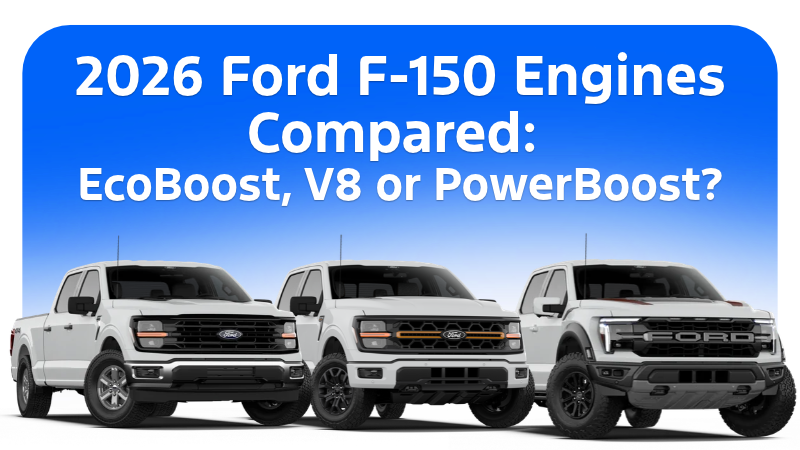
Choosing a 2026 Ford F-150 engine is less about finding one “best” option and more about matching the truck to the work you actually do. The 2.7-liter EcoBoost V6 is a strong everyday choice. The 3.5-liter EcoBoost V6 is the towing leader. The 5.0-liter V8 combines traditional V8 character with serious capability. The available PowerBoost full hybrid adds strong performance and useful onboard power. For New Mexico drivers, the right answer also depends on elevation, trailer weight, passengers, cargo, and how often the truck will work near its limits. Here is how the four mainstream F-150 powertrains compare. Start With Your Real Workload Before choosing an engine, write down what the truck needs to carry and tow on its busiest day, not just during a normal commute. For towing, consider the trailer’s loaded weight rather than its empty weight. Include water, fuel, tools, recreational equipment and anything else that will travel inside it. Trailer tongue weight, people and cargo in the truck all use part of the F-150’s available payload. Engine choice matters, but it does not determine capability by itself. Cab, bed, drivetrain, axle ratio, equipment and other factors can change a truck’s rating. Maximum towing and payload figures are separate ratings and should not be treated as if one configuration achieves every maximum at the same time. Always confirm the exact truck’s specifications and check the payload label on the driver-side doorjamb. Is the 2.7-Liter EcoBoost V6 Enough? For many F-150 shoppers, yes. The 2.7-liter EcoBoost V6 produces 325 horsepower and 400 lb-ft of torque. When properly equipped, it can tow up to 8,400 pounds. That makes it a practical fit for drivers who primarily commute, handle home projects and occasionally tow a smaller boat, utility trailer or recreational trailer. It offers substantially more torque than its displacement might suggest, without requiring shoppers to step up to one of the higher-output engines. Choose the 2.7-liter EcoBoost if your priorities are: - Everyday driving with useful truck capability - Occasional light or moderate towing - A lower engine requirement than a maximum-towing build - Strong low-end torque in a practical configuration The limitation is straightforward. If your trailer and cargo regularly approach the truck’s rating, a higher-capacity configuration can provide more operating margin. Which F-150 Engine Is Best for Maximum Towing? The available 3.5-liter EcoBoost V6 is the conventional towing leader in the 2026 F-150 lineup. It produces 400 horsepower and 500 lb-ft of torque. Properly equipped configurations can tow up to 13,500 pounds, and the highest available F-150 payload rating of 2,440 pounds is also associated with a properly configured 3.5-liter EcoBoost truck. Those two maximum figures are not a promise that one truck will deliver both at once. Shoppers should compare the doorjamb label, axle ratio, towing equipment and Ford’s rating for the exact cab, bed and drivetrain under consideration. The 3.5-liter EcoBoost is the strongest starting point for buyers who regularly tow larger travel trailers, equipment or other heavy loads. It is also worth considering when future needs may be more demanding than today’s trailer. Choose the 3.5-liter EcoBoost if your priorities are: - The highest available conventional towing capacity - Strong torque for loaded driving and grades - More capability margin for frequent towing - A gas powertrain with broad work-truck flexibility Why Choose the 5.0-Liter V8? The available 5.0-liter V8 produces 400 horsepower and 410 lb-ft of torque. When properly equipped, it can tow up to 12,800 pounds. Its appeal is not limited to the specification sheet. Some truck buyers simply prefer the response, sound and driving character of a naturally aspirated V8. The 5.0-liter also offers capability that sits close to the top of the conventional F-150 range without using a turbocharged engine. Choose the 5.0-liter V8 if your priorities are: - Traditional V8 feel and sound - Strong towing and hauling capability - Naturally aspirated power delivery - A familiar choice for work, recreation and long-term truck ownership Availability varies by trim and configuration, so confirm that the V8 can be ordered with the cab, bed, drivetrain and equipment you want. What Makes the PowerBoost Full Hybrid Different? The available 3.5-liter PowerBoost full hybrid combines a twin-turbocharged V6 with an electric motor. It produces 430 horsepower and offers the strongest torque output among the four mainstream F-150 powertrains. Its clearest advantage is versatility. PowerBoost includes Pro Power Onboard, which can supply electrical power for tools, recreation and other compatible equipment. Available output depends on the truck’s equipment, with Ford listing a 2.4-kW system and an available 7.2-kW system for PowerBoost configurations. Properly equipped PowerBoost trucks are rated to tow up to 12,400 pounds in certain 4x2 configurations or up to 11,600 pounds with 4x4. The hybrid equipment can also affect available payload, making the exact truck’s doorjamb label especially important. Choose PowerBoost if your priorities are: - Strong acceleration and towing capability - Built-in electrical power at a jobsite, campsite or tailgate - A hybrid powertrain without giving up full-size-truck utility - One truck that supports work and recreation in different ways Fuel use will vary with configuration, weather, terrain, driving habits and load. Buyers should compare the EPA label on the exact truck rather than assuming the hybrid will deliver the same result in every use case. What About the F-150 Raptor Engines? F-150 Raptor and Raptor R use specialized high-output powertrains designed around off-road performance. The Raptor’s high-output 3.5-liter EcoBoost V6 produces 450 horsepower, while the Raptor R’s supercharged 5.2-liter V8 produces 720 horsepower. These are compelling choices for performance-focused buyers, but they are not the route to the F-150’s maximum towing or payload ratings. If your main objective is hauling a heavy trailer, begin with the mainstream 3.5-liter EcoBoost, 5.0-liter V8 or PowerBoost configurations. How Does New Mexico Elevation Affect the Decision? Elevation deserves attention when a truck will tow through northern New Mexico, mountain passes or other high-altitude routes. Ford notes that vehicle performance can decrease at higher elevations when a truck is heavily loaded or towing. To match sea-level performance, Ford’s 2026 towing guidance recommends reducing gross vehicle weight and gross combined weight by 2 percent for every 1,000 feet of elevation. That does not automatically mean every Albuquerque driver needs the largest engine. It does mean buyers who tow near a truck’s limits should calculate for the routes they actually travel. Extra capability margin can be more valuable than selecting a configuration that only works on paper at sea level. Which 2026 F-150 Engine Should You Choose? For a quick starting point: - Choose the **2.7-liter EcoBoost** for daily driving and occasional light or moderate towing. - Choose the **3.5-liter EcoBoost** when maximum conventional towing is the main goal. - Choose the **5.0-liter V8** for strong capability with traditional V8 character. - Choose the **PowerBoost full hybrid** for strong performance plus useful onboard electrical power. - Consider **Raptor or Raptor R** when specialized off-road performance matters more than maximum towing or payload. The final decision should be made at the configuration level, not just the engine level. Power Ford can help you compare window stickers, payload labels and towing ratings across available 2026 F-150 configurations. Bring the weight and type of trailer you plan to tow, along with an estimate of passengers and cargo, so the conversation starts with the truck’s real job. Shop new Ford vehicles at Power Ford or contact Power Ford to compare 2026 F-150 powertrains in Albuquerque

2026 Ford Explorer Trim Levels: Which One Fits Your Life in New Mexico?

2026 Ford Explorer Trim Levels: Which One Fits Your Life in New Mexico?

2026 Ford Explorer Trim Levels: Which One Fits Your Life in New Mexico? The right 2026 Ford Explorer trim depends on what you want your SUV to do beyond carrying passengers. Active 100A covers the essentials. Active adds useful everyday comfort. ST-Line gives you a sportier look and more technology without moving to the performance engine. Tremor is the trail-focused choice. ST delivers the strongest on-road performance, while Platinum puts comfort and premium features first. All six Explorer models share the same basic strengths: three-row flexibility, a practical amount of cargo room, useful towing capability, and technology designed for everyday driving. The differences become important when you decide how much comfort, performance, off-pavement capability, and equipment you will actually use. What Every 2026 Explorer Gives You The 2026 Explorer lineup includes Active 100A, Active, ST-Line, Tremor, ST, and Platinum. Every model has three rows and can tow up to 5,000 pounds when properly equipped. Ford includes a Class III Trailer Tow Package across the lineup, although passengers, cargo, trailer setup, and other operating conditions still affect how much you can safely tow. Passenger capacity depends on the seating configuration. Most Explorer models come with second-row captain's chairs and seating for six, while a second-row bench can increase capacity to seven on eligible models. ST-Line uses the bench as its standard second-row arrangement. Tremor is configured for six passengers. With all three rows in use, the Explorer provides 16.3 cubic feet of cargo space. Folding the rear seats expands maximum cargo capacity to as much as 85.8 cubic feet, depending on the model. That makes the trim decision less about basic space and more about how you want the vehicle to feel and function. Active: More Everyday Comfort Explorer Active builds on that foundation with features that matter during daily use, including heated front seats, a heated steering wheel, a power liftgate, active noise cancellation, roof-rack side rails, and a ten-way power driver's seat. For many Albuquerque drivers, Active may be the lineup's most balanced configuration. The extra comfort is easy to appreciate on cold mornings, longer drives, school runs, and weekend trips, but the vehicle still stays focused on everyday usability rather than specialized performance or luxury. ST-Line: Sporty Design Without the Performance Engine Visit Power Ford in Albuquerque to compare current Explorer options and find the configuration that fits the way you drive in New Mexico. Visit Power Ford in Albuquerque to compare current Explorer options and find the configuration that fits the way you drive in New Mexico. ST-Line is for someone who likes the Explorer ST's visual attitude but does not need its more powerful V6. It keeps the 2.3L EcoBoost engine while adding black exterior accents, 20-inch wheels, Explorer hood lettering, red interior stitching, a 360-Degree Camera, and a ten-speaker B&O Sound System. Available BlueCruise hands-free highway driving also makes ST-Line worth considering for drivers who spend significant time on compatible stretches of I-25 or I-40. BlueCruise remains a driver-assist feature, so the driver must stay attentive and be ready to take control. Choose ST-Line when appearance and technology matter more to you than maximum acceleration or trail-focused hardware. Tremor: The Explorer for Rougher Routes The new Explorer Tremor is the most trail-oriented model in the 2026 lineup. It adds all-terrain tires, a Torsen limited-slip rear axle, off-road-tuned suspension with increased ride height, underbody protection, tow hooks, and auxiliary lighting. A 3.0L EcoBoost V6 is available for drivers who also want more power. That equipment gives Tremor a clear purpose. It is designed for families whose recreation regularly takes them beyond pavement, such as reaching trailheads, campsites, mountain property, or rough access roads. It is not automatically the best choice simply because New Mexico has snow, dirt roads, and changing elevations. If most of your driving stays on pavement, an Explorer with available Intelligent 4WD may meet your needs with fewer specialized features. Tremor is the right upgrade when off-pavement driving is a meaningful part of how you use the vehicle, not just an occasional possibility. ST: Performance Comes First Explorer ST is the on-road performance model. Its 3.0L EcoBoost V6 produces 385 horsepower and 415 lb-ft of torque, and Ford pairs it with a sport-tuned suspension. Rear-wheel drive is standard, while Intelligent 4WD is available. The important distinction is that ST is not simply a more powerful ST-Line. ST-Line emphasizes sporty appearance and technology with the standard 2.3L engine. ST changes the driving experience with the V6 and performance-focused suspension while retaining three-row seating and up to 5,000 pounds of towing capability when properly equipped. Choose ST if acceleration and a more athletic road feel are priorities you will appreciate every day. If you mainly want the look, ST-Line is the more direct fit. Platinum: Comfort and Premium Features Explorer Platinum is built around a more premium cabin rather than maximum performance. It uses the 2.3L EcoBoost engine and offers features such as the Lux Leather Package with quilted seating surfaces, heated and ventilated front seats, available massaging front seats, heated second-row seating, a 14-speaker B&O Sound System, and available BlueCruise. Platinum makes the strongest case for drivers who take frequent highway trips, carry adult passengers, or simply want their family SUV to feel quieter and more refined. It is also a reminder not to assume the highest trim automatically has the strongest engine. For 2026, the 3.0L V6 is reserved for ST and available on Tremor, while Platinum focuses on comfort. Which 2026 Explorer Trim Is Right for You? - Choose Active 100A for the essential three-row Explorer experience. - Choose Active for added daily comfort and convenience. - Choose ST-Line for sport-inspired design and upgraded technology. - Choose Tremor for regular off-pavement travel and trail-focused hardware. - Choose ST for V6 performance and a sport-tuned driving experience. - Choose Platinum for premium comfort and long-distance refinement. Do not make the decision from a feature list alone. Seating configuration, drivetrain, packages, and options can change how an Explorer fits your family and how it feels on the road. Compare the window stickers, sit in the second and third rows, and drive the trims that match your priorities back-to-back. Visit Power Ford in Albuquerque to compare current Explorer options and find the configuration that fits the way you drive in New Mexico.

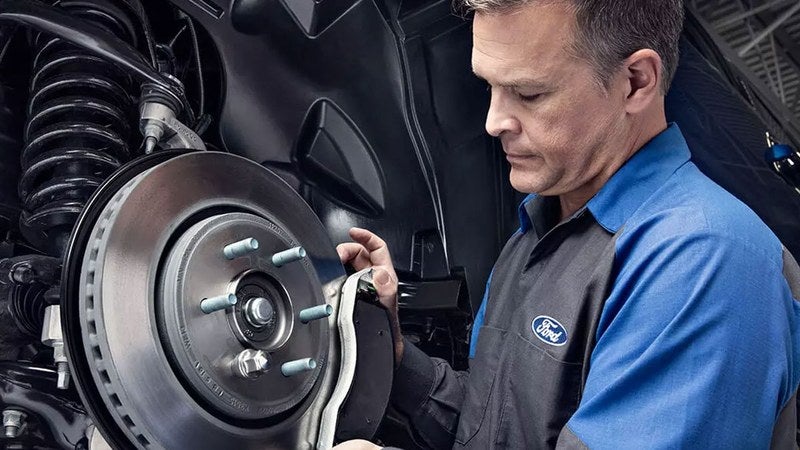
Ford technician fitting a genuine Ford brake rotor and pad, OEM Ford parts for drivers near Los Lunas, NM

OEM vs Aftermarket Ford Parts Near Los Lunas, NM: Are OEM Parts Worth It and Where Can You Get Them?

OEM Ford parts are worth paying more for when the repair involves safety systems, driver-assist cameras or radar, collision structure, a leased vehicle, or a Ford still under warranty. For wipers, bulbs, cabin filters and older high-mileage Fords, a reputable aftermarket part is often a fair way to save. Near Los Lunas, NM, genuine Ford and Motorcraft parts are sold through the Power Ford parts department in Albuquerque, roughly 25 to 30 minutes north on I-25 and reachable at (505) 225-7468. Below, OEM vs aftermarket Ford parts go head to head on fit, materials, price, warranty, ADAS calibration, collision repair, lease returns and resale, so you can make the call one part at a time. OEM vs Aftermarket Ford Parts: Fit, Materials and Price OEM means the part was built to Ford's own specification and sold under the Ford Genuine Parts name or as Motorcraft, Ford's service-parts brand. Its part number is tied to how your vehicle was built, so a VIN lookup at the parts counter accounts for engine, trim, production date and the running changes Ford makes partway through a model year. An aftermarket part is designed by another company to fit a range of vehicles, usually by measuring the original. Some aftermarket brands do that very well and some do not, and the difference tends to hide where you cannot see it on the shelf: the rubber compound in a control-arm bushing, the friction material in a brake pad, the thickness of a bracket, or an electrical connector that clicks in but never seats quite as firmly. Price is where aftermarket wins at the counter, and for plenty of jobs the saving is worth taking. Wiper blades, bulbs, cabin air filters and tires in the correct size and load rating are easy places to spend less, and on a 15-year-old truck with 200,000 miles, a budget part matched to the vehicle's remaining life can be the sensible choice. The math changes once you price the whole job. Labor costs the same whichever part goes in, so a part that wears out early or takes a second visit to fit correctly can wipe out the saving. Ask for the Motorcraft price on maintenance items such as filters, batteries and brake pads as well; it is Ford's own line for everyday service parts, and the gap to aftermarket is sometimes smaller than shoppers expect. Shop Genuine Ford Parts by VIN How Warranty Coverage Compares on OEM and Aftermarket Parts Genuine Ford and Motorcraft parts carry Ford's own limited parts warranty of 24 months with unlimited mileage, starting on the day a retail customer buys the part. When the part is professionally installed, limited labor is covered too, and a claim can be handled by the original installer or by any Ford or Lincoln dealer, which is useful if something fails on a trip far from Valencia County. Some categories get longer coverage: Ford's Ford and Motorcraft service parts warranty summary lists 3 years with unlimited miles, labor included, on new and remanufactured transmission and gas engine assemblies, and a limited lifetime warranty for the original purchaser on struts and shocks for non-commercial cars and light trucks. Aftermarket coverage depends on the brand and the store, and many parts-store warranties replace the part without paying anyone to install it again. What aftermarket parts do not do is automatically void your Ford new-vehicle warranty. Under the federal Magnuson-Moss Warranty Act, the FTC's guide to auto warranties explains that your warranty stays in effect if you use aftermarket or recycled parts, and that a manufacturer or dealer must prove an aftermarket part caused the damage before refusing coverage. The reverse also holds: if a non-Ford part fails and damages a covered component, that repair can be denied, and Ford's parts warranty itself excludes failures caused by non-Ford parts. So the case for OEM is about fit and quality rather than a warranty threat. Whichever you choose, keep every receipt and repair order, since maintenance records are what a claim is judged on. Schedule Service With Genuine Ford Parts ADAS Calibration and Collision Repair: Where OEM Matters Most Driver-assist hardware is where the OEM vs aftermarket question has its clearest answer. Fords equipped with Ford Co-Pilot360 rely on a forward camera at the top of the windshield and, on many models, a radar sensor behind the grille or front bumper. Ford's collision repair position statement on ADAS, updated in 2026, requires a scan before and after repairs and a calibration whenever the work touches a sensor, its mounting point, or a part in its field of view, such as the windshield, bumper cover, grille or a bracket. The same statement says recycled, salvaged, aftermarket and reconditioned ADAS sensors are not approved, and warns that aftermarket bumper parts can differ in material thickness or composition in ways that interfere with radar. Ford also does not approve aftermarket windshields, because glass that distorts the camera's view can cause system faults or unintended braking, so when a rock strike on I-25 turns into a cracked windshield, ask for Ford glass and a documented calibration. After a collision, read the estimate before you sign: insurers often specify non-OEM or recycled parts to hold down cost, so ask what is going on the vehicle, whether your policy offers an OEM-parts option, and whether the shop is following Ford's repair procedures. For everyday maintenance rather than crash work, our Albuquerque guide to genuine Ford parts and certified service covers oil changes, brakes, tires and batteries. Lease Returns and Resale: Where OEM Pays You Back If you lease through Ford Credit, the vehicle is inspected when you turn it in, and Ford Credit's excess wear and use guidelines list insufficient or poor-quality repairs, broken or missing parts, and tires that are not an appropriate match for the vehicle among the conditions that can be charged. A well-made aftermarket part is not an automatic problem, but a bumper cover with uneven gaps, a headlamp that has clouded faster than the one beside it, or a mismatched set of tires is the kind of thing an inspector writes down. On a lease, OEM is the low-risk choice, because the vehicle is going back to be judged against how it left the factory. Resale follows the same logic, with an appraiser or private buyer in place of the lease inspector. Panel gaps that do not line up, paint that does not match and a driver-assist warning on the dash all show up in an offer, and a used Ford has to pass a 172-point inspection by a Ford factory-trained technician before a dealer can sell it as Gold Certified. A folder of repair orders showing genuine parts and documented calibrations is easy for the next owner to trust, and it gives the appraiser one less unknown to price in when you trade the vehicle in. Visit Our Ford Dealership Near Los Lunas Where to Get Genuine Ford Parts Near Los Lunas Genuine Ford parts are sold through franchised Ford dealer parts departments, and Power Ford's parts counter at 1101 Montaño Rd NE in Albuquerque is roughly 25 to 30 minutes north of Los Lunas on I-25. It is open Monday through Friday from 7:30 a.m. to 5:00 p.m. and Saturday from 8:00 a.m. to 5:00 p.m., closed Sunday, at (505) 225-7468. Call ahead with your VIN so the part is confirmed and pulled, or ordered, before you leave Valencia County, which saves a wasted trip if it has to come in. If you would rather have it installed, our service department at (505) 933-7890 uses factory-trained technicians and can tell you up front whether the repair will need a calibration. Belen, Bosque Farms and Peralta drivers make the same run up the interstate. Truck owners will find the model-specific side of this in our guide to genuine OEM Ford F-150 parts for Rio Rancho drivers, including the maintenance parts we keep on the shelf. Common Questions About OEM vs Aftermarket Ford Parts Are OEM Ford parts worth it over aftermarket? Usually, yes, for safety systems, driver-assist cameras and radar, collision repairs, leased vehicles and Fords still under warranty, because OEM parts match the vehicle's build and carry Ford's 24-month, unlimited-mileage parts warranty. Aftermarket parts can be a fair saving on wipers, bulbs, cabin filters and older high-mileage vehicles. Compare the installed cost of the whole job rather than the part price alone, since labor costs the same either way. Will using aftermarket parts void my Ford warranty? No, not automatically. Under the federal Magnuson-Moss Warranty Act, the FTC says your vehicle warranty stays in effect if you use aftermarket or recycled parts, and the manufacturer or dealer must prove an aftermarket part caused a failure before denying that claim. If a non-Ford part does damage a covered component, that specific repair can be refused, so keep receipts and repair orders for every part and service. Where can I buy genuine Ford OEM parts near Los Lunas, NM? Power Ford's parts department at 1101 Montaño Rd NE in Albuquerque sells genuine Ford and Motorcraft parts and sits roughly 25 to 30 minutes north of Los Lunas on I-25. Call (505) 225-7468 with your VIN to confirm the part before you drive up. Parts hours are Monday through Friday from 7:30 a.m. to 5:00 p.m. and Saturday from 8:00 a.m. to 5:00 p.m., closed Sunday. Price the Whole Job Before You Choose The quickest way to settle OEM vs aftermarket for your Ford is to price the actual repair. Call the parts desk at (505) 225-7468 with your VIN and the part you need, ask for the Ford Genuine or Motorcraft price, and set it beside the aftermarket quote you already have, labor and warranty included. If the estimate has you wondering whether it's time for a newer Ford instead, we can run those numbers on the same visit. We'll beat any Ford deal in New Mexico, or you'll get $1,000 cash in your pocket. Schedule a Test Drive Contact Our Team


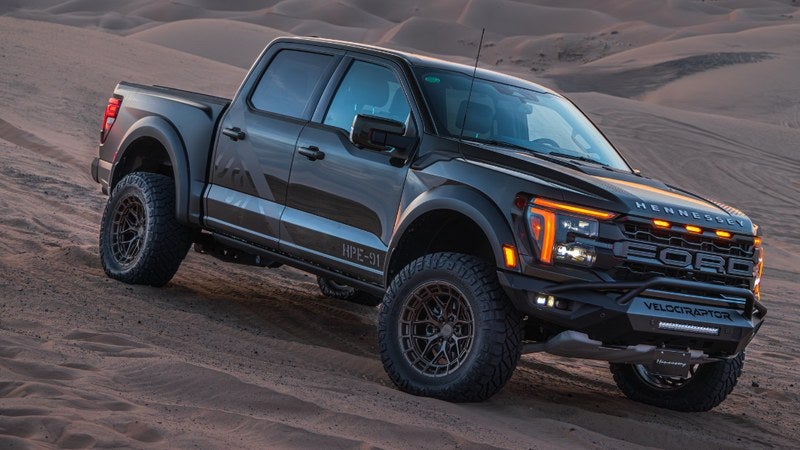
Hennessey VelociRaptor Ford F-150 Raptor on desert dunes, a Hennessey Ford truck for sale near Albuquerque, NM

Where Can I Find a Hennessey Ford Truck for Sale Near Albuquerque, NM?

The place to find a Hennessey Ford truck for sale near Albuquerque, NM is Power Ford on Montaño Road, New Mexico's Hennessey Performance dealer, which sells Hennessey-tuned Fords new from stock and as ordered builds. The 2026 lineup covers the 800-bhp F-150 Venom 800, VelociRaptor packages for the F-150 Raptor and Raptor R, and the VelociRaptor 500 Bronco Raptor. You can see current builds on our Hennessey performance Fords for sale in New Mexico page. This guide covers what each build makes, how Hennessey's 3-year/36,000-mile warranty sits alongside Ford's factory coverage, and whether to buy a truck already on the lot or order one built to your spec. The Hennessey Ford Trucks Available in 2026 Hennessey Performance, founded in 1991 and based in Sealy, Texas, now centers its Ford truck program on three platforms. The headliner for 2026 is the F-150 Venom 800, which starts with the 5.0-liter V8 F-150 and doubles its horsepower. Hennessey adds a 3.0-liter supercharger, an air-to-water intercooler, upgraded fuel injectors and its own engine calibration to take the stock 400 horsepower to 800 bhp at 6,200 rpm, with 757 lb-ft of torque, and quotes 0-60 mph in 3.4 seconds and an 11.7-second quarter mile. The package also brings Brembo six-piston brakes, a 6-inch suspension lift with FOX coilovers, 20-inch Hennessey wheels on 35-inch tires, Venom bumpers and serial-numbered interior plaques. Hennessey Package Base Ford Truck Hennessey-Rated Output Worth Knowing F-150 Venom 800 2026 F-150, 5.0L V8 (400 hp stock) 800 bhp @ 6,200 rpm / 757 lb-ft @ 4,100 rpm 3.0L supercharger; 0-60 mph in 3.4 sec (Hennessey) VelociRaptor 600 2026 F-150 Raptor, twin-turbo 3.5L V6 558 bhp @ 5,100 rpm / 672 lb-ft @ 3,500 rpm Marked sold out on Hennessey's spec sheet VelociRaptoR 1000 2026 F-150 Raptor R, supercharged 5.2L V8 (720 hp stock) 1,043 bhp @ 7,000 rpm / 824 lb-ft @ 4,800 rpm Hennessey's highest-output Raptor build VelociRaptor 500 2026 Bronco Raptor, twin-turbo 3.0L V6 (418 hp stock) 500 bhp @ 5,700 rpm / 550 lb-ft @ 3,900 rpm Production limited to 200 units The Raptor packages are where availability gets tight. Hennessey's own spec sheet marks the VelociRaptor 600 for the twin-turbo 3.5-liter Raptor as sold out, so a truck that is already built may be the only way to get one. The VelociRaptoR 1000 starts from the 720-horsepower supercharged Raptor R and is rated at 1,043 bhp. On the Bronco Raptor, the VelociRaptor 500 lifts the stock 418 horsepower to 500 bhp and adds 37-inch tires, 20-inch wheels including the spare, chassis dyno tuning and up to 500 miles of road testing, with production capped at 200 trucks. Every one of these builds carries Hennessey's 3-year/36,000-mile limited warranty. If you are still deciding whether you want a factory Raptor at all, our look at buying a new F-150 Raptor near Rio Rancho covers the stock truck first. Explore Power Performance Builds Buying a Hennessey Truck in Stock vs Ordering a Build An in-stock Hennessey truck is the faster and more certain route. The conversion is finished, calibrated and road tested, so you can drive the exact truck before you sign, match its serial-numbered plaques to the paperwork and take it home without waiting on a build slot. For a limited run like the 200-unit VelociRaptor 500, or a package Hennessey has already sold out, a truck from stock may be the only option left. The trade-off is that the color, trim and factory options were chosen before you arrived, and high-demand builds rarely sit on a lot for long, so call ahead to confirm a truck is still available before you make the trip. Ordering makes sense when the spec matters more than the date. You choose the base truck, its trim, color and factory options, then the Hennessey package, and the conversion is scheduled. Power Ford's guidance is that builds take anywhere from a few days to several weeks depending on parts and scheduling, and if the base truck is not already in the pipeline it has to be factory-ordered from Ford first, with lead times that vary by model and configuration. Buyers who want the full experience can also take final delivery at Hennessey's Pennzoil Proving Grounds in Sealy, Texas. If you already own a qualifying late-model F-150, Raptor or Bronco Raptor, ask whether upgrading your own truck is possible for the package you want. Start a Custom Factory Order How Hennessey's Warranty Works Alongside Ford's Factory Coverage A Hennessey truck effectively carries two warranties, and each covers a different part of the truck. Ford's New Vehicle Limited Warranty still runs 3 years or 36,000 miles, with powertrain coverage to 5 years or 60,000 miles, for defects in factory-supplied materials and workmanship, but Ford's list of what its warranty does not cover includes alterations, modifications and non-Ford parts. Hennessey's 3-year/36,000-mile limited warranty covers that ground instead, protecting against defects in materials and workmanship on the modifications it installs. In practice, a fault in the supercharger, intercooler or engine calibration is Hennessey's to fix, while something the build never touched, like the touchscreen, power windows or climate control, stays with Ford. The gray zone is a failure that might be blamed on the extra power. Under the Magnuson-Moss Warranty Act, Ford cannot reject a claim just because a truck has been modified; it has to show the modification caused the failure. That is a strong argument for buying through a franchised Ford dealer that knows both sides of the paperwork. Keeping Both Warranties Intact After Delivery A few details in Hennessey's terms catch new owners out. Its coverage starts when the truck leaves Hennessey's facility for final delivery, so on an in-stock truck ask for that date in writing, and a truck bought new from a dealer needs its Hennessey warranty activated online, which Hennessey limits to qualifying 2025 and newer model years. Hennessey's published terms also say the warranty is non-transferable, so if you are shopping a used Hennessey truck, verify any remaining coverage by VIN rather than assuming it carries over. The exclusions read much like Ford's, and they spell out racing, track use and excessive towing. If the truck will spend most of its life pulling a trailer, our guide to choosing a Ford truck or SUV for towing and off-road driving in New Mexico is the better place to start. Servicing is the other half. Hennessey tells owners to instruct any service department not to perform ECU flashing or software updates, because a factory update can overwrite the calibration and leave the truck undrivable until Hennessey retunes it. Power Ford services Hennessey vehicles locally, which helps, but it is still worth reminding the service advisor at every visit. The same goes for recalls: run the VIN through NHTSA's free recall lookup from time to time, and if a campaign calls for a powertrain software update, contact Hennessey support before it is applied rather than skipping it. Keep every oil change and service receipt as well, since Hennessey warns that missing maintenance records can lead to denied claims under either warranty. Visit Our Albuquerque Ford Dealership What to Budget for a Hennessey Ford Truck Because Hennessey quotes package prices on inquiry rather than publishing them, the real number is the base truck plus the conversion, priced together by the dealer. Expect a meaningful premium over a stock truck, since a package like the Venom 800 bundles a supercharger system, brakes, suspension, wheels, tires, bumpers and calibration time. Ask for an itemized buyer's order so the truck, the Hennessey package and any delivery or transport costs appear as separate lines, and you can see exactly what you are financing. Power Ford arranges financing for eligible buyers with a personalized quote, and a trade-in can be applied to the deal. Before delivery, call your insurer: a Hennessey conversion is a modification your policy should list, and it is better to know the premium before you sign than after. Common Questions About Buying a Hennessey Ford Near Albuquerque Is there a Hennessey dealer in New Mexico? Yes. Power Ford, at 1101 Montaño Rd NE in Albuquerque, is New Mexico's Hennessey Performance dealer and sells Hennessey-built Fords new, both from stock and as ordered builds. The 2026 truck lineup includes the 800-bhp F-150 Venom 800, VelociRaptor packages for the F-150 Raptor and Raptor R, and the VelociRaptor 500 Bronco Raptor. Call sales at (505) 933-7883 to check which builds are available right now. Does a Hennessey upgrade void the Ford factory warranty? Not as a whole. Ford's 3-year/36,000-mile New Vehicle Limited Warranty and 5-year/60,000-mile powertrain coverage still apply to factory parts the build does not affect, although Ford excludes alterations and modifications themselves. Hennessey covers the modifications it installs with a 3-year/36,000-mile limited warranty against defects in materials and workmanship. Under federal warranty law, Ford has to show that a modification caused a failure before it can deny the claim. How long does it take to get a Hennessey truck if I order a build? An in-stock Hennessey truck is already built, so it can go home once the paperwork is done. An ordered build takes longer: Power Ford quotes anywhere from a few days to several weeks for the conversion, depending on parts and scheduling, plus Ford's factory lead time if the base truck has to be ordered first. Limited packages, such as the 200-unit VelociRaptor 500 Bronco Raptor, can sell out entirely. Find Your Hennessey Ford in Albuquerque The quickest way to see which Hennessey Ford trucks are for sale in Albuquerque right now is to call Power Ford sales at (505) 933-7883 and ask which builds are on the lot today and which packages can still be ordered for 2026. We are at 1101 Montaño Rd NE, open Monday through Saturday from 8:00 a.m. to 8:00 p.m. and Sunday from 10:00 a.m. to 6:00 p.m., and we regularly work with performance buyers from Rio Rancho, Santa Fe, Los Lunas and across New Mexico. We'll beat any Ford deal in New Mexico, or you'll get $1,000 cash in your pocket. Schedule a Test Drive Contact Our Team
Contact Us

Fill out this form below and we'll contact you shortly
*Required Fields