
Blog / Power Ford Service

OEM vs Aftermarket Ford Parts Near Los Lunas, NM: Are OEM Parts Worth It and Where Can You Get Them?

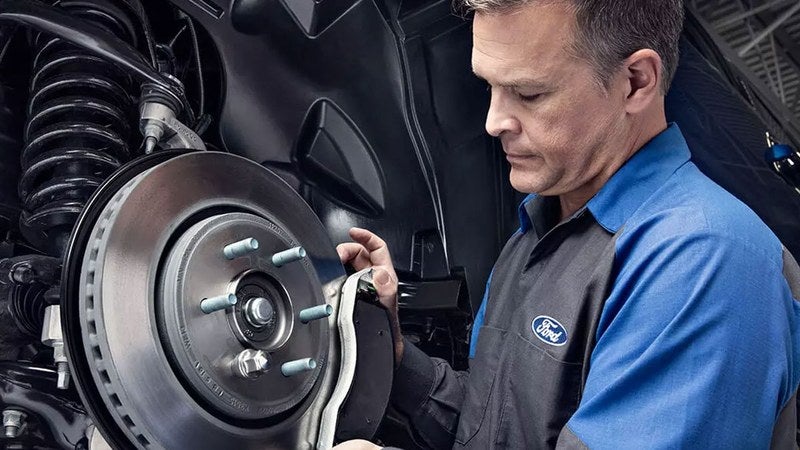
Ford technician fitting a genuine Ford brake rotor and pad, OEM Ford parts for drivers near Los Lunas, NM

OEM Ford parts are worth paying more for when the repair involves safety systems, driver-assist cameras or radar, collision structure, a leased vehicle, or a Ford still under warranty. For wipers, bulbs, cabin filters and older high-mileage Fords, a reputable aftermarket part is often a fair way to save. Near Los Lunas, NM, genuine Ford and Motorcraft parts are sold through the Power Ford parts department in Albuquerque, roughly 25 to 30 minutes north on I-25 and reachable at (505) 225-7468. Below, OEM vs aftermarket Ford parts go head to head on fit, materials, price, warranty, ADAS calibration, collision repair, lease returns and resale, so you can make the call one part at a time.

OEM vs Aftermarket Ford Parts: Fit, Materials and Price

OEM means the part was built to Ford's own specification and sold under the Ford Genuine Parts name or as Motorcraft, Ford's service-parts brand. Its part number is tied to how your vehicle was built, so a VIN lookup at the parts counter accounts for engine, trim, production date and the running changes Ford makes partway through a model year. An aftermarket part is designed by another company to fit a range of vehicles, usually by measuring the original. Some aftermarket brands do that very well and some do not, and the difference tends to hide where you cannot see it on the shelf: the rubber compound in a control-arm bushing, the friction material in a brake pad, the thickness of a bracket, or an electrical connector that clicks in but never seats quite as firmly.

Price is where aftermarket wins at the counter, and for plenty of jobs the saving is worth taking. Wiper blades, bulbs, cabin air filters and tires in the correct size and load rating are easy places to spend less, and on a 15-year-old truck with 200,000 miles, a budget part matched to the vehicle's remaining life can be the sensible choice. The math changes once you price the whole job. Labor costs the same whichever part goes in, so a part that wears out early or takes a second visit to fit correctly can wipe out the saving. Ask for the Motorcraft price on maintenance items such as filters, batteries and brake pads as well; it is Ford's own line for everyday service parts, and the gap to aftermarket is sometimes smaller than shoppers expect.

How Warranty Coverage Compares on OEM and Aftermarket Parts

Genuine Ford and Motorcraft parts carry Ford's own limited parts warranty of 24 months with unlimited mileage, starting on the day a retail customer buys the part. When the part is professionally installed, limited labor is covered too, and a claim can be handled by the original installer or by any Ford or Lincoln dealer, which is useful if something fails on a trip far from Valencia County. Some categories get longer coverage: Ford's Ford and Motorcraft service parts warranty summary lists 3 years with unlimited miles, labor included, on new and remanufactured transmission and gas engine assemblies, and a limited lifetime warranty for the original purchaser on struts and shocks for non-commercial cars and light trucks. Aftermarket coverage depends on the brand and the store, and many parts-store warranties replace the part without paying anyone to install it again.

What aftermarket parts do not do is automatically void your Ford new-vehicle warranty. Under the federal Magnuson-Moss Warranty Act, the FTC's guide to auto warranties explains that your warranty stays in effect if you use aftermarket or recycled parts, and that a manufacturer or dealer must prove an aftermarket part caused the damage before refusing coverage. The reverse also holds: if a non-Ford part fails and damages a covered component, that repair can be denied, and Ford's parts warranty itself excludes failures caused by non-Ford parts. So the case for OEM is about fit and quality rather than a warranty threat. Whichever you choose, keep every receipt and repair order, since maintenance records are what a claim is judged on.

ADAS Calibration and Collision Repair: Where OEM Matters Most
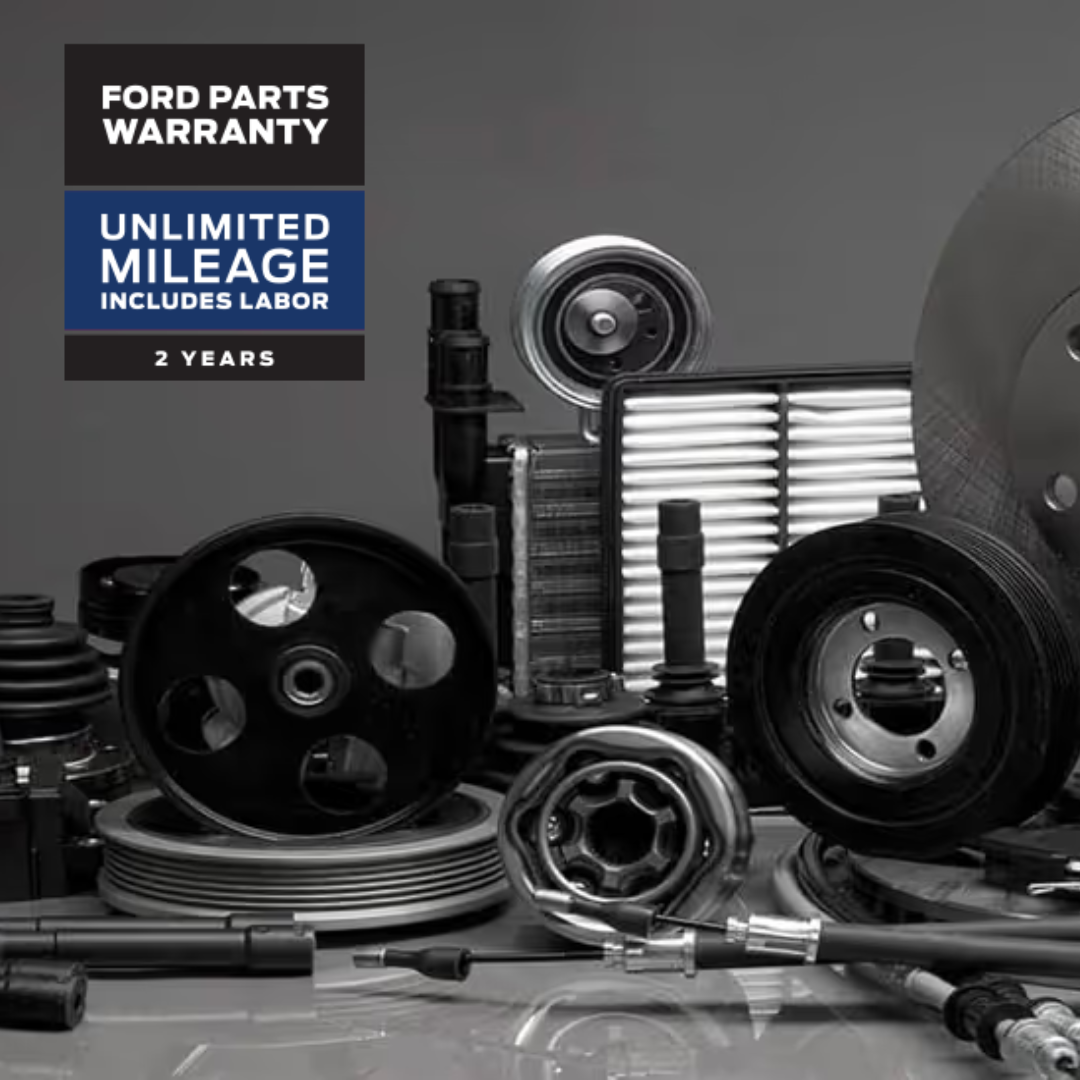
Genuine Ford and Motorcraft parts compared with aftermarket parts at the Power Ford parts department serving Los Lunas, NM

Driver-assist hardware is where the OEM vs aftermarket question has its clearest answer. Fords equipped with Ford Co-Pilot360 rely on a forward camera at the top of the windshield and, on many models, a radar sensor behind the grille or front bumper. Ford's collision repair position statement on ADAS, updated in 2026, requires a scan before and after repairs and a calibration whenever the work touches a sensor, its mounting point, or a part in its field of view, such as the windshield, bumper cover, grille or a bracket. The same statement says recycled, salvaged, aftermarket and reconditioned ADAS sensors are not approved, and warns that aftermarket bumper parts can differ in material thickness or composition in ways that interfere with radar. Ford also does not approve aftermarket windshields, because glass that distorts the camera's view can cause system faults or unintended braking, so when a rock strike on I-25 turns into a cracked windshield, ask for Ford glass and a documented calibration. After a collision, read the estimate before you sign: insurers often specify non-OEM or recycled parts to hold down cost, so ask what is going on the vehicle, whether your policy offers an OEM-parts option, and whether the shop is following Ford's repair procedures. For everyday maintenance rather than crash work, our Albuquerque guide to genuine Ford parts and certified service covers oil changes, brakes, tires and batteries.

Lease Returns and Resale: Where OEM Pays You Back

If you lease through Ford Credit, the vehicle is inspected when you turn it in, and Ford Credit's excess wear and use guidelines list insufficient or poor-quality repairs, broken or missing parts, and tires that are not an appropriate match for the vehicle among the conditions that can be charged. A well-made aftermarket part is not an automatic problem, but a bumper cover with uneven gaps, a headlamp that has clouded faster than the one beside it, or a mismatched set of tires is the kind of thing an inspector writes down. On a lease, OEM is the low-risk choice, because the vehicle is going back to be judged against how it left the factory.

Resale follows the same logic, with an appraiser or private buyer in place of the lease inspector. Panel gaps that do not line up, paint that does not match and a driver-assist warning on the dash all show up in an offer, and a used Ford has to pass a 172-point inspection by a Ford factory-trained technician before a dealer can sell it as Gold Certified. A folder of repair orders showing genuine parts and documented calibrations is easy for the next owner to trust, and it gives the appraiser one less unknown to price in when you trade the vehicle in.

Where to Get Genuine Ford Parts Near Los Lunas

Genuine Ford parts are sold through franchised Ford dealer parts departments, and Power Ford's parts counter at 1101 Montaño Rd NE in Albuquerque is roughly 25 to 30 minutes north of Los Lunas on I-25. It is open Monday through Friday from 7:30 a.m. to 5:00 p.m. and Saturday from 8:00 a.m. to 5:00 p.m., closed Sunday, at (505) 225-7468. Call ahead with your VIN so the part is confirmed and pulled, or ordered, before you leave Valencia County, which saves a wasted trip if it has to come in. If you would rather have it installed, our service department at (505) 933-7890 uses factory-trained technicians and can tell you up front whether the repair will need a calibration. Belen, Bosque Farms and Peralta drivers make the same run up the interstate. Truck owners will find the model-specific side of this in our guide to genuine OEM Ford F-150 parts for Rio Rancho drivers, including the maintenance parts we keep on the shelf.

Common Questions About OEM vs Aftermarket Ford Parts

Are OEM Ford parts worth it over aftermarket?

Usually, yes, for safety systems, driver-assist cameras and radar, collision repairs, leased vehicles and Fords still under warranty, because OEM parts match the vehicle's build and carry Ford's 24-month, unlimited-mileage parts warranty. Aftermarket parts can be a fair saving on wipers, bulbs, cabin filters and older high-mileage vehicles. Compare the installed cost of the whole job rather than the part price alone, since labor costs the same either way.

Will using aftermarket parts void my Ford warranty?

No, not automatically. Under the federal Magnuson-Moss Warranty Act, the FTC says your vehicle warranty stays in effect if you use aftermarket or recycled parts, and the manufacturer or dealer must prove an aftermarket part caused a failure before denying that claim. If a non-Ford part does damage a covered component, that specific repair can be refused, so keep receipts and repair orders for every part and service.

Where can I buy genuine Ford OEM parts near Los Lunas, NM?

Power Ford's parts department at 1101 Montaño Rd NE in Albuquerque sells genuine Ford and Motorcraft parts and sits roughly 25 to 30 minutes north of Los Lunas on I-25. Call (505) 225-7468 with your VIN to confirm the part before you drive up. Parts hours are Monday through Friday from 7:30 a.m. to 5:00 p.m. and Saturday from 8:00 a.m. to 5:00 p.m., closed Sunday.

Price the Whole Job Before You Choose

The quickest way to settle OEM vs aftermarket for your Ford is to price the actual repair. Call the parts desk at (505) 225-7468 with your VIN and the part you need, ask for the Ford Genuine or Motorcraft price, and set it beside the aftermarket quote you already have, labor and warranty included. If the estimate has you wondering whether it's time for a newer Ford instead, we can run those numbers on the same visit. We'll beat any Ford deal in New Mexico, or you'll get $1,000 cash in your pocket.
Posted in:

Related Posts

Genuine Ford Parts graphic for the Power Ford parts department in Albuquerque

Who Sells Wholesale Ford OEM Parts in Bulk to Repair Shops Near Albuquerque, NM

Repair shops around Albuquerque source wholesale Ford OEM parts the same way dealers do: through a franchised Ford parts department, ordering against Ford's own catalog by VIN rather than a generic cross-reference. Power Ford's parts department in Albuquerque fills that role for shops across the metro, at (505) 225-7468. What follows is the practical side — how VIN-level ordering keeps the wrong part off your bench, what to have ready before you call, and where the OEM-versus-aftermarket decision actually costs you money on a comeback. What a Shop Actually Needs From an OEM Parts Source Consumer parts advice is about whether OEM is worth it. For a shop, that argument was settled by the third comeback. What matters day to day is narrower: can you get the exact part for this VIN, can you find out today whether it is on the shelf or three days out, and does the counter answer the phone during your working hours. A generic catalog that lists one water pump for a model year is not good enough when mid-year running changes mean two exist. VIN-level ordering is the whole difference. A franchised Ford parts department queries the same catalog Ford builds the vehicles from, so the part number comes back tied to the actual build — engine code, axle, production date, the running change that happened in March. That is also why the two brands you will be quoted are Ford Genuine Parts and Motorcraft, Ford's own service-parts line. Ford's official parts catalog organizes the same inventory by category if you want to check a number before you call. Order Ford Parts Online Ordering in Volume Through the Parts Desk Bulk and repeat ordering for shops is handled by the parts counter directly, not through a web form. Call (505) 225-7468 with your shop name, the makes you see most, and a sense of your typical order mix, and the parts team can talk through pricing on volume, what is stocked locally versus what comes in on a regional order, and how quickly the lines you use most can be turned around. That conversation is worth having once properly rather than ad hoc on every job. Have the VINs ready. For a multi-line order the fastest path is VIN plus the part numbers you have already identified, because it lets the counter confirm fitment and availability in one pass instead of three calls. Shops running Ford fleet work should also know there is a dedicated Commercial Vehicle Center on the retail side, with fleet management support, commercial financing and priority commercial service scheduling — relevant if your customers are running vehicles you also help them buy and upfit. See Commercial and Fleet Services Where OEM Pays for Itself on a Comeback The cost of an aftermarket part is not its price, it is the probability you touch that job twice. Sensors and modules are the clearest case: a part that reports slightly outside the expected range will set a code, pass a bench test, and come back as a diagnostic argument you cannot bill for. Body and structural parts are the second, because panel gaps and mounting-point tolerances decide whether a calibration completes. There is also a category where the choice is not yours at all — open recall work has to run through a franchised dealer with the specified part, so it is worth running customer VINs through NHTSA's free recall lookup before you quote a job that overlaps one. Our wider guide to genuine Ford parts and certified service in Albuquerque covers the OEM-versus-aftermarket comparison in more depth. Setting Up Ordering as a Shop The parts department is at 1101 Montaño Rd NE in Albuquerque, open Monday through Friday from 7:30 a.m. to 5:00 p.m. and Saturday from 8:00 a.m. to 5:00 p.m., closed Sunday — the early weekday open is the useful part, since it lines up with when most shops are writing the day's tickets. Come in or call with your business details and the parts team will walk through how ordering, quoting and pickup work for your volume. Two things make every order after the first one faster: give the counter a single point of contact at your shop, and keep your own record of the Ford part numbers you reorder most. Shops that do both stop re-deriving the same number every time a common job comes through the door, and the counter can flag it when a superseded number replaces one you use regularly. Visit Power Ford in Albuquerque Shops and Fleets We Supply Around the Metro Most of the shops we deal with are inside the Albuquerque metro, but the counter regularly fills orders heading out to Rio Rancho, Corrales, Bernalillo, Los Lunas, Belen and Edgewood. Truck parts dominate the volume, which is no surprise in New Mexico — we wrote up the model-specific side of that in our guide to finding genuine OEM Ford F-150 parts near Rio Rancho, covering the lines that move fastest and why F-150 part numbers in particular reward checking against the VIN rather than the model year. Common Questions Repair Shops Ask Us Who sells wholesale Ford OEM parts to repair shops near Albuquerque, NM? Power Ford's parts department in Albuquerque supplies genuine Ford and Motorcraft parts to independent repair shops, fleets and body shops as a franchised Ford dealer. Orders are placed by VIN against Ford's own catalog, so what arrives matches the build rather than a generic cross-reference. Call the parts desk at (505) 225-7468 to set up ordering. Can an independent repair shop buy Ford OEM parts in bulk? Yes. Independent shops order genuine Ford and Motorcraft parts through a franchised Ford dealer's parts department, and Power Ford handles that for shops across the Albuquerque metro. Volume and account arrangements are worked out directly with the parts desk rather than through a web form, so call (505) 225-7468 with your shop details and typical order mix. What are Power Ford's parts department hours and phone number? Power Ford's parts department is at 1101 Montaño Rd NE in Albuquerque and is reachable at (505) 225-7468. Hours are Monday through Friday from 7:30 a.m. to 5:00 p.m. and Saturday from 8:00 a.m. to 5:00 p.m., closed Sunday. Having VINs and part numbers ready makes a volume order considerably faster to quote. Talk to the Parts Counter Directly The fastest way to find out whether we are the right OEM source for your shop is to call the parts desk at (505) 225-7468 and price a few of the lines you order most against what you pay now. And if your shop is also running work trucks, the same conversation can cover the vehicle side: We'll beat any Ford deal in New Mexico, or you'll get $1,000 cash in your pocket. Either way, you will get a straight answer rather than a quote form. Schedule a Test Drive Contact Our Team
Power Ford parts and service department serving the Albuquerque metro

Where to Find Genuine OEM Ford F-150 Parts Near Rio Rancho

We hear from a lot of Rio Rancho F-150 owners who've been quoted parts from an auto parts store or an independent shop and want to know if genuine Ford parts are really worth the difference. We're Power Ford, and because our own technicians install both genuine and aftermarket parts every day, we've got a clear view of where that difference actually matters on a truck like the F-150, and where you have more flexibility. Here's what we'd tell you, plus how to get genuine parts near Rio Rancho whether you install them yourself or have us handle it. Why Genuine OEM Parts Matter on an F-150 Genuine Ford parts, including Motorcraft components, are engineered to the exact fit and performance specifications your F-150 was built around. That matters more than it sounds like on a truck that regularly tows, hauls, or covers a lot of miles, since components like brakes, filters, and suspension parts see more real-world stress than they would on a typical car. Using the wrong-spec part on those systems is where owners tend to run into premature wear or, in some cases, voided warranty coverage. Shop Genuine Ford Parts Our Parts Department and What We Stock Our parts department keeps a deep inventory of F-150-specific components on hand, from filters and belts to brakes, batteries, and fluids, so most jobs don't require a special order or a long wait. If you're looking to personalize your truck rather than just maintain it, we also carry genuine Ford accessories designed to fit without the guesswork that comes with aftermarket options. Common F-150 Parts and Maintenance Needs Following Ford's recommended maintenance schedule is the simplest way to know when genuine parts actually need replacing instead of guessing. That typically includes brake pads, tires, batteries, cabin air filters, and wiper blades, along with routine oil changes. Keeping these on a genuine-parts schedule is also one of the easier ways to protect resale value if you plan to trade the truck in down the road. Certified Service to Install Them Right A genuine part is only as good as the install, which is why our service department uses factory-trained technicians for every job. Our Quick Lane handles faster routine work like fluid top-offs and filter swaps, and if you want to know more about why our shop specifically is worth trusting with the install, our why service here page covers that in more detail. We've also written about how often you should rotate your tires, which is one of the most overlooked maintenance items on a truck that sees regular highway miles. Schedule Service Online Getting Parts and Service Without the Drive from Rio Rancho We know Rio Rancho is a bit of a haul, so we try to make genuine parts and service as convenient as we can. Our pickup and delivery service and mobile service requests can handle a lot of routine parts installs without you ever making the trip in, and our online scheduler makes it easy to book whichever option works best for you. Common Questions About Genuine F-150 Parts Are genuine Ford parts really necessary, or is aftermarket fine? It depends on the part. For safety and drivetrain-related components, we'd recommend genuine parts to protect fit, performance, and warranty coverage. For cosmetic accessories, aftermarket options are often fine. Do you carry parts for older F-150 model years, not just the newest one? Yes. Our parts department regularly special orders components for older F-150 model years when they're not in stock. Can I get parts installed without driving in from Rio Rancho? For many routine jobs, yes. Our pickup and delivery service and mobile service option can save you the drive. Get the Right Parts for Your F-150 Whether you're maintaining your F-150 yourself or want our certified technicians to handle it, we can get you genuine parts built for your exact truck. Reach out or schedule service, and we'll take it from there. Shop Ford Parts Schedule Service

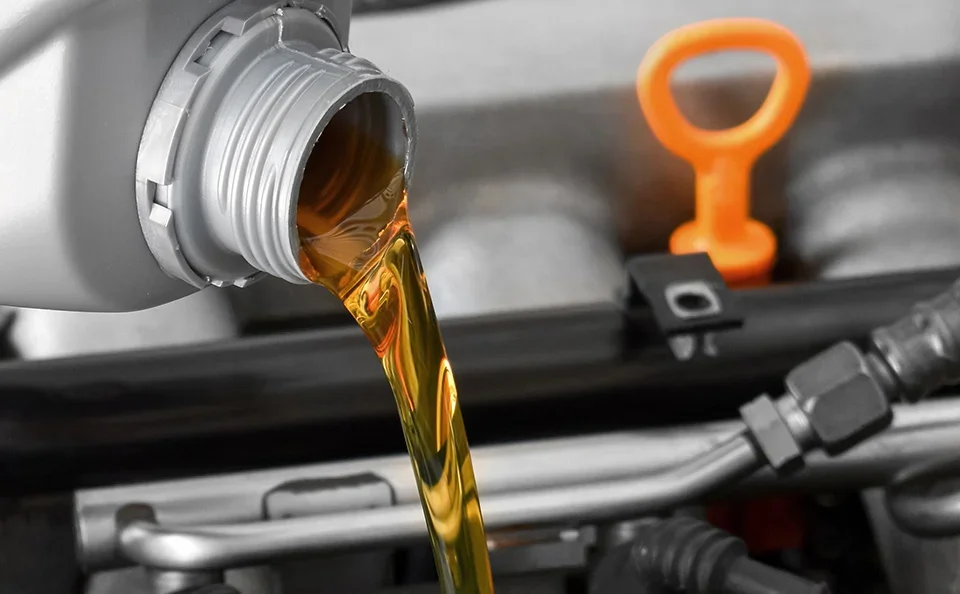
Power Ford Synthetic Oil

How Often to Change Synthetic Oil

Most vehicles using synthetic oil need an oil change every 7,500 to 10,000 miles, or at least once a year. However, severe driving conditions such as frequent short trips, extreme temperatures, or heavy towing may require more frequent changes every 5,000 to 7,500 miles. Always consult your owner's manual and oil monitoring system for the best schedule for your specific vehicle. Ever thought about how often to change synthetic oil in your car? It's key for your vehicle's health. At Power Ford, we make it easy to figure out oil change times. Synthetic oil is vital for your engine. It moves from the engine sump to valve gear at start-up. It keeps protecting as temperatures go up. Most cars need oil changes every 7,500 to 10,000 miles. Some makers say it's okay to wait up to 16,000 miles. So, when should you change synthetic oil? At least once a year is the rule. Regular oil changes bring many benefits. They make your car run cleaner, save gas, last longer, and perform better. Always check your car's manual for the best schedule for your model. At Power Ford, we're here to help you keep your car in top shape. Our skilled technicians will help you understand synthetic oil changes. This way, your car will stay in great condition for many years. Schedule Your Oil Change Understanding Synthetic Oil and Its Role in Your Engine Synthetic oil is a big step forward in car lubrication. It's not like regular motor oil. It gives your engine top-notch protection. To know when to change synthetic oil, you need to understand its unique qualities. What Makes Synthetic Oil Different from Conventional Oil Synthetic oil is made differently than regular oil. While regular oil comes from crude oil, synthetic oil is made in labs. The main differences are: Molecular uniformity for smoother engine performance Stability in extreme temperatures Stronger against breakdown and contamination These traits mean synthetic oil protects your engine better in all driving conditions. Knowing when to change synthetic oil depends on these special features. The Benefits of Using Synthetic Oil in Your Vehicle Using synthetic oil has many benefits for your car's health: Longer engine life with better lubrication Better fuel efficiency Less engine wear in extreme temperatures Cleaner engine internals Synthetic Oil Characteristic Performance Benefit Higher Temperature Resistance Maintains lubrication during intense heat Better Cold-Start Protection Reduces engine stress during winter Lower Friction Coefficient Improves overall engine efficiency Even though synthetic oil changes cost more at first, the long-term benefits are worth it. Your engine gets top-notch protection. This means fewer repairs and a longer car life. How Often Do You Change Synthetic Oil in a Car Knowing when to change full synthetic oil is key to keeping your car running well. Most cars need synthetic oil changes every 7,500 to 10,000 miles. Some makers say you can go up to 15,000 miles. How often you should change synthetic oil depends on a few things: Vehicle make and model Driving conditions Manufacturer recommendations Vehicle age For regular driving, here's a basic rule for synthetic oil changes: Driving Type Oil Change Interval Normal Driving Conditions 7,500 - 10,000 miles Severe Driving Conditions 5,000 - 7,500 miles Extended Highway Driving Up to 15,000 miles Your car's manual is the best guide for oil change times. Newer cars might have systems that tell you when to change oil. Even if you don't drive much, change synthetic oil yearly to keep it fresh. If you're unsure, talk to a mechanic. They can give advice based on your car and how you drive. Keeping track of your oil changes is important for your car's health and performance. Factors That Affect Your Synthetic Oil Change Schedule Changing synthetic oil isn't the same for everyone. Your driving habits and car's condition are key. They help decide when to change your oil. Many factors affect synthetic oil change frequency. Knowing these can keep your engine running well. Impact of Severe Driving Conditions Severe driving can shorten synthetic oil life. Conditions include: Frequent short trips under 5 miles Extreme temperature variations Dusty or sandy road environments Stop-and-go traffic Heavy load towing In tough driving conditions, you might need to change oil more often. For most, changing synthetic oil every 5,000 to 7,500 miles is best. Manufacturer Recommendations and Oil Monitoring Systems Today's cars have advanced oil monitoring systems. They track your driving. These systems help figure out when to change synthetic oil. Always check your car's manual for the best advice. Most makers give specific oil change times for your car. This keeps your engine safe. If you're unsure about synthetic oil change frequency, our service center can help. We consider your car's state and driving habits for advice. Conclusion Synthetic oil changes are a smart way to keep your car running well for a long time. They help keep your Ford's engine clean and working great. This means your car can go a long way, maybe even up to 200,000 miles. When you change your oil regularly, you're doing a lot for your car. Always check the oil level and add more if needed. This stops your engine from getting damaged. At Power Ford, our team knows how to take care of your car. We use the right synthetic oil and keep track of your car's maintenance. We're here to help your car stay in top shape. Ready for your next oil change? Call us at 505-933-7890 or visit 1101 Montano Rd. N.E., Albuquerque, NM 87107. Our service center is quick and has comfy waiting areas. Let us help your Ford perform at its best. Schedule Your Oil Change FAQ Is synthetic oil really better than conventional oil? Yes, synthetic oil is better. It's made in labs with uniform molecules for better flow and protection. It also lasts longer, saves fuel, and cuts emissions. Though it costs more, it's worth it for your car's health. Do I need to change synthetic oil if I don't drive many miles? Yes, change synthetic oil at least once a year, even if you don't drive much. Oil breaks down over time, even when your car is parked. Always check your owner's manual for the best advice. What are considered severe driving conditions that might require more frequent oil changes? Severe conditions include short trips, dusty areas, towing, extreme temperatures, and city driving. In these cases, you might need to change oil every 5,000 to 7,500 miles instead of the usual. Can I rely on my car's oil monitoring system? Yes, modern Ford vehicles with Intelligent Oil-Life Monitor systems are very reliable. They track engine data and driving conditions to give you the best oil change schedule. Are synthetic oil changes more expensive? Synthetic oil changes cost more at first than conventional oil. But, they offer better protection and can save fuel in the long run. This makes them a good value for your car. Schedule Your Oil Change