Blog

All Albuquerque Ford Dealer Albuquerque Area Ford Albuquerque Ford Service Power Ford Service Albuquerque Used Cars Bronco F150 Safety EV Awards Explorer Performance Finance Ford Blue Advantage Certified Rio Rancho Bronco Sport Ford Trucks & SUVs Comfort Maverick Mustang Ranger Super Duty Expedition Fleet Interior Tires
2026 Ford Explorer Trim Levels: Which One Fits Your Life in New Mexico?

2026 Ford Explorer Trim Levels: Which One Fits Your Life in New Mexico?

2026 Ford Explorer Trim Levels: Which One Fits Your Life in New Mexico? The right 2026 Ford Explorer trim depends on what you want your SUV to do beyond carrying passengers. Active 100A covers the essentials. Active adds useful everyday comfort. ST-Line gives you a sportier look and more technology without moving to the performance engine. Tremor is the trail-focused choice. ST delivers the strongest on-road performance, while Platinum puts comfort and premium features first. All six Explorer models share the same basic strengths: three-row flexibility, a practical amount of cargo room, useful towing capability, and technology designed for everyday driving. The differences become important when you decide how much comfort, performance, off-pavement capability, and equipment you will actually use. What Every 2026 Explorer Gives You The 2026 Explorer lineup includes Active 100A, Active, ST-Line, Tremor, ST, and Platinum. Every model has three rows and can tow up to 5,000 pounds when properly equipped. Ford includes a Class III Trailer Tow Package across the lineup, although passengers, cargo, trailer setup, and other operating conditions still affect how much you can safely tow. Passenger capacity depends on the seating configuration. Most Explorer models come with second-row captain's chairs and seating for six, while a second-row bench can increase capacity to seven on eligible models. ST-Line uses the bench as its standard second-row arrangement. Tremor is configured for six passengers. With all three rows in use, the Explorer provides 16.3 cubic feet of cargo space. Folding the rear seats expands maximum cargo capacity to as much as 85.8 cubic feet, depending on the model. That makes the trim decision less about basic space and more about how you want the vehicle to feel and function. Active: More Everyday Comfort Explorer Active builds on that foundation with features that matter during daily use, including heated front seats, a heated steering wheel, a power liftgate, active noise cancellation, roof-rack side rails, and a ten-way power driver's seat. For many Albuquerque drivers, Active may be the lineup's most balanced configuration. The extra comfort is easy to appreciate on cold mornings, longer drives, school runs, and weekend trips, but the vehicle still stays focused on everyday usability rather than specialized performance or luxury. ST-Line: Sporty Design Without the Performance Engine Visit Power Ford in Albuquerque to compare current Explorer options and find the configuration that fits the way you drive in New Mexico. Visit Power Ford in Albuquerque to compare current Explorer options and find the configuration that fits the way you drive in New Mexico. ST-Line is for someone who likes the Explorer ST's visual attitude but does not need its more powerful V6. It keeps the 2.3L EcoBoost engine while adding black exterior accents, 20-inch wheels, Explorer hood lettering, red interior stitching, a 360-Degree Camera, and a ten-speaker B&O Sound System. Available BlueCruise hands-free highway driving also makes ST-Line worth considering for drivers who spend significant time on compatible stretches of I-25 or I-40. BlueCruise remains a driver-assist feature, so the driver must stay attentive and be ready to take control. Choose ST-Line when appearance and technology matter more to you than maximum acceleration or trail-focused hardware. Tremor: The Explorer for Rougher Routes The new Explorer Tremor is the most trail-oriented model in the 2026 lineup. It adds all-terrain tires, a Torsen limited-slip rear axle, off-road-tuned suspension with increased ride height, underbody protection, tow hooks, and auxiliary lighting. A 3.0L EcoBoost V6 is available for drivers who also want more power. That equipment gives Tremor a clear purpose. It is designed for families whose recreation regularly takes them beyond pavement, such as reaching trailheads, campsites, mountain property, or rough access roads. It is not automatically the best choice simply because New Mexico has snow, dirt roads, and changing elevations. If most of your driving stays on pavement, an Explorer with available Intelligent 4WD may meet your needs with fewer specialized features. Tremor is the right upgrade when off-pavement driving is a meaningful part of how you use the vehicle, not just an occasional possibility. ST: Performance Comes First Explorer ST is the on-road performance model. Its 3.0L EcoBoost V6 produces 385 horsepower and 415 lb-ft of torque, and Ford pairs it with a sport-tuned suspension. Rear-wheel drive is standard, while Intelligent 4WD is available. The important distinction is that ST is not simply a more powerful ST-Line. ST-Line emphasizes sporty appearance and technology with the standard 2.3L engine. ST changes the driving experience with the V6 and performance-focused suspension while retaining three-row seating and up to 5,000 pounds of towing capability when properly equipped. Choose ST if acceleration and a more athletic road feel are priorities you will appreciate every day. If you mainly want the look, ST-Line is the more direct fit. Platinum: Comfort and Premium Features Explorer Platinum is built around a more premium cabin rather than maximum performance. It uses the 2.3L EcoBoost engine and offers features such as the Lux Leather Package with quilted seating surfaces, heated and ventilated front seats, available massaging front seats, heated second-row seating, a 14-speaker B&O Sound System, and available BlueCruise. Platinum makes the strongest case for drivers who take frequent highway trips, carry adult passengers, or simply want their family SUV to feel quieter and more refined. It is also a reminder not to assume the highest trim automatically has the strongest engine. For 2026, the 3.0L V6 is reserved for ST and available on Tremor, while Platinum focuses on comfort. Which 2026 Explorer Trim Is Right for You? - Choose Active 100A for the essential three-row Explorer experience. - Choose Active for added daily comfort and convenience. - Choose ST-Line for sport-inspired design and upgraded technology. - Choose Tremor for regular off-pavement travel and trail-focused hardware. - Choose ST for V6 performance and a sport-tuned driving experience. - Choose Platinum for premium comfort and long-distance refinement. Do not make the decision from a feature list alone. Seating configuration, drivetrain, packages, and options can change how an Explorer fits your family and how it feels on the road. Compare the window stickers, sit in the second and third rows, and drive the trims that match your priorities back-to-back. Visit Power Ford in Albuquerque to compare current Explorer options and find the configuration that fits the way you drive in New Mexico.

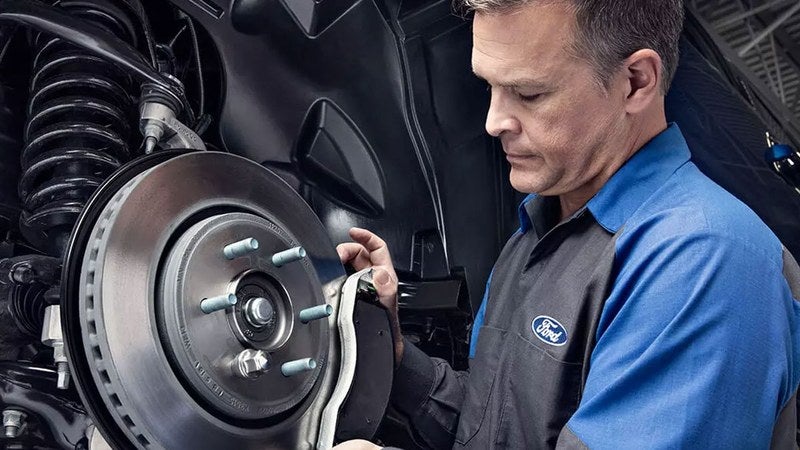
Ford technician fitting a genuine Ford brake rotor and pad, OEM Ford parts for drivers near Los Lunas, NM

OEM vs Aftermarket Ford Parts Near Los Lunas, NM: Are OEM Parts Worth It and Where Can You Get Them?

OEM Ford parts are worth paying more for when the repair involves safety systems, driver-assist cameras or radar, collision structure, a leased vehicle, or a Ford still under warranty. For wipers, bulbs, cabin filters and older high-mileage Fords, a reputable aftermarket part is often a fair way to save. Near Los Lunas, NM, genuine Ford and Motorcraft parts are sold through the Power Ford parts department in Albuquerque, roughly 25 to 30 minutes north on I-25 and reachable at (505) 225-7468. Below, OEM vs aftermarket Ford parts go head to head on fit, materials, price, warranty, ADAS calibration, collision repair, lease returns and resale, so you can make the call one part at a time. OEM vs Aftermarket Ford Parts: Fit, Materials and Price OEM means the part was built to Ford's own specification and sold under the Ford Genuine Parts name or as Motorcraft, Ford's service-parts brand. Its part number is tied to how your vehicle was built, so a VIN lookup at the parts counter accounts for engine, trim, production date and the running changes Ford makes partway through a model year. An aftermarket part is designed by another company to fit a range of vehicles, usually by measuring the original. Some aftermarket brands do that very well and some do not, and the difference tends to hide where you cannot see it on the shelf: the rubber compound in a control-arm bushing, the friction material in a brake pad, the thickness of a bracket, or an electrical connector that clicks in but never seats quite as firmly. Price is where aftermarket wins at the counter, and for plenty of jobs the saving is worth taking. Wiper blades, bulbs, cabin air filters and tires in the correct size and load rating are easy places to spend less, and on a 15-year-old truck with 200,000 miles, a budget part matched to the vehicle's remaining life can be the sensible choice. The math changes once you price the whole job. Labor costs the same whichever part goes in, so a part that wears out early or takes a second visit to fit correctly can wipe out the saving. Ask for the Motorcraft price on maintenance items such as filters, batteries and brake pads as well; it is Ford's own line for everyday service parts, and the gap to aftermarket is sometimes smaller than shoppers expect. Shop Genuine Ford Parts by VIN How Warranty Coverage Compares on OEM and Aftermarket Parts Genuine Ford and Motorcraft parts carry Ford's own limited parts warranty of 24 months with unlimited mileage, starting on the day a retail customer buys the part. When the part is professionally installed, limited labor is covered too, and a claim can be handled by the original installer or by any Ford or Lincoln dealer, which is useful if something fails on a trip far from Valencia County. Some categories get longer coverage: Ford's Ford and Motorcraft service parts warranty summary lists 3 years with unlimited miles, labor included, on new and remanufactured transmission and gas engine assemblies, and a limited lifetime warranty for the original purchaser on struts and shocks for non-commercial cars and light trucks. Aftermarket coverage depends on the brand and the store, and many parts-store warranties replace the part without paying anyone to install it again. What aftermarket parts do not do is automatically void your Ford new-vehicle warranty. Under the federal Magnuson-Moss Warranty Act, the FTC's guide to auto warranties explains that your warranty stays in effect if you use aftermarket or recycled parts, and that a manufacturer or dealer must prove an aftermarket part caused the damage before refusing coverage. The reverse also holds: if a non-Ford part fails and damages a covered component, that repair can be denied, and Ford's parts warranty itself excludes failures caused by non-Ford parts. So the case for OEM is about fit and quality rather than a warranty threat. Whichever you choose, keep every receipt and repair order, since maintenance records are what a claim is judged on. Schedule Service With Genuine Ford Parts ADAS Calibration and Collision Repair: Where OEM Matters Most Driver-assist hardware is where the OEM vs aftermarket question has its clearest answer. Fords equipped with Ford Co-Pilot360 rely on a forward camera at the top of the windshield and, on many models, a radar sensor behind the grille or front bumper. Ford's collision repair position statement on ADAS, updated in 2026, requires a scan before and after repairs and a calibration whenever the work touches a sensor, its mounting point, or a part in its field of view, such as the windshield, bumper cover, grille or a bracket. The same statement says recycled, salvaged, aftermarket and reconditioned ADAS sensors are not approved, and warns that aftermarket bumper parts can differ in material thickness or composition in ways that interfere with radar. Ford also does not approve aftermarket windshields, because glass that distorts the camera's view can cause system faults or unintended braking, so when a rock strike on I-25 turns into a cracked windshield, ask for Ford glass and a documented calibration. After a collision, read the estimate before you sign: insurers often specify non-OEM or recycled parts to hold down cost, so ask what is going on the vehicle, whether your policy offers an OEM-parts option, and whether the shop is following Ford's repair procedures. For everyday maintenance rather than crash work, our Albuquerque guide to genuine Ford parts and certified service covers oil changes, brakes, tires and batteries. Lease Returns and Resale: Where OEM Pays You Back If you lease through Ford Credit, the vehicle is inspected when you turn it in, and Ford Credit's excess wear and use guidelines list insufficient or poor-quality repairs, broken or missing parts, and tires that are not an appropriate match for the vehicle among the conditions that can be charged. A well-made aftermarket part is not an automatic problem, but a bumper cover with uneven gaps, a headlamp that has clouded faster than the one beside it, or a mismatched set of tires is the kind of thing an inspector writes down. On a lease, OEM is the low-risk choice, because the vehicle is going back to be judged against how it left the factory. Resale follows the same logic, with an appraiser or private buyer in place of the lease inspector. Panel gaps that do not line up, paint that does not match and a driver-assist warning on the dash all show up in an offer, and a used Ford has to pass a 172-point inspection by a Ford factory-trained technician before a dealer can sell it as Gold Certified. A folder of repair orders showing genuine parts and documented calibrations is easy for the next owner to trust, and it gives the appraiser one less unknown to price in when you trade the vehicle in. Visit Our Ford Dealership Near Los Lunas Where to Get Genuine Ford Parts Near Los Lunas Genuine Ford parts are sold through franchised Ford dealer parts departments, and Power Ford's parts counter at 1101 Montaño Rd NE in Albuquerque is roughly 25 to 30 minutes north of Los Lunas on I-25. It is open Monday through Friday from 7:30 a.m. to 5:00 p.m. and Saturday from 8:00 a.m. to 5:00 p.m., closed Sunday, at (505) 225-7468. Call ahead with your VIN so the part is confirmed and pulled, or ordered, before you leave Valencia County, which saves a wasted trip if it has to come in. If you would rather have it installed, our service department at (505) 933-7890 uses factory-trained technicians and can tell you up front whether the repair will need a calibration. Belen, Bosque Farms and Peralta drivers make the same run up the interstate. Truck owners will find the model-specific side of this in our guide to genuine OEM Ford F-150 parts for Rio Rancho drivers, including the maintenance parts we keep on the shelf. Common Questions About OEM vs Aftermarket Ford Parts Are OEM Ford parts worth it over aftermarket? Usually, yes, for safety systems, driver-assist cameras and radar, collision repairs, leased vehicles and Fords still under warranty, because OEM parts match the vehicle's build and carry Ford's 24-month, unlimited-mileage parts warranty. Aftermarket parts can be a fair saving on wipers, bulbs, cabin filters and older high-mileage vehicles. Compare the installed cost of the whole job rather than the part price alone, since labor costs the same either way. Will using aftermarket parts void my Ford warranty? No, not automatically. Under the federal Magnuson-Moss Warranty Act, the FTC says your vehicle warranty stays in effect if you use aftermarket or recycled parts, and the manufacturer or dealer must prove an aftermarket part caused a failure before denying that claim. If a non-Ford part does damage a covered component, that specific repair can be refused, so keep receipts and repair orders for every part and service. Where can I buy genuine Ford OEM parts near Los Lunas, NM? Power Ford's parts department at 1101 Montaño Rd NE in Albuquerque sells genuine Ford and Motorcraft parts and sits roughly 25 to 30 minutes north of Los Lunas on I-25. Call (505) 225-7468 with your VIN to confirm the part before you drive up. Parts hours are Monday through Friday from 7:30 a.m. to 5:00 p.m. and Saturday from 8:00 a.m. to 5:00 p.m., closed Sunday. Price the Whole Job Before You Choose The quickest way to settle OEM vs aftermarket for your Ford is to price the actual repair. Call the parts desk at (505) 225-7468 with your VIN and the part you need, ask for the Ford Genuine or Motorcraft price, and set it beside the aftermarket quote you already have, labor and warranty included. If the estimate has you wondering whether it's time for a newer Ford instead, we can run those numbers on the same visit. We'll beat any Ford deal in New Mexico, or you'll get $1,000 cash in your pocket. Schedule a Test Drive Contact Our Team

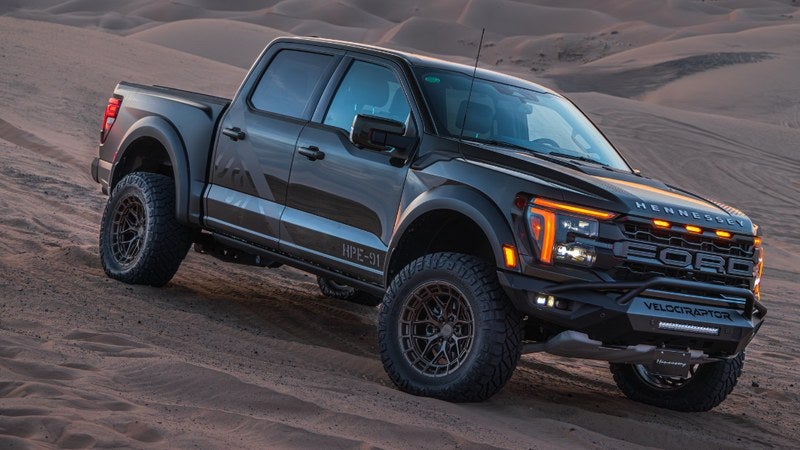
Hennessey VelociRaptor Ford F-150 Raptor on desert dunes, a Hennessey Ford truck for sale near Albuquerque, NM

Where Can I Find a Hennessey Ford Truck for Sale Near Albuquerque, NM?

The place to find a Hennessey Ford truck for sale near Albuquerque, NM is Power Ford on Montaño Road, New Mexico's Hennessey Performance dealer, which sells Hennessey-tuned Fords new from stock and as ordered builds. The 2026 lineup covers the 800-bhp F-150 Venom 800, VelociRaptor packages for the F-150 Raptor and Raptor R, and the VelociRaptor 500 Bronco Raptor. You can see current builds on our Hennessey performance Fords for sale in New Mexico page. This guide covers what each build makes, how Hennessey's 3-year/36,000-mile warranty sits alongside Ford's factory coverage, and whether to buy a truck already on the lot or order one built to your spec. The Hennessey Ford Trucks Available in 2026 Hennessey Performance, founded in 1991 and based in Sealy, Texas, now centers its Ford truck program on three platforms. The headliner for 2026 is the F-150 Venom 800, which starts with the 5.0-liter V8 F-150 and doubles its horsepower. Hennessey adds a 3.0-liter supercharger, an air-to-water intercooler, upgraded fuel injectors and its own engine calibration to take the stock 400 horsepower to 800 bhp at 6,200 rpm, with 757 lb-ft of torque, and quotes 0-60 mph in 3.4 seconds and an 11.7-second quarter mile. The package also brings Brembo six-piston brakes, a 6-inch suspension lift with FOX coilovers, 20-inch Hennessey wheels on 35-inch tires, Venom bumpers and serial-numbered interior plaques. Hennessey Package Base Ford Truck Hennessey-Rated Output Worth Knowing F-150 Venom 800 2026 F-150, 5.0L V8 (400 hp stock) 800 bhp @ 6,200 rpm / 757 lb-ft @ 4,100 rpm 3.0L supercharger; 0-60 mph in 3.4 sec (Hennessey) VelociRaptor 600 2026 F-150 Raptor, twin-turbo 3.5L V6 558 bhp @ 5,100 rpm / 672 lb-ft @ 3,500 rpm Marked sold out on Hennessey's spec sheet VelociRaptoR 1000 2026 F-150 Raptor R, supercharged 5.2L V8 (720 hp stock) 1,043 bhp @ 7,000 rpm / 824 lb-ft @ 4,800 rpm Hennessey's highest-output Raptor build VelociRaptor 500 2026 Bronco Raptor, twin-turbo 3.0L V6 (418 hp stock) 500 bhp @ 5,700 rpm / 550 lb-ft @ 3,900 rpm Production limited to 200 units The Raptor packages are where availability gets tight. Hennessey's own spec sheet marks the VelociRaptor 600 for the twin-turbo 3.5-liter Raptor as sold out, so a truck that is already built may be the only way to get one. The VelociRaptoR 1000 starts from the 720-horsepower supercharged Raptor R and is rated at 1,043 bhp. On the Bronco Raptor, the VelociRaptor 500 lifts the stock 418 horsepower to 500 bhp and adds 37-inch tires, 20-inch wheels including the spare, chassis dyno tuning and up to 500 miles of road testing, with production capped at 200 trucks. Every one of these builds carries Hennessey's 3-year/36,000-mile limited warranty. If you are still deciding whether you want a factory Raptor at all, our look at buying a new F-150 Raptor near Rio Rancho covers the stock truck first. Explore Power Performance Builds Buying a Hennessey Truck in Stock vs Ordering a Build An in-stock Hennessey truck is the faster and more certain route. The conversion is finished, calibrated and road tested, so you can drive the exact truck before you sign, match its serial-numbered plaques to the paperwork and take it home without waiting on a build slot. For a limited run like the 200-unit VelociRaptor 500, or a package Hennessey has already sold out, a truck from stock may be the only option left. The trade-off is that the color, trim and factory options were chosen before you arrived, and high-demand builds rarely sit on a lot for long, so call ahead to confirm a truck is still available before you make the trip. Ordering makes sense when the spec matters more than the date. You choose the base truck, its trim, color and factory options, then the Hennessey package, and the conversion is scheduled. Power Ford's guidance is that builds take anywhere from a few days to several weeks depending on parts and scheduling, and if the base truck is not already in the pipeline it has to be factory-ordered from Ford first, with lead times that vary by model and configuration. Buyers who want the full experience can also take final delivery at Hennessey's Pennzoil Proving Grounds in Sealy, Texas. If you already own a qualifying late-model F-150, Raptor or Bronco Raptor, ask whether upgrading your own truck is possible for the package you want. Start a Custom Factory Order How Hennessey's Warranty Works Alongside Ford's Factory Coverage A Hennessey truck effectively carries two warranties, and each covers a different part of the truck. Ford's New Vehicle Limited Warranty still runs 3 years or 36,000 miles, with powertrain coverage to 5 years or 60,000 miles, for defects in factory-supplied materials and workmanship, but Ford's list of what its warranty does not cover includes alterations, modifications and non-Ford parts. Hennessey's 3-year/36,000-mile limited warranty covers that ground instead, protecting against defects in materials and workmanship on the modifications it installs. In practice, a fault in the supercharger, intercooler or engine calibration is Hennessey's to fix, while something the build never touched, like the touchscreen, power windows or climate control, stays with Ford. The gray zone is a failure that might be blamed on the extra power. Under the Magnuson-Moss Warranty Act, Ford cannot reject a claim just because a truck has been modified; it has to show the modification caused the failure. That is a strong argument for buying through a franchised Ford dealer that knows both sides of the paperwork. Keeping Both Warranties Intact After Delivery A few details in Hennessey's terms catch new owners out. Its coverage starts when the truck leaves Hennessey's facility for final delivery, so on an in-stock truck ask for that date in writing, and a truck bought new from a dealer needs its Hennessey warranty activated online, which Hennessey limits to qualifying 2025 and newer model years. Hennessey's published terms also say the warranty is non-transferable, so if you are shopping a used Hennessey truck, verify any remaining coverage by VIN rather than assuming it carries over. The exclusions read much like Ford's, and they spell out racing, track use and excessive towing. If the truck will spend most of its life pulling a trailer, our guide to choosing a Ford truck or SUV for towing and off-road driving in New Mexico is the better place to start. Servicing is the other half. Hennessey tells owners to instruct any service department not to perform ECU flashing or software updates, because a factory update can overwrite the calibration and leave the truck undrivable until Hennessey retunes it. Power Ford services Hennessey vehicles locally, which helps, but it is still worth reminding the service advisor at every visit. The same goes for recalls: run the VIN through NHTSA's free recall lookup from time to time, and if a campaign calls for a powertrain software update, contact Hennessey support before it is applied rather than skipping it. Keep every oil change and service receipt as well, since Hennessey warns that missing maintenance records can lead to denied claims under either warranty. Visit Our Albuquerque Ford Dealership What to Budget for a Hennessey Ford Truck Because Hennessey quotes package prices on inquiry rather than publishing them, the real number is the base truck plus the conversion, priced together by the dealer. Expect a meaningful premium over a stock truck, since a package like the Venom 800 bundles a supercharger system, brakes, suspension, wheels, tires, bumpers and calibration time. Ask for an itemized buyer's order so the truck, the Hennessey package and any delivery or transport costs appear as separate lines, and you can see exactly what you are financing. Power Ford arranges financing for eligible buyers with a personalized quote, and a trade-in can be applied to the deal. Before delivery, call your insurer: a Hennessey conversion is a modification your policy should list, and it is better to know the premium before you sign than after. Common Questions About Buying a Hennessey Ford Near Albuquerque Is there a Hennessey dealer in New Mexico? Yes. Power Ford, at 1101 Montaño Rd NE in Albuquerque, is New Mexico's Hennessey Performance dealer and sells Hennessey-built Fords new, both from stock and as ordered builds. The 2026 truck lineup includes the 800-bhp F-150 Venom 800, VelociRaptor packages for the F-150 Raptor and Raptor R, and the VelociRaptor 500 Bronco Raptor. Call sales at (505) 933-7883 to check which builds are available right now. Does a Hennessey upgrade void the Ford factory warranty? Not as a whole. Ford's 3-year/36,000-mile New Vehicle Limited Warranty and 5-year/60,000-mile powertrain coverage still apply to factory parts the build does not affect, although Ford excludes alterations and modifications themselves. Hennessey covers the modifications it installs with a 3-year/36,000-mile limited warranty against defects in materials and workmanship. Under federal warranty law, Ford has to show that a modification caused a failure before it can deny the claim. How long does it take to get a Hennessey truck if I order a build? An in-stock Hennessey truck is already built, so it can go home once the paperwork is done. An ordered build takes longer: Power Ford quotes anywhere from a few days to several weeks for the conversion, depending on parts and scheduling, plus Ford's factory lead time if the base truck has to be ordered first. Limited packages, such as the 200-unit VelociRaptor 500 Bronco Raptor, can sell out entirely. Find Your Hennessey Ford in Albuquerque The quickest way to see which Hennessey Ford trucks are for sale in Albuquerque right now is to call Power Ford sales at (505) 933-7883 and ask which builds are on the lot today and which packages can still be ordered for 2026. We are at 1101 Montaño Rd NE, open Monday through Saturday from 8:00 a.m. to 8:00 p.m. and Sunday from 10:00 a.m. to 6:00 p.m., and we regularly work with performance buyers from Rio Rancho, Santa Fe, Los Lunas and across New Mexico. We'll beat any Ford deal in New Mexico, or you'll get $1,000 cash in your pocket. Schedule a Test Drive Contact Our Team

Model car, pen and lease agreement, comparing Ford lease deals near Santa Fe, NM

What Are the Best Ford Lease Deals Available Right Now Near Santa Fe, NM?

The best Ford lease deals near Santa Fe, NM right now are the current factory-backed Ford Credit lease programs, but the best one for you is the offer with the lowest total cost at the mileage you actually drive, not the smallest advertised payment. Those programs change regularly and vary by region, so Power Ford keeps the live offers on its current Ford lease and finance specials page. What follows is how to read any lease offer, from capitalized cost and residual value to money factor, due at signing and mileage allowance, plus how to size the mileage cap for an I-25 commute and what your choices are when the lease ends. How to Judge a Ford Lease Deal Beyond the Monthly Payment Every lease payment is built from the same few numbers, and two of them do most of the work. The capitalized cost is the price of the vehicle inside the lease, and it is negotiable the same way a purchase price is; anything that lowers it, such as Ford lease cash, a down payment or trade-in equity, counts as a capitalized cost reduction. The residual value is what Ford Credit projects the vehicle will be worth at the end of the term, set as a percentage of MSRP and not open to negotiation. You pay for the gap between those two numbers, so a sharp cap cost and a strong residual are what make a lease inexpensive. A higher mileage allowance typically lowers the residual, because the vehicle is expected to come back with more miles on it. The money factor is the lease's finance charge written as a small decimal. Multiply it by 2,400 for a rough APR equivalent, so 0.00250 works out to about 6%. Advertised offers are written for well-qualified lessees approved through Ford Motor Credit, so ask for the money factor on your own approval; if your credit is still rebuilding or your current loan is underwater, our guide to Ford financing with bad credit or negative equity covers that side. Then look at due at signing, which can bundle the first payment, an acquisition fee, any down payment, taxes and registration. Add everything you will pay over the lease and divide by the number of months: $3,600 due at signing on a 36-month lease adds $100 a month to the real cost. Electric-vehicle leases need one extra check, because the $7,500 federal credit that leasing companies used to pass through on many EV leases ended for vehicles acquired after September 30, 2025. Explore Ford Lease and Finance Options Choosing a Mileage Cap for a Santa Fe Commute on I-25 Mileage is where Santa Fe leases most often go wrong. Many advertised Ford lease offers are built on 10,500 miles a year, which suits a driver who mostly stays in town. Albuquerque is roughly 60 miles down I-25 from the Plaza, though, so a five-day round-trip commute adds up to about 120 miles a day, or close to 29,000 miles over a working year before a single weekend trip. A Los Alamos commute up US 84/285 and NM 502 runs about 70 miles round trip, which still lands near 17,000 a year. Overage is billed at the per-mile rate printed in your lease, often around 25 cents, so running 8,000 miles a year past the cap on a 36-month lease turns into a $6,000 bill at turn-in. Set the allowance from your real driving, with a buffer for weekend drives to Taos or Ski Santa Fe. Ford Credit lets you choose a higher annual allowance when you sign, and paying for miles that way usually costs less than paying for the same miles as overage later. If you will consistently drive far past what a lease allows, financing is usually the cheaper route, because an owned vehicle carries no overage charge. Two Ford Credit options soften a lease that runs long: buying the vehicle at lease end means you are not responsible for excess mileage charges, though the purchase price was set for a lower-mileage vehicle, and the originating dealer may be able to move the overage into your next contract, as Ford explains on its excess mileage transfer page. Splitting the week with the Rail Runner between Santa Fe and Albuquerque is another way to keep a lease inside its cap. Compare a Purchase Payment Your Options When a Ford Lease Ends Ford Credit gives you three paths at the end of the term, laid out on its lease-end process page: return the vehicle, buy it, or lease or buy another Ford. Returning starts with a complimentary pre-inspection you can schedule within 60 days of your lease-end date, which leaves time to deal with door dings, chipped glass or worn tires, the kind of wear that gravel roads and I-25 construction zones hand out, before excess wear and use charges apply. Ford Credit's optional WearCare coverage waives those charges up to $5,000 in most cases. A disposition fee applies only if your lease agreement discloses one, and qualifying customers who buy or lease a new Ford or Lincoln, or a Ford Blue Advantage certified vehicle, through Ford Credit may be eligible to have it waived. Buying is done at the purchase price Ford Credit quotes, plus taxes, and it makes sense when the vehicle is worth more than that figure or you have run well past your miles. Electric models are the one to check early, because Ford notes some EVs may not be eligible for purchase at lease end. Shopping a Ford Lease From Santa Fe Power Ford is at 1101 Montaño Rd NE in Albuquerque, about an hour south of the Santa Fe Plaza on I-25, and sales is open Monday through Saturday from 8:00 a.m. to 8:00 p.m. and Sunday from 10:00 a.m. to 6:00 p.m., so a commuter can stop in on the way home. Settle the numbers before you make the drive. Pick an offer, call (505) 933-7883, and ask for a lease worksheet on a specific stock number that shows the selling price, residual percentage, money factor, annual mileage, the per-mile overage rate and every line of the amount due at signing. Lease programs are tied to particular model years, trims and dates, so confirm the offer still applies to that vehicle on the day you plan to come in. Ask how taxes are handled as well. New Mexico charges a 4% motor vehicle excise tax when a vehicle is titled, and a leased vehicle is titled in the leasing company's name, so find out whether that cost is being paid at signing or built into the capitalized cost. Either way it should appear as its own line. Have the worksheet sent by email so you can compare it line by line with any other quote you are holding, rather than weighing two monthly payments that may rest on different mileage, terms or amounts due up front. Shop Power Ford From Santa Fe Using Trade-In Equity as Your Lease Down Payment If the vehicle you drive now is worth more than you owe on it, the difference is equity, and on a lease it can cover the amount due at signing or reduce the capitalized cost to bring the monthly payment down. Be careful about putting a large sum toward the cap cost, though. If a leased vehicle is totaled or stolen early in the term, gap protection is designed to cover the difference between the insurance payout and what you still owe, but it does not give back money you put down. A sensible middle path is to let the equity cover the drive-off costs, then ask whether anything left over can come back to you rather than disappearing into the cap cost. If your trade is a pickup, our breakdown of what drives a Ford F-150's trade-in value shows which engine, cab, mileage and condition details move the number, so you know roughly what you are bringing to the table before the appraisal. Common Questions Santa Fe Drivers Ask About Ford Leases What are the best Ford lease deals near Santa Fe, NM right now? The best Ford lease deal near Santa Fe is the one with the lowest total cost at the mileage you actually drive, not simply the lowest monthly payment. Ford Credit lease programs change regularly and vary by region, so check Power Ford's new Ford specials page for current offers, then compare each one's capitalized cost, residual value, money factor, amount due at signing and annual mileage allowance before you choose. How many miles a year should I get on a Ford lease if I commute from Santa Fe? Start from your real driving, not the advertised allowance. Many Ford lease offers are built on 10,500 miles a year, but a five-day round trip between Santa Fe and Albuquerque on I-25 runs about 120 miles a day, close to 29,000 miles a year. Choose a higher allowance at signing if you will go over modestly. If you will run far past it, financing usually costs less than paying overage charges at turn-in. What are my options at the end of a Ford Credit lease? Ford Credit gives you three choices at lease end: return the vehicle, buy it at the purchase price Ford Credit quotes, or lease or buy another Ford. Returning starts with a complimentary pre-inspection you can schedule within 60 days of your lease-end date, and any excess mileage or wear charges are settled then. Buying the vehicle means you are not responsible for excess mileage charges, though some electric models may not be eligible for purchase. Get a Side-by-Side Ford Lease Quote Before You Drive Down The quickest way to find the best Ford lease deal near Santa Fe is to compare real worksheets rather than headline payments. Tell us the model you want, how many miles you drive in a year and what you are trading, and we will price the same vehicle as a lease at two mileage allowances and as a purchase, so you can see which costs less for the way you drive. We'll beat any Ford deal in New Mexico, or you'll get $1,000 cash in your pocket. Call (505) 933-7883 to set it up before you leave Santa Fe. Schedule a Test Drive Contact Our Team

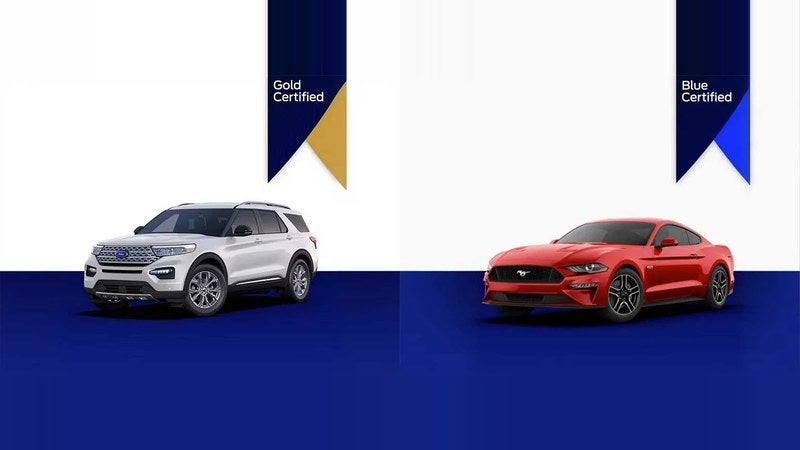
Ford Gold Certified Explorer and Blue Certified Mustang compared, Ford Blue Advantage tiers near Santa Fe, NM

Ford Gold vs Blue Certified Near Santa Fe, NM: What's the Difference and Who Sells Them

Ford Gold Certified is the stricter tier: Ford-only vehicles up to six years old with under 80,000 miles, a 172-point inspection and a 7-year/100,000-mile powertrain warranty. Blue Certified accepts any make up to ten years old and 150,000 miles, with a 139-point inspection and 90-day/4,000-mile coverage. Near Santa Fe, both tiers are sold only through participating franchised Ford dealers, and Power Ford, about an hour south on I-25 in Albuquerque, lists its certified pre-owned Ford inventory online. Below, the two tiers go side by side on eligibility, inspections, warranty clocks, roadside help, the return window and the history report, followed by which one suits which kind of Santa Fe, NM driver. Gold or Blue: Where Ford Draws the Line Both tiers belong to Ford Blue Advantage, Ford's certified pre-owned program, and both require a Ford factory-trained technician to inspect the vehicle before it can wear the badge. What separates them is the vehicle itself. Gold Certified is reserved for Ford models, such as an F-150, Bronco, Explorer, Escape or Maverick, that are no more than six years old and still under 80,000 miles, which in 2026 means roughly the 2021 model year and newer. Blue Certified opens the gate to anything up to ten years old and under 150,000 miles, Ford or not, so a Subaru Outback or Toyota Tacoma traded in at a Ford store can still come out certified. A third tier matters if you are shopping electric. EV Certified covers models like the Mustang Mach-E and F-150 Lightning on the same six-year, 80,000-mile terms as Gold, with a 127-point inspection built around the electric drivetrain and an 8-year/100,000-mile BaseCARE EV limited warranty. For gas and hybrid shoppers, though, the choice is Gold versus Blue, and which tier a car can carry is set by its make, age and mileage rather than negotiated at the desk. A five-year-old Escape with 60,000 miles can qualify for Gold; the same Escape at 85,000 miles can only go Blue. Confirm the tier on the specific VIN, in writing, before you start comparing prices. Shop Used Cars Near Santa Fe Ford Gold vs Blue Certified, Side by Side The figures below are the current program terms Ford publishes in its Ford Blue Advantage tier comparison. Two rows do most of the work. The powertrain warranty exists only on Gold, and the comprehensive warranty runs four times longer on Gold in months and three times longer in miles. The CARFAX report and the 14-day return window, by contrast, are identical on both. Program Detail Gold Certified Blue Certified Eligible makes Ford models only Ford and non-Ford makes Maximum age Up to 6 years old Up to 10 years old Maximum mileage Under 80,000 miles Under 150,000 miles Inspection 172-point, by Ford factory-trained technicians 139-point, by Ford factory-trained technicians Comprehensive limited warranty 12 months / 12,000 miles 90 days / 4,000 miles Powertrain limited warranty 7 years / 100,000 miles from the original warranty start date Not included 24/7 roadside assistance 7 years 90 days Money-back guarantee 14 days / 1,000 miles, with an exchange option 14 days / 1,000 miles, with an exchange option Vehicle history report CARFAX report included CARFAX report included FordPass Rewards points 22,000 11,000 Read the money-back row closely, because it is the one shoppers most often misread. Ford gives you 14 days or 1,000 miles, whichever comes first, to bring a certified vehicle back or have the dealer help you into a different one, but the trade-in you handed over is not returned, a replacement vehicle can mean a new credit application, and Ford notes the guarantee applies at participating dealers, so make sure it appears on your buyer's order. The CARFAX report is no formality on a Blue Certified car either: a ten-year-old vehicle has had more owners and more chances at a body shop, and the report is where that history shows up. See Ford Blue Advantage at Power Ford How the Gold and Blue Warranty Clocks Run The two Gold warranties start on different dates, and that is where buyers lose track of what they actually have. Ford's Gold Certified limited warranty booklet starts the 12-month/12,000-mile comprehensive coverage on the later of two dates: the day you buy the vehicle, or the day the original 3-year/36,000-mile new-vehicle coverage expires. On a two-year-old F-150 with 20,000 miles, the factory bumper-to-bumper warranty keeps running and the certified coverage stacks on after it. The 7-year/100,000-mile powertrain coverage counts from the original new-vehicle warranty start date instead, so a 2023 Bronco Sport first sold in October 2023 is covered to October 2030 or 100,000 miles, whichever comes first. Gold repairs carry a $100 deductible per visit, and the coverage transfers if you sell. Blue's 90-day/4,000-mile coverage is a short safety net, designed to catch the problems that surface in the first months of ownership. Our guide to choosing a Ford Blue Advantage dealer in Albuquerque covers the dealership side of the same decision. Which Tier Fits Which Santa Fe Buyer Gold Certified earns its higher price for Santa Fe drivers who pile on miles or lean hard on a drivetrain. Commute down I-25 to Albuquerque or up NM 502 to Los Alamos and you can put 20,000 miles a year on a vehicle, which makes the length of the powertrain clock the coverage that matters most. The same goes for anyone who makes the winding climb to Ski Santa Fe all winter, tows a small trailer out to Abiquiu Lake, or takes the High Road to Taos on gravel spurs: a four-wheel-drive F-150, Bronco or Explorer gets worked, and a powertrain warranty that runs to seven years or 100,000 miles from the original sale, with roadside help alongside it, is what the extra money buys. High-mileage commuters should check how much of the 100,000 miles is left, not just the years. Blue Certified is the better fit when the budget is fixed and the miles will be modest: a first car for a Santa Fe Community College student, a second vehicle for errands around the Railyard, or a downsizer's sedan that rarely leaves city limits. Because Blue takes any make, it is also how a shopper who simply prefers a Subaru or a Honda gets a factory-backed inspection and warranty from a Ford store. Go in clear-eyed about what you are buying: 90 days of coverage, no powertrain warranty, and a vehicle that may be ten years into its life. Read the CARFAX report, run the VIN through NHTSA's recall lookup, and keep a repair cushion for the years the warranty will not reach. See How We Serve Santa Fe Drivers Buying a Certified Ford From Santa Fe Power Ford is at 1101 Montaño Rd NE in Albuquerque, roughly 60 miles and about an hour south of the Santa Fe Plaza on I-25. Certified stock turns over quickly, so the efficient way to shop from Santa Fe is to pick a vehicle online, call (505) 933-7883, and have us confirm its tier, original warranty start date and remaining powertrain miles before you make the drive. The trip home is well inside the 1,000-mile return window, so the money-back guarantee works the same for you as it does for a buyer across town. If a three-row SUV is on your list, our breakdown of what a Gold Certified Ford Explorer's warranty covers runs the same numbers on one specific model. Common Questions Santa Fe Shoppers Ask About Gold vs Blue Certified What's the difference between Ford Gold Certified and Blue Certified? Gold Certified covers Ford models up to six years old with under 80,000 miles, passes a 172-point inspection, and includes a 12-month/12,000-mile comprehensive warranty plus a 7-year/100,000-mile powertrain warranty. Blue Certified accepts any make up to ten years old and under 150,000 miles, passes a 139-point inspection, and includes 90-day/4,000-mile comprehensive coverage with no powertrain warranty. Both include a CARFAX report and a 14-day/1,000-mile money-back guarantee. Who sells Ford Blue Advantage certified vehicles near Santa Fe, NM? Ford Blue Advantage Gold and Blue Certified vehicles are sold only through participating franchised Ford dealers. Power Ford, at 1101 Montaño Rd NE in Albuquerque, sits about an hour south of Santa Fe on I-25 and lists its certified pre-owned inventory online. Call (505) 933-7883 to confirm which tier a specific vehicle carries, its original warranty start date, and how much powertrain coverage remains before you drive down. Does Ford Blue Certified come with a powertrain warranty? No. Blue Certified includes a 90-day or 4,000-mile comprehensive limited warranty, whichever comes first, plus 90 days of 24/7 roadside assistance, but no separate powertrain warranty. The 7-year/100,000-mile powertrain limited warranty belongs to Gold Certified and is measured from the vehicle's original warranty start date. If long-term engine and transmission protection matters to you, shop Gold Certified or ask about extended coverage before you sign. See Both Tiers Before You Decide The quickest way to settle Gold versus Blue is to look at one of each with the inspection checklist and CARFAX report in hand. Tell us your budget and how many miles you drive in a year, and we will pull the certified Fords that fit, along with any Blue Certified vehicles from other makes on the lot. We'll beat any Ford deal in New Mexico, or you'll get $1,000 cash in your pocket. Call (505) 933-7883 to line up a visit from Santa Fe. Schedule a Test Drive Contact Our Team

Power Ford team with the 2026 Cars.com Dealer of the Year award, a best rated Ford dealer near Los Lunas, NM

Which Is the Best Rated Ford Dealer Near Los Lunas, NM?

The best rated Ford dealer near Los Lunas, NM is the one whose reviews hold up on four tests at once: there are a lot of them, most of them are recent, a manager answers them, and the scores agree across Google, Cars.com, DealerRater and CARFAX. Power Ford in Albuquerque, about 30 minutes north on I-25, was named the 2026 Cars.com Ford Dealer of the Year in New Mexico on almost exactly those measures. Our wider guide to what to look for in a Ford dealership across Albuquerque and Santa Fe covers inventory, service and financing; this one is about reading the reviews before you make the drive up from Valencia County. How to Judge Ford Dealer Reviews Before You Leave Los Lunas Start with volume and recency, because a star average means very little without both. A near-perfect score built on a few dozen reviews can be the product of one good month, while a strong score built on thousands of reviews over several years is far harder to inflate. Then sort by newest. Dealerships change sales managers, finance staff and service advisors, so what buyers said in the last few months tells you more about the visit you are about to have than what they said three years ago. A healthy profile shows a steady stream of new reviews every week, not a burst followed by silence. Next, read the replies. A store where management answers reviews, the critical ones especially, is showing you that someone is accountable when a deal or a repair goes sideways, and the tone of that reply tells you more than the fact that it exists. Last, check that the picture holds across platforms. Each site collects feedback from a slightly different slice of customers, so a dealership that looks excellent on one and mediocre on another deserves a closer read. Federal rules help at the edges: the FTC rule banning fake reviews and testimonials, in force since October 2024, bars businesses from posting fake reviews, paying for reviews that express a particular sentiment, or using threats to get negative ones taken down. Reading for patterns is still your job. See Our Ford Dealership for Los Lunas What the 2026 Cars.com Dealer of the Year Actually Measures Cars.com's Dealer of the Year award is useful precisely because it is built from the signals you would check by hand. For the 2026 awards, Cars.com evaluated nearly 1.3 million consumer reviews submitted during the 2025 calendar year and scored dealerships on average star rating, total review volume and management response rate. A store needed at least 25 reviews in the year to qualify, so a handful of five-star posts from friends and family cannot carry anyone onto the list. The response-rate piece is the telling one: Cars.com reported that nearly 90% of 2026 winners actively responded to consumer reviews, compared with 52% of dealerships that did not win. Power Ford was named the 2026 Cars.com Ford Dealer of the Year in New Mexico, which puts us at the top of the state's Ford stores on Cars.com's combined measure of rating, volume and responsiveness for 2025. For a Los Lunas buyer that carries more weight than any slogan, because the result was calculated from what other customers wrote rather than anything the dealership submitted. It is still one platform among several, which is why we would rather you read our Google, DealerRater and CARFAX reviews alongside it than take the badge on its own. See Our 2026 Cars.com Dealer Award Seven Straight Years as a CARFAX Top Rated Dealer The second recognition worth weighing is the one with the longest track record. Power Ford was named a 2025 CARFAX Top Rated Dealer for the seventh consecutive year, and the award is drawn from verified customer ratings and reviews rather than internal scoring or paid placement. Consistency is the point here. One strong year can come down to a single great sales manager; seven in a row means the standard held through staff changes, inventory swings and some very unusual years for the car business. For used-car shoppers in Los Lunas it has a practical side too, because the Top Rated recognition appears inside the CARFAX reports many buyers already pull when they compare used vehicles. What Reviews Can't Tell You About a Specific Car Reviews rate the dealership, not the vehicle. Even at a store with a strong reputation, the car on the lot has its own history, and that part is yours to verify. Ask for an out-the-door price in writing before you leave home, with the vehicle price, dealer fees, tax and title itemized, and request the history report on the exact VIN. Then run that VIN through NHTSA's free recall lookup. It takes under a minute and shows any open safety recall, and no dealership can edit what it returns. The same standard applies whether you are shopping new or used. Every pre-owned vehicle we list comes with a history report and goes through a multi-point inspection by our technicians before it is offered for sale, and you should be able to see both before you commit to the drive. If anything is missing from a listing, ask for it. How quickly and plainly that answer arrives is a small preview of the experience the reviews describe. Shop Used Cars Near Los Lunas Making the Drive Up From Los Lunas and Valencia County Power Ford is at 1101 Montaño Rd NE in Albuquerque, about 30 minutes north of Los Lunas on I-25. Sales is open Monday through Saturday from 8:00 a.m. to 8:00 p.m. and Sunday from 10:00 a.m. to 6:00 p.m., so an evening visit after work is realistic. We regularly work with buyers from Los Lunas, Belen, Bosque Farms, Peralta, Tomé and Meadow Lake, and the review checklist above works the same from any of them. We applied a similar approach for shoppers coming from the north in our guide to finding a no-pressure Ford dealership near Santa Fe, where the drive is twice as long and settling the numbers before you leave matters even more. Common Questions About Ford Dealer Reviews Near Los Lunas Which Ford dealer near Los Lunas, NM has the best customer reviews? Power Ford in Albuquerque, about 30 minutes north of Los Lunas on I-25, was named the 2026 Cars.com Ford Dealer of the Year in New Mexico. Cars.com scored that award on average star rating, review volume and management response rate, using reviews posted during 2025. Power Ford has also been a CARFAX Top Rated Dealer for seven consecutive years through 2025, based on verified customer ratings and reviews. How can I tell if car dealership reviews are real? Look for reviews that are numerous, recent and spread across several platforms such as Google, Cars.com, DealerRater and CARFAX, with similar scores on each. Read the critical reviews and check whether a manager replied with specifics rather than a template. A sudden burst of five-star reviews followed by silence is a warning sign. Since October 2024, an FTC rule has also banned businesses from faking reviews or paying for positive ones. Where can I read customer reviews of Power Ford in Albuquerque? Power Ford has customer reviews on Google, Cars.com, DealerRater and CARFAX, and reading at least two of them gives a fairer picture than any single score. Sort each by newest to see how the current team is doing, and read the management responses as closely as the reviews themselves. If you have bought or serviced a vehicle with us, your own Google review helps the next Los Lunas shopper. Read the Reviews, Then Hold Us to Them Reviews are the fastest way to narrow down the best rated Ford dealer near Los Lunas, but they are a starting point rather than a verdict. Read ours on a couple of platforms, email for an out-the-door price on the vehicle you want, and see whether the visit matches what other customers described. We'll beat any Ford deal in New Mexico, or you'll get $1,000 cash in your pocket. Call sales at (505) 933-7883, or book a test drive and judge us against the standard our reviews set. If you've already visited Power Ford, please leave us a review! Schedule a Test Drive Contact Our Team

Ford Blue Advantage: Is a Certified Pre-Owned Ford Worth It?

Ford Blue Advantage: Is a Certified Pre-Owned Ford Worth It?

Ford Blue Advantage Explained: Gold vs. Blue Certified Ford Vehicles Buying used does not have to mean guessing. Ford Blue Advantage gives shoppers a structured way to compare certified pre-owned Ford vehicles that have been inspected, reviewed for history, and backed by Ford warranty coverage. The biggest question is not whether a certified used Ford costs more than a typical used vehicle. It is whether the additional inspection process, warranty coverage, and peace of mind are worth it for the way you shop. Gold Certified vs. Blue Certified A Gold Certified Ford must be no more than six years old, have fewer than 80,000 miles, and pass a 172-point inspection. Gold Certified vehicles also come with a 12-month or 12,000-mile comprehensive limited warranty and a 7-year or 100,000-mile powertrain limited warranty, measured from the original new-vehicle warranty start date. A Blue Certified vehicle can be up to ten years old, have fewer than 150,000 miles, and must pass a 139-point inspection. Blue Certified vehicles include a 90-day or 4,000-mile comprehensive limited warranty. The biggest difference between Gold Certified and Blue Certified comes down to age, mileage, inspection depth, and warranty coverage. Gold Certified is the more selective program and is limited to newer Ford vehicles with fewer miles. Blue Certified allows older and higher-mileage vehicles while still requiring a detailed inspection and Ford-backed warranty coverage. For shoppers, the right choice depends on whether you want the most stringent certification or simply want more reassurance than a typical used vehicle may offer. A certified pre-owned inspection is not just about making sure the vehicle starts and drives. Ford's Gold Certified inspection looks at 172 different areas, including the vehicle's history, drivetrain, brakes, suspension, tires, steering, electrical components, and overall condition. That matters because some of the most expensive used-vehicle problems are not always obvious during a short test drive. One of the more interesting Ford Blue Advantage benefits is the 14-day or 1,000-mile money-back guarantee. If the vehicle is not the right fit, eligible buyers can return it to the Ford dealer where it was purchased within the program limits. That gives a used-car shopper something a normal test drive cannot provide: time to actually live with the vehicle before deciding whether it truly fits their needs. Certification also matters when shopping for a higher-mileage truck. Mileage alone does not tell you whether an F-150 has been well maintained or worked hard its entire life. A Ford Blue Advantage inspection gives buyers another layer of information beyond the number on the odometer, which can be especially valuable when comparing used F-150s, Rangers, Explorers, or other Ford vehicles. Ford Blue Advantage is not limited to gas-powered vehicles. Ford also offers EV Certified vehicles for shoppers considering models such as the Mustang Mach-E. Those vehicles go through a dedicated 127-point inspection process that includes EV-specific systems such as charging components and high-voltage systems. Is a Ford Blue Advantage vehicle worth it? For buyers who want more certainty when shopping used, the answer can be yes. You are not just paying for a vehicle with a certification badge. You are getting an inspection process, vehicle history review, Ford-backed warranty coverage, roadside assistance, and a money-back guarantee. The real value is reducing some of the uncertainty that comes with buying used. If you are shopping for a certified pre-owned Ford in Albuquerque, Rio Rancho, or the surrounding New Mexico area, compare current Ford Blue Advantage inventory at MyFordDealer.com or visit Power Ford and see the difference between Gold Certified, Blue Certified, and traditional used vehicles for yourself.

What Ford Is Right for You?

What Ford Is Right for You?

What Ford Is Right for You? 2026 Ford Buyer’s Guide for New Mexico One of the best things about shopping for a Ford is that there is no single answer for every driver. Some buyers need a truck that can tow and haul. Others need a family SUV, something capable off-road, a fuel-conscious hybrid, an electric vehicle for daily commuting, or a Mustang that makes the drive itself more enjoyable. The better question is not, “What is the best Ford?” It is, “What Ford fits the way I actually live?” For New Mexico drivers, that can mean thinking about everything from Albuquerque commuting and I-25 travel to mountain roads, camping, towing, family space, fuel costs, charging, and weekend recreation. The right Ford is the one that gives you the capability you will actually use. If You Need a Truck If towing, hauling, work, or outdoor recreation are a regular part of your life, Ford gives you several very different truck choices. The Maverick is the place to start if you want pickup utility without moving into a traditional midsize or full-size truck. Ford offers a hybrid powertrain across the 2026 Maverick lineup, making it especially interesting for buyers who want a truck bed and everyday efficiency. The Ranger makes sense for drivers who want more traditional truck capability in a midsize package. It is easier to maneuver than a full-size truck while still offering meaningful towing, available four-wheel drive, and off-road capability. The F-150 is the better fit when you need more towing, payload, cabin choices, bed choices, and powertrain flexibility. Ford also continues to offer the available 3.5L PowerBoost Full Hybrid V6 in the 2026 F-150, giving buyers a hybrid option without giving up full-size truck capability. And if your truck is primarily a work tool and your towing or payload requirements go beyond what an F-150 is designed to handle, Super Duty is where the conversation should move next. Maverick is for the buyer who wants some truck. Ranger is for the buyer who needs a truck. F-150 is for the buyer who needs more truck. Super Duty is for the buyer whose truck is part of the job. If You Need an SUV for Everyday Life The Bronco Sport works well for someone who wants a manageable everyday SUV with standard four-wheel drive and enough capability for camping, snow, dirt roads, and weekend recreation. The Explorer is the stronger choice when passenger space becomes a priority. It gives buyers three-row seating and more family-oriented versatility. The Expedition moves into full-size SUV territory for drivers who want more passenger room, cargo space, towing capability, and long-distance family flexibility. Bronco Sport is the everyday adventure SUV. Explorer is the family SUV. Expedition is the full-size family and towing SUV. If You Want a Hybrid Ford currently offers hybrid options in both the Maverick and F-150 lineups. The Maverick hybrid is geared toward drivers who want pickup versatility while keeping efficiency and daily usability high. The F-150 PowerBoost is a very different proposition. It is a full-size truck first, with hybrid technology added to deliver strong torque, towing capability, and features such as available Pro Power Onboard. Maverick hybrid is about doing truck things more efficiently. F-150 PowerBoost is about adding hybrid technology to a truck that still needs to work like an F-150. If You Are Ready for an Electric Vehicle The 2026 Mustang Mach-E is currently Ford’s primary all-electric consumer vehicle, with rear-wheel-drive and electric all-wheel-drive configurations available depending on trim. Ford lists Select, Premium, and GT series for 2026. The Mustang Mach-E makes sense for someone whose daily driving fits electric ownership well and who wants an SUV with strong acceleration, modern technology, and no gasoline stops. For an Albuquerque commuter with reliable home charging, an EV can be particularly convenient because the vehicle can start each morning with a charged battery instead of requiring regular trips to the gas station. If you frequently take long rural trips, tow, travel in areas where charging access may be limited, or cannot charge reliably at home or work, an EV may require more planning than a gas or hybrid vehicle. The right answer depends less on whether EVs are “good” and more on whether charging fits your routine. If You Want Something Fun Then we get to Mustang. Not every vehicle decision needs to be justified by towing capacity, cargo volume, or fuel economy. The 2026 Mustang is for the buyer who wants the vehicle itself to be part of the experience. The current lineup includes EcoBoost models for buyers who want Mustang styling and performance in a more approachable package, along with V8-powered GT and higher-performance versions for buyers who specifically want the sound and character of a traditional Mustang. Ford continues to list the 2026 Mustang alongside its core current lineup. Conclusion Choosing the right Ford should not start with horsepower, trim levels, or the biggest vehicle on the lot. It should start with what you actually need your vehicle to do. If you commute around Albuquerque and occasionally need a bed, Maverick may make more sense than an F-150. If you need serious towing and hauling capability, F-150 or Super Duty may be worth the extra size. If your priorities are family space, outdoor recreation, electric driving, or simply enjoying the road, Ford has completely different vehicles designed around those needs. The right Ford is not the one with the most capability. It is the one with the right capability for your life. That is the decision Power Ford should help you make. Compare current Ford trucks, SUVs, hybrids, electric vehicles, and Mustangs at MyFordDealer.com, or visit Power Ford in Albuquerque and drive a few different options back-to-back before deciding.

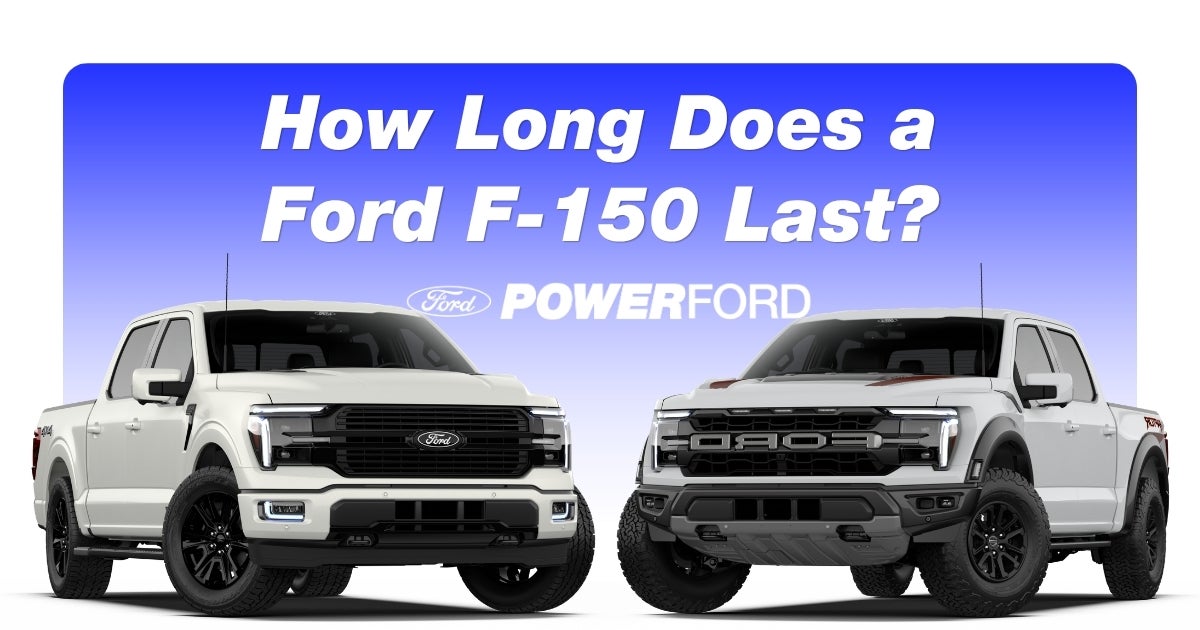
How Long Does a Ford F-150 Last?

How Long Does a Ford F-150 Last? 100K, 200K Miles and Beyond!

How Long Does a Ford F-150 Last? Reliability, Mileage, and Maintenance Can a Ford F-150 last 200,000 miles? Absolutely. But there is no mileage number where every F-150 suddenly becomes old, and there is no guarantee that every truck will reach 200,000 miles. Current vehicle longevity research estimates the F-150’s average lifespan at roughly 164,000 miles, with about one in four reaching at least 200,000 miles. The bigger question is how the truck was maintained and what kind of work those miles involved. Two F-150s can both show 100,000 miles and have lived completely different lives. One may have spent most of those miles cruising on I-25, while another may have spent years towing trailers, idling on job sites, carrying heavy equipment, or driving dusty roads. Ford considers towing, heavy loads, excessive idling, dust, and extreme temperatures severe driving conditions. That means the number on the odometer tells you how far the truck traveled, but it does not tell you how hard it worked to get there. Is 100,000 miles too much for an F-150? There is nothing magical about 100,000 miles that suddenly makes an F-150 a bad truck. A well-maintained F-150 with 120,000 miles may be a much stronger purchase than a neglected truck with 70,000 miles. For a used buyer, maintenance history, towing history, transmission behavior, fluid leaks, tire wear, suspension condition, previous damage and warning lights can tell you more than mileage alone. What helps an F-150 reach high mileage? The best way to help an F-150 reach high mileage is consistent maintenance. Stay on top of oil changes, fluids, filters, tires, brakes, and cooling system service, and pay attention to small issues before they become expensive repairs. If your truck spends a lot of time towing, idling, hauling heavy loads, or driving in hot and dusty conditions, your maintenance schedule should reflect that extra workload. For New Mexico F-150 owners, dust, heat, mountain driving, and rough roads make regular inspections even more important. A high-mileage truck is not automatically a worn-out truck. In many cases, the difference between an F-150 that feels tired at 100,000 miles and one that keeps going well beyond that point comes down to how consistently it was maintained and how quickly small problems were addressed. Does New Mexico Driving Affect F-150 Longevity? New Mexico driving can expose an F-150 to a wide range of conditions. Albuquerque commuting may be easy duty, while towing into the mountains, driving on dusty roads, hauling equipment, or working in extreme heat can place significantly different demands on the same truck. None of those conditions mean an F-150 cannot have a long service life. They simply make it more important to maintain the truck based on how it is actually used rather than treating every mile the same. Conclusion So how long does an F-150 last? There is no single mileage number that determines when a truck is finished. Some F-150s will need major repairs before 200,000 miles, while others can remain useful well beyond that point. The biggest factors are how the truck was maintained, how hard it worked, and whether small problems were handled before they became expensive ones. If you are shopping for a used F-150 in Albuquerque or the surrounding New Mexico area, do not judge the truck by mileage alone. Look at the entire story.

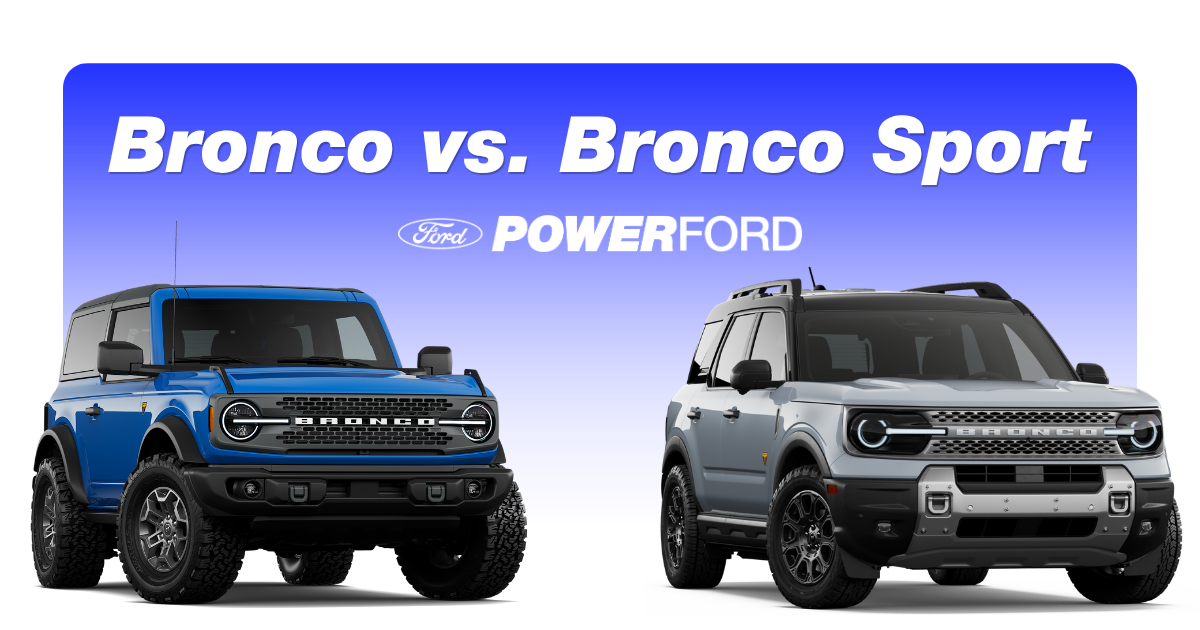
Bronco vs. Bronco Sport

2026 Ford Bronco vs. Bronco Sport: Which Is Better for New Mexico?

Bronco vs. Bronco Sport The 2026 Ford Bronco and Bronco Sport may share a name, but they are built for two very different types of drivers. The Bronco Sport is the better fit for someone who wants a comfortable everyday SUV with standard Four Wheel Drive and enough capability for camping, dirt roads, snow, and weekend adventures. The Bronco takes things further with body-on-frame construction, available serious off-road equipment, removable doors and roof options, and considerably more customization. The easiest way to think about it is this: the Bronco Sport is an everyday SUV that is ready for adventure, while the Bronco is an adventure vehicle that can still handle everyday life. Bronco Sport Capability Do not let the Bronco Sport name fool you into thinking it is simply a smaller Bronco with less capability. Every 2026 Bronco Sport comes standard with Four Wheel Drive, which already makes it an interesting choice for New Mexico drivers. Step up to the Bronco Sport Badlands, and you get a 2.0L EcoBoost engine, Advanced 4x4 with a twin-clutch rear drive unit, seven G.O.A.T. Modes, underbody protection, and available Sasquatch equipment. For someone who spends Monday through Friday driving around Albuquerque but wants to reach a campsite, trailhead, ski area, or forest road on the weekend, that may be more capability than they actually need. Bronco Capability The full-size Bronco is where the conversation changes from getting to the trail to actually taking on the trail. Buyers can choose more powerful EcoBoost engines, serious suspension and Four Wheel Drive hardware, available locking front and rear differentials with the Sasquatch Package, and even a manual transmission on certain configurations. You can also remove the doors and roof, which is something the Bronco Sport simply is not designed to do. If exploring difficult terrain is one of the reasons you are buying the vehicle in the first place, the Bronco gives you considerably more room to grow into that lifestyle. Daily Driving Bronco Sport There is also the part of ownership that happens when you are not climbing rocks. If most of your mileage comes from commuting around Albuquerque, highway driving, school runs, or errands, the Bronco Sport makes a strong case for itself. The 1.5L models are EPA-estimated at 25 MPG city and 30 MPG highway, while still giving you standard Four Wheel Drive. That combination makes the Bronco Sport particularly appealing for someone who wants outdoor capability without driving a more specialized off-road vehicle every day. Which Bronco is best for New Mexico? New Mexico is also a good place to appreciate the difference between these two SUVs because our driving conditions can change quickly. You can leave Albuquerque on dry pavement and find snow, mud, loose dirt, or rough roads as you gain elevation or head farther away from the city. For most drivers who occasionally encounter those conditions, the Bronco Sport provides a very useful combination of Four Wheel Drive capability and everyday comfort. For drivers who actively seek out tougher trails, deeper terrain, and more challenging off-road situations, that is where the additional hardware available on the Bronco begins to make sense. Bronco vs. Bronco Sport: Conclusion When choosing between the 2026 Ford Bronco and Bronco Sport, do not just ask which SUV is better. Ask how you actually spend your time behind the wheel. If most of your driving happens on pavement around Albuquerque, with occasional camping, dirt roads, snow, or weekend trips into the mountains, the Bronco Sport offers a strong balance of everyday comfort, standard Four Wheel Drive, fuel efficiency, and off-road capability. If off-road driving is a major part of your lifestyle and you want more ground clearance, stronger trail-focused hardware, removable doors and roof options, and greater customization, the full-size Bronco is likely the better fit. For New Mexico drivers, the right choice between the Bronco and Bronco Sport comes down to how much of your life happens on pavement and how much of it starts when the pavement ends.

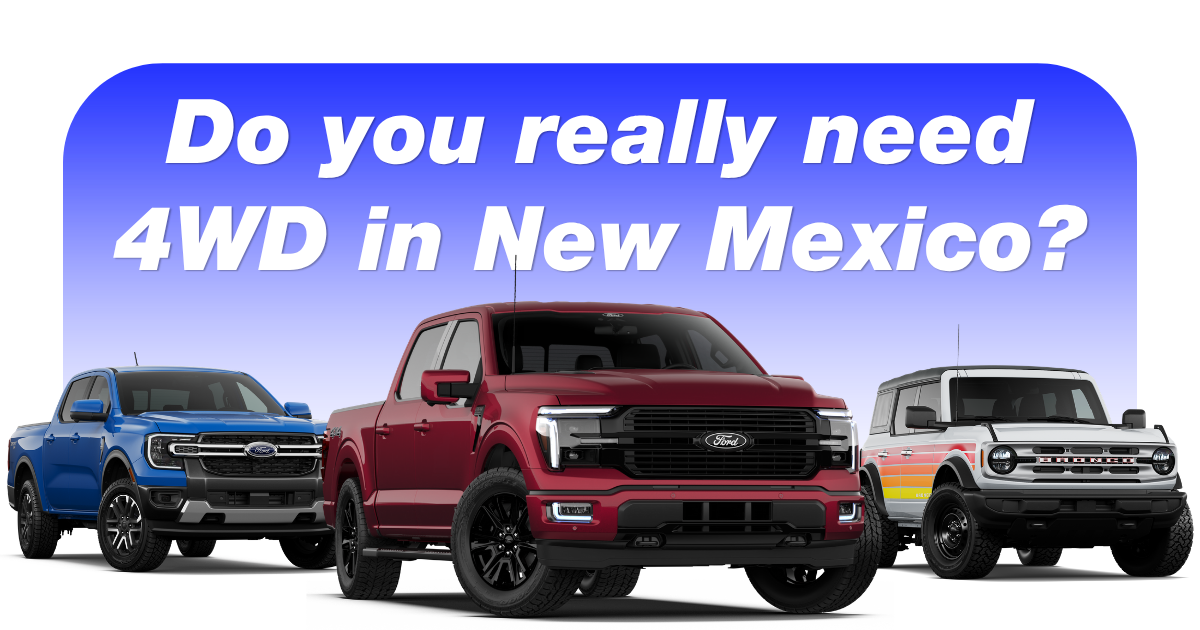
Do You Really Need Four Wheel Drive in New Mexico?

Do You Really Need 4WD in New Mexico?

Living in New Mexico does not automatically mean you need Four Wheel Drive. If most of your driving consists of commuting around Albuquerque, running errands, and traveling on maintained highways, a two-wheel-drive vehicle with good tires may be all you need. However, if your lifestyle regularly takes you into the mountains, onto dirt roads, through snow, or farther off the pavement, Four Wheel Drive can quickly become one of those features you are glad you have. The real question is not whether Four Wheel Drive is better. The question is whether your day-to-day driving gives you a reason to use it. When Does Four Wheel Drive Make Sense in New Mexico? New Mexico has a little bit of everything. Albuquerque can be dry and sunny while roads farther north are dealing with snow and ice. Summer monsoon storms can also turn otherwise manageable roads into muddy or slick conditions very quickly. Four Wheel Drive makes the most sense for drivers who regularly: Go camping or hunting on dirt and forest roads. Travel into the mountains during the winter. Drive through snow, mud, sand, or loose terrain. Tow recreational equipment into areas where road conditions may be unpredictable. Spend time on job sites or rural roads. Want additional off-road capability for weekend recreation. If most of your driving never puts you in those situations, you may not need the additional capability. Four Wheel Drive Does Not Replace Good Tires This might be the most important thing to understand: Four Wheel Drive can help your vehicle gain traction and keep moving, but it does not make snow, ice, or wet pavement disappear. Your tires still play a major role in how well your vehicle accelerates, turns, and stops. The New Mexico Department of Transportation recommends checking your tires before winter travel, reducing your speed in snow and ice, increasing following distance, and checking road conditions before heading out. During monsoon conditions, NMDOT also recommends slowing down, avoiding cruise control on slippery roads, and never attempting to cross a flooded roadway. In other words, Four Wheel Drive is a great tool. It is not a substitute for good tires and good judgment. What Does Ford Four Wheel Drive Give You? The advantage of buying a modern Ford with Four Wheel Drive goes beyond simply sending power to all four wheels. On the 2026 Ford F-150, available Four Wheel Drive configurations can include selectable drive modes for conditions such as Slippery, Deep Snow and Sand, and Mud and Ruts. Models such as the F-150 Tremor take that capability even further with standard Four Wheel Drive, an electronic locking rear differential, off-road suspension, all-terrain tires, and additional trail-focused drive modes. The 2026 Ford Ranger also offers Four Wheel Drive across the lineup, with Four Wheel Drive standard on Ranger Raptor. Depending on the model and equipment, Ranger drivers can access terrain-focused drive modes designed for conditions such as mud, sand, rocks, and other off-road situations. That matters in New Mexico because the road you start on is not always the road you finish on. So Do You Actually Need Four Wheel Drive? If you spend nearly all of your time driving around Albuquerque on paved roads, you probably do not need Four Wheel Drive simply because you live in New Mexico. If your weekends involve camping, hunting, fishing, skiing, mountain roads, forest roads, or exploring places where pavement eventually disappears, Four Wheel Drive becomes much easier to justify. It really comes down to where you drive when you are not commuting. You may only need Four Wheel Drive a handful of times each year, but those handful of times may be exactly why you bought it. At Power Ford, we would rather help you determine how you actually use your vehicle than automatically tell you that you need more equipment. Compare available two-wheel-drive and Four Wheel Drive Ford vehicles at MyFordDealer.com, or visit Power Ford in Albuquerque and let us help you decide which configuration makes the most sense for your lifestyle.

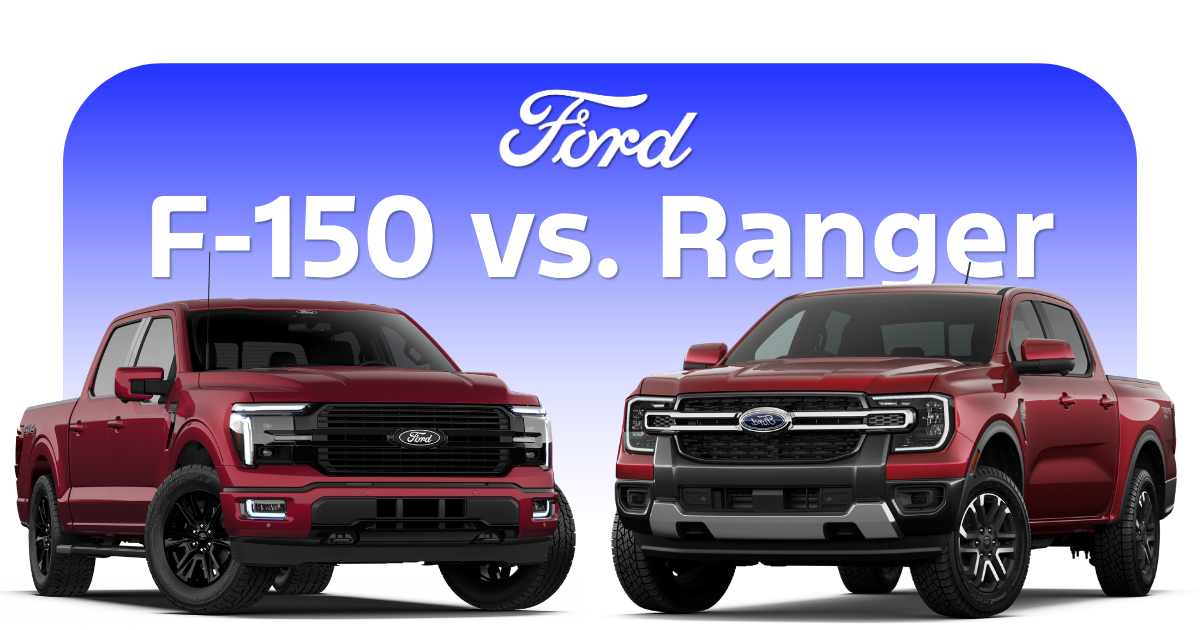
F-150 VS. Ranger

2026 Ford F-150 vs. Ranger : Best Truck for New Mexico?

If you want a more agile midsize truck for daily Albuquerque driving, navigating city parking, exploring off-road trails, and handling moderate towing without routinely needing full-size capability, the 2026 Ford Ranger may be the better truck for you. Its smaller footprint makes it easier to maneuver while still giving you genuine truck capability for weekday driving and weekend adventures throughout New Mexico. If you regularly tow larger trailers, carry heavier payloads, or need one truck to handle work, family, and recreation, the 2026 Ford F-150 starts to become the stronger choice. When properly equipped, the F-150 offers up to 13,500 pounds of available towing capacity, compared with up to 7,500 pounds for most properly equipped Ranger configurations. That additional capability can make a major difference when pulling a larger travel trailer, boat, or work trailer. F-150 vs. Ranger Size: Does Bigger Always Mean Better? Towing capacity is not the only number to consider. Payload is just as important, especially when you are loading the truck with passengers, camping equipment, tools, or recreational gear while also pulling a trailer. The 2026 F-150 offers up to 2,440 pounds of available payload capacity when properly configured, while the Ranger offers up to 1,767 pounds. That doesn’t automatically make the F-150 the better truck. It comes back to how much capability you actually need. The Ranger gives many drivers plenty of useful towing and hauling capability in a smaller package, while the F150 gives buyers considerably more room for heavier loads and larger trailers. What Trim Level Suits You? If you like having options, the 2026 F-150 has the advantage. Buyers can choose from eight trim levels: XL, STX, XLT, Lariat, Tremor, King Ranch, Platinum, and Raptor. The lineup ranges from practical work trucks and comfortable daily drivers to luxury and serious off-road performance. Depending on the trim and configuration, buyers can also choose from EcoBoost engines, the traditional 5.0L V8, or the available 3.5L PowerBoost Full Hybrid V6. This gives F-150 buyers more flexibility to prioritize towing, performance, efficiency, comfort, or off-road capability. The 2026 Ranger keeps things simpler with four trim levels: XL, XLT, Lariat, and Raptor. XL focuses on capability and value, XLT adds more everyday comfort and technology, Lariat brings a more premium experience, and Raptor is built for high-performance off-road driving. Ranger buyers can choose from the 2.3L EcoBoost, the available 2.7L EcoBoost V6 on select trims, or the 3.0L EcoBoost V6 in the Ranger Raptor. The Ranger doesn’t offer a V8 or hybrid option, but its more focused lineup makes it easier for buyers who want genuine truck capability without needing the size or extensive configuration choices of the F-150. So Which Truck Is Best for You? Both the 2026 Ford Ranger and 2026 Ford F-150 are well suited for life in New Mexico. Both offer available Four Wheel Drive, strong towing and hauling capability, off-road options, and the versatility to handle changing road conditions, mountain trips, rougher terrain, and everyday driving around Albuquerque. Depending on the trim you choose, both trucks can also offer impressive interior technology, comfort, driver assistance features, and premium amenities. The biggest differences ultimately come down to size, maximum capability, powertrain choices, and the number of configurations available. Choosing between them really comes back to one question: "How much truck do you actually need"? If your week consists of commuting around Albuquerque and your weekends involve camping, trails, hunting, fishing, outdoor recreation, and occasional towing, the Ranger may give you everything you need in a more manageable midsize package. If your day-to-day life includes heavier towing, larger payloads, more passengers, work equipment, or simply wanting more capability available when you need it, the F-150 may be the better fit. Neither truck is universally better. The right truck is the one that fits what you actually do every day and where you want to go next. Visit Power Ford in Albuquerque to drive the 2026 Ranger and F-150 back-to-back, or explore our current Ford truck inventory at MyFordDealer.com and decide which one fits your lifestyle.

Contact Us

Fill out this form below and we'll contact you shortly
*Required Fields