

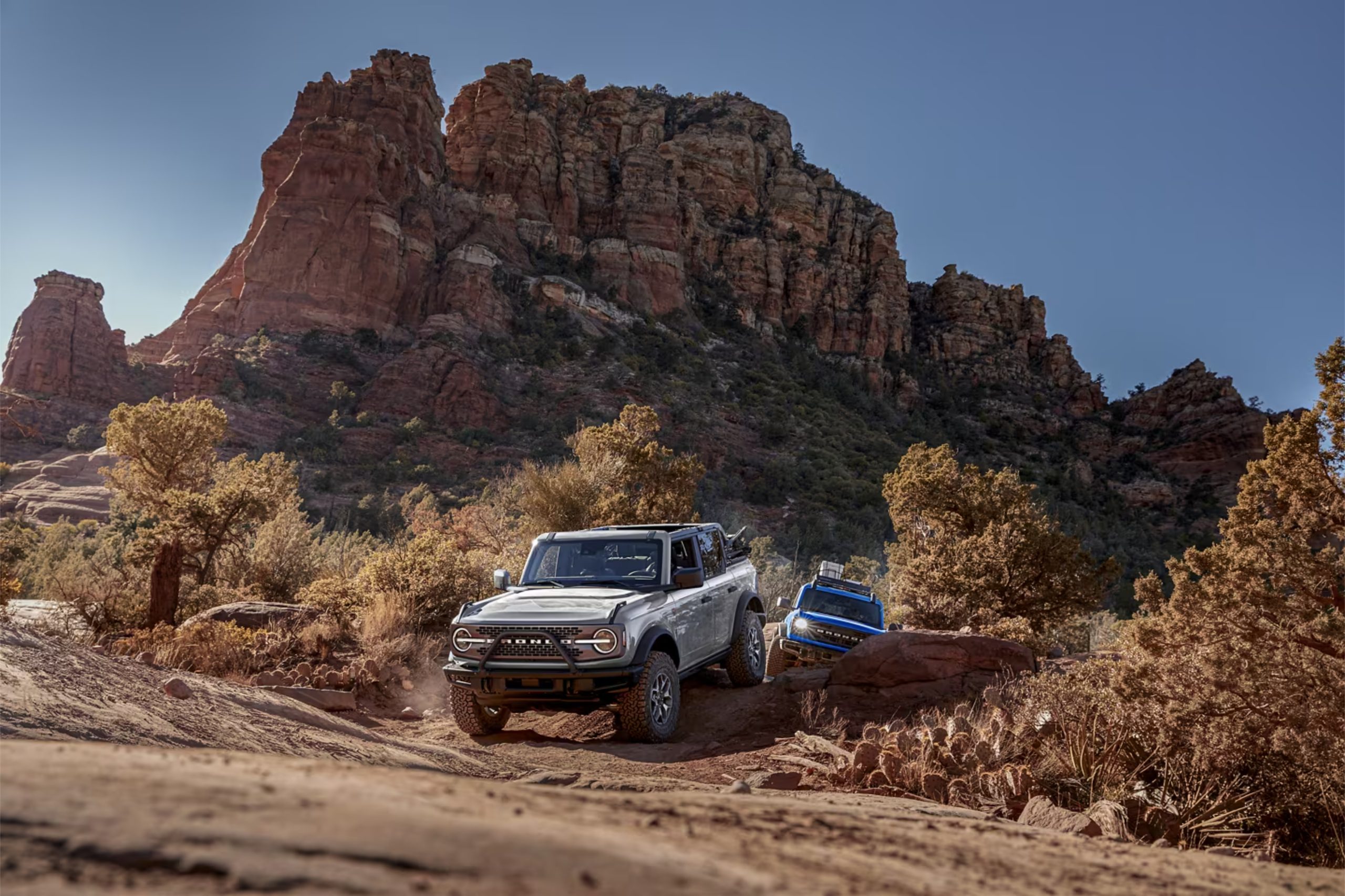
If you’re comparing the Bronco vs Wrangler in Albuquerque, New Mexico, you’ve probably already read five comparisons that end the same way: “both are great, it really comes down to personal preference.” That’s not useful.
We sell Broncos at Power Ford on Montaño. Worth saying upfront. But we talk to buyers every week who are genuinely stuck between these two, and we’d rather give a straight answer than a sales pitch dressed up as journalism.
What Each Truck Is For
The Wrangler has been doing this since before most current buyers were born. It has a cult following, a parts ecosystem that spans every town in America, and a core formula Jeep has never felt the need to meaningfully change. If you want a platform you can spend years building out with lifts, armor, and lockers, there’s no better starting point at this price.
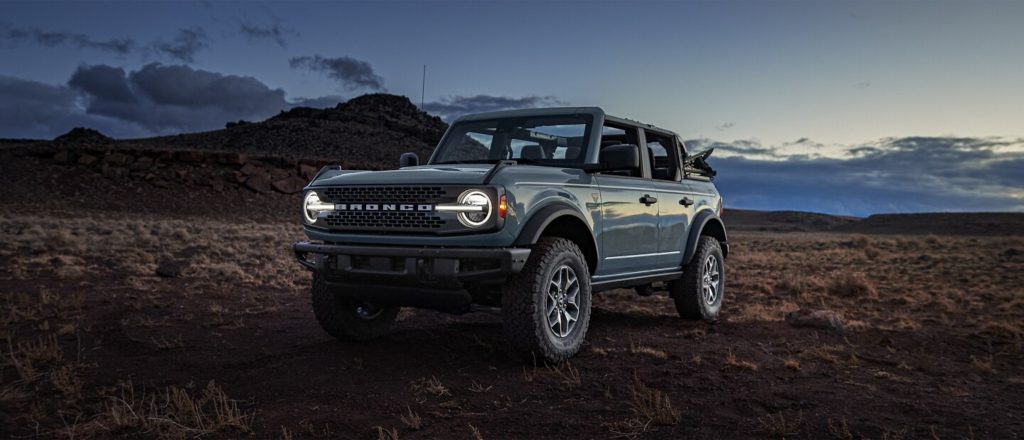
The Bronco came in trying to be more modern. Better highway manners, more factory capability straight off the lot, a cleaner interior. Some people think that makes it better. Some think it made it softer. It depends entirely on what you’re actually doing with the truck.
Capability: The Jemez Test
Most Albuquerque buyers asking about off-road rigs have somewhere specific in mind — the Jemez Mountains, forest roads off the east face of the Sandias, the Quebradas Backcountry Byway down past Socorro, or Cibola. A few are planning actual rock crawling. Most are doing two-tracks, light rock, and unpaved roads in varying states of condition.
For that use case, both trucks are fine. Neither one is going to strand you on anything a reasonable trail description would send you down.
Ground clearance. Bronco Badlands: 11.6 inches stock. Wrangler Rubicon: 10.8. Not a meaningful difference on most NM trails, but the Bronco edges it.
Locking differentials. Both the Badlands and the Rubicon ship with front and rear lockers from the factory. The Bronco adds a sway bar disconnect on those trims.
Approach/departure angles. Wrangler Rubicon: 44.5 degrees approach, 37 departure. Bronco Badlands: 43.2 and 37.2. Essentially the same for anything you’d encounter locally.
At stock, same-tier configurations, they’re basically a wash on capability. The Wrangler’s real edge is what happens after you buy it. More shops know how to work on it, more aftermarket parts exist, and the community around modifying Wranglers is bigger than anything the Bronco has built so far. That gap is closing, but it’s real.
Daily Driving
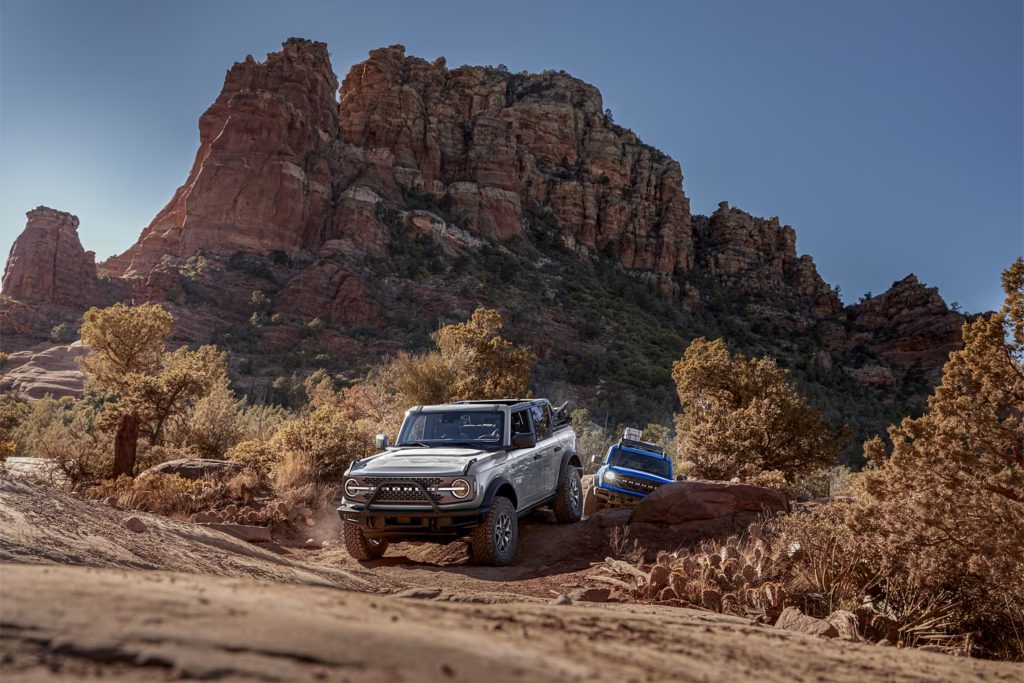
This is where the gap is more obvious. The Bronco rides like something you’d actually want to drive to work. Highway composure is noticeably better. The interior is cleaner and more logically laid out. Ford’s SYNC 4 system is easier to use day-to-day than Jeep’s Uconnect. The base turbocharged 2.3L four-cylinder puts out 275 hp. The optional 2.7L EcoBoost V6 (330 hp) is legitimately fast for a truck this size.
The Wrangler has always been honest about the tradeoff. It shakes at highway speeds. Wind noise is part of the experience. The same solid rear axle that makes it so good on rocks makes it bounce on pavement. Wrangler buyers have known this for 30 years and most don’t care. But if you’re commuting five days a week and trailing on weekends, the Bronco will wear on you less.

New Mexico Specifics
Altitude. Albuquerque sits at 5,312 feet. Both trucks handle elevation fine. The Bronco’s EcoBoost motors are turbocharged, so they compensate for thinner air better than a naturally aspirated engine — which matters more when you’re climbing into the Sandias at 9,000-plus feet.
Heat and dust. Summers here hit triple digits and the dust off forest roads and Rio Rancho Mesa is real. The Bronco’s cabin filtration system is more modern, which you notice on long dusty two-tracks.
Theft. Wranglers are consistently among the most stolen vehicles in the country, and New Mexico ranks near the top nationally for vehicle theft. Run the comparison through your insurance agent before you decide.
Pricing: 2026 Side-by-Side
| Trim | Ford Bronco | Jeep Wrangler |
|---|---|---|
| Base (2-door) | ~$36,000 | ~$34,000 |
| Mid (4-door) | ~$44,000 | ~$45,000 |
| Off-road (Badlands/Rubicon) | ~$52,000 | ~$53,000 |
| Top trim | ~$62,000 | ~$58,000 |
MSRP estimates. See our live Bronco inventory at Power Ford for current pricing.
They’re close at most trim levels. The Wrangler 4xe plug-in hybrid carries a premium but qualifies for federal EV tax credits — worth factoring in if you’re comparing out-of-pocket cost.
Bronco vs Wrangler Albuquerque: The Short Version
Buy the Bronco if you want to drive it every day and trail on weekends without white-knuckling the highway. Better ride, better interior, better tech.
Buy the Wrangler if you’re planning to build it out over time and want access to the deepest aftermarket ecosystem in off-roading. The Rubicon is the most battle-tested trail machine at this price point, and that reputation isn’t nothing.
Both hold value well. New Mexico truck demand stays consistent. You’ll just regret not knowing which one fit you before you bought it.
Frequently Asked Questions
Is the Ford Bronco better off-road than a Jeep Wrangler?
At the same trim tier, capability is close. The Wrangler Rubicon leads on aftermarket depth for serious builds. Stock vs. stock, the Bronco Badlands has a slight clearance edge.
Which is better for daily driving in Albuquerque?
The Bronco. Smoother highway ride, better interior, more current tech.
Does the Ford Bronco hold its value?
Yes. Broncos have held well since launch. Wranglers are also among the best value-retention vehicles in any class.
Can I see a Ford Bronco in stock at Power Ford Albuquerque?
Yes. Check current inventory at powerfordnm.com or call 505-341-2200.
Connect with us

Recent Blog Entries
- 2026 Ford Maverick Hybrid in Albuquerque — Is It the Right Truck for New Mexico Life?
- Ford Bronco vs. Jeep Wrangler: A Real Comparison for New Mexico Drivers
- Ford Employee Pricing for All at Power Ford Albuquerque — Save Now Through July 2026
- Ford Certified Pre-Owned Warranty Program Overview
- Moving to Albuquerque in 2026? The Best Vehicles for New Mexico Roads, Weather & Lifestyle