Blog

How to Find a No-Pressure Ford Dealership Near Santa Fe, NM

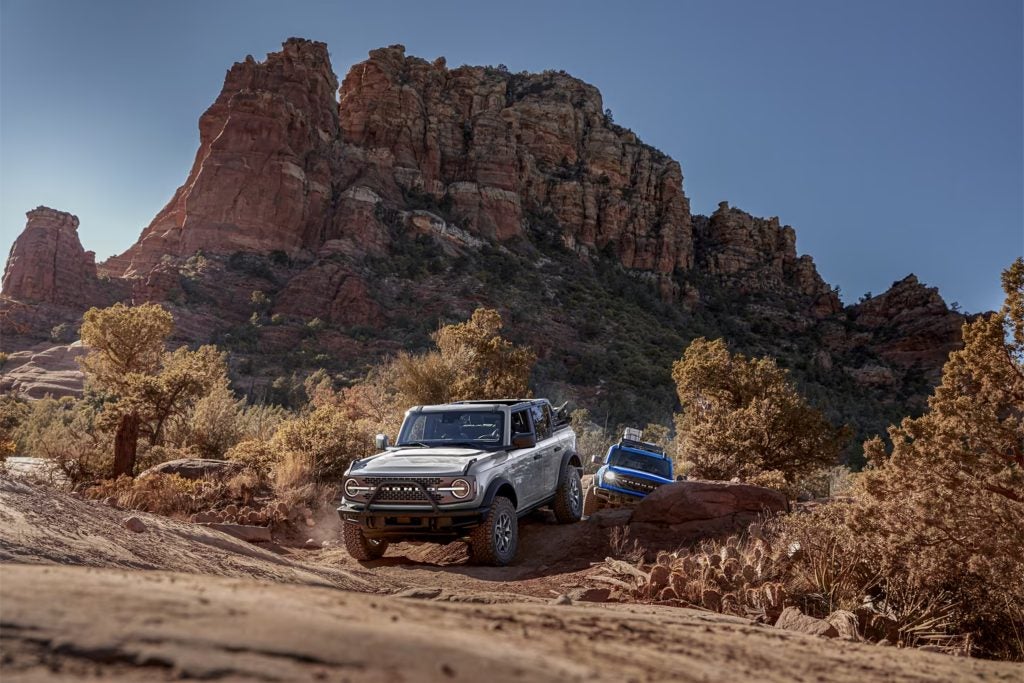
Ford Bronco on a red dirt trail below rock mesas in the high desert near Santa Fe, New Mexico

Yes — the short answer is that the no-pressure Ford dealerships near Santa Fe are the ones that publish out-the-door pricing, let you finish most of the deal online, and keep the same numbers in person that they quoted you by email. Power Ford, about an hour south on I-25, is built that way, and we would rather show you the standard than ask you to trust a slogan. We covered the wider version of this in our guide to choosing the best Ford dealership across Albuquerque and Santa Fe, and this one is written for the drive from Santa Fe specifically.

What to Look for in a Ford Dealership Near Santa Fe, NM

Distance is the easiest thing to compare and the least useful. What actually separates dealerships is how much of the deal you can settle before you show up. A no-pressure store will put a specific vehicle's out-the-door number in an email — vehicle price, doc fee, tax, title, and any dealer-installed accessories itemized — and that number will still be the number when you walk in. If a dealership will only discuss price in person, that is the pressure, stated politely.

Inventory honesty is the second test. Ask whether the vehicle you are looking at is physically on the lot today, because a thin lot padded out with in-transit and locate units turns an hour-long drive into a wasted afternoon. That applies to used stock as much as new: every pre-owned listing should carry a VIN, a history report, and a service record you can read before you commit to the drive.

The third test is what happens after you sign. Ask how service appointments get scheduled, whether the shop installs genuine Ford parts, and what options exist for customers who live an hour away. A dealership that already has an answer ready is one that expects to keep you past the sale.

Settle the Numbers Before You Leave Santa Fe

The point of a no-pressure process is that the drive down I-25 is the last step rather than the first one. You can get pre-approved online and see what you actually qualify for before anyone brings up monthly payments, and our finance team works with a wide range of lenders and credit situations, including options through our credit-friendly financing program if your history is not perfect. If you have a vehicle to put toward the next one, we can walk you through a trade-in or a straightforward sell-us-your-car appraisal, with no obligation to buy anything the same day.

Inventory Worth the Hour on I-25

A drive from Santa Fe only makes sense if there is more to look at when you arrive. We keep a deep lineup of new Ford models, including the F-150, Super Duty trucks, and the full Bronco family, alongside electrified options like the Mustang Mach-E and F-150 Lightning. Santa Fe drivers tend to weigh four-wheel drive, ground clearance, and winter capability more heavily than buyers further south, and we try to stock accordingly.

Service You Do Not Have to Drive Down For

An hour each way is the real objection to buying outside Santa Fe, and it is a fair one. Our service department is staffed with technicians who work on Fords every day, you can book a visit through our online service scheduler, and our Quick Lane handles routine work without turning the day into a project. For many routine appointments, our pickup and delivery service removes the round trip entirely. When work does need doing, we install genuine Ford parts, and our recommended maintenance schedule spells out what your vehicle needs and when, so nothing gets sold to you on the spot.

Recognition Instead of a Slogan

We would rather point at outside recognition than describe ourselves. We have been named a DealerRater Dealer of the Year, earned the Ford President's Award, been recognized as a J.D. Power Dealer of Excellence, and picked up a Best of the City honor in Albuquerque. None of that guarantees your experience, which is why we would also tell you to read our reviews across Google, Cars.com, DealerRater, and Facebook. Consistency across several platforms tells you more than any single review can.

Common Questions from Santa Fe Shoppers

Is it worth driving from Santa Fe to Albuquerque to buy a Ford?

It is worth it when the selection, the pricing, and the after-sale support are meaningfully better than what you can settle for closer to home. Compare those three things first and treat the hour on I-25 as the tiebreaker, not the starting point.

Can I get an out-the-door price by email before I drive down?

Yes. Ask for a specific vehicle by VIN and request the number itemized, including vehicle price, doc fee, tax, title, and any add-ons. You can start that conversation through our contact page, and it is a reasonable thing to ask of any dealership you are considering.

How much of the process can I finish online?

Most of it. You can browse our inventory, get pre-approved, and have your trade appraised before you set foot on the lot, which leaves the visit for confirming the vehicle and signing.

What happens when I need service an hour from home?

You can schedule online, use our Quick Lane for routine work, or let our pickup and delivery service handle the trip for many appointments.

Do you work with buyers from other towns north of Albuquerque?

We do. Alongside our Santa Fe customers, we regularly work with drivers from Bernalillo, Corrales, and Rio Rancho.

Come Judge Us on the Details

We are not going to tell you that an hour of driving is nothing, and we do not expect you to take our word over your own experience. Ask us for the out-the-door number, ask what is actually on the lot, and ask how service works for someone who lives in Santa Fe. Then decide.
Recommended Posts

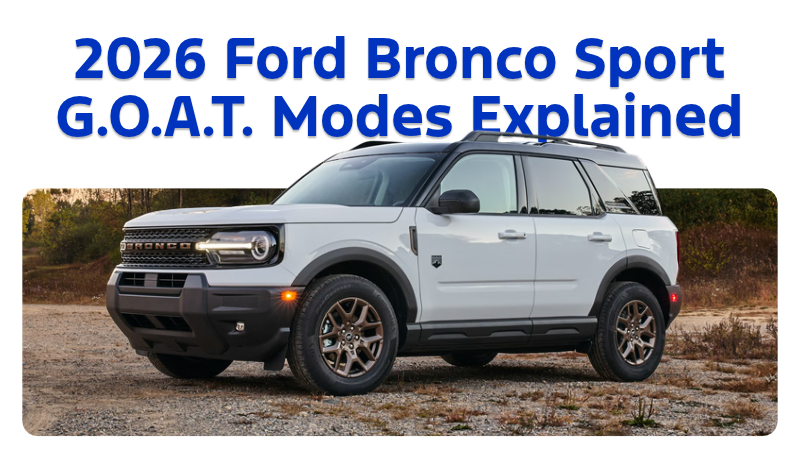
2026 Ford Bronco Sport G.O.A.T. Modes Explained

2026 Ford Bronco Sport G.O.A.T. Modes Explained

The 2026 Ford Bronco Sport uses G.O.A.T. Modes, short for Goes Over Any Type of Terrain, to adjust how the vehicle responds to different driving conditions. Big Bend, Heritage, and Outer Banks include five modes: Normal, ECO, Sport, Slippery, and Off-Road. Badlands adds Rock Crawl and Rally for seven modes total. These settings can change accelerator response, transmission behavior, traction and stability controls, and aspects of the four-wheel-drive system. They do not create more tire grip, ground clearance or underbody protection. The right mode helps the Bronco Sport use its existing hardware more effectively, but the driver still has to choose a safe speed and a route that fits the vehicle. What Does Each Bronco Sport G.O.A.T. Mode Do? Each mode gives the Bronco Sport a different set of responses. The useful question is not which mode sounds most capable. It is which one matches the surface under the tires. Normal Mode: The Everyday Setting Normal is the starting point for ordinary paved-road driving. It balances accelerator response, shifting and vehicle controls for typical commuting and highway travel. For most drives around Albuquerque, Normal is the mode to leave selected. There is no need to choose a specialized setting simply because the Bronco Sport has standard 4x4. ECO Mode: A Calmer Response ECO adjusts vehicle operation to prioritize fuel efficiency. Drivers may notice a less aggressive response than Sport mode because the vehicle is trying to make smoother use of power. ECO does not guarantee a particular fuel-economy result. Speed, acceleration, traffic, temperature, elevation, tires, and cargo still affect fuel use. Think of it as a setting that supports efficient driving habits, not a substitute for them. Sport Mode: Quicker On-Road Response Sport increases accelerator responsiveness and holds lower transmission gears longer to provide stronger acceleration. It is designed to make on-road driving feel more immediate and engaging. That can be useful when a driver wants sharper response, but it is not an off-road mode, and it does not increase the vehicle’s traction limits. More responsive controls still require smooth inputs, especially on wet, snowy or loose surfaces. Slippery Mode: Snow, Ice and Slick Surfaces Slippery mode lowers accelerator responsiveness, changes transmission shift points, and adjusts traction and stability controls to help reduce wheel spin. Ford identifies snow, ice, and firm surfaces covered by loose or slippery material as appropriate conditions. This mode can be useful when New Mexico weather changes quickly or a shaded mountain road remains icy. It does not shorten stopping distance or make unsuitable tires suitable for winter conditions. Leave more space, reduce speed, and follow tire or chain requirements where they apply. Ford also cautions against using Slippery mode on dry pavement because certain four-wheel-drive settings can create driveline bind and damage. Return to Normal when the slick conditions end. Off-Road Mode: Loose and Uneven Terrain Off-Road mode is intended for loose surfaces such as sand and deep snow. Ford describes it as using a more aggressive accelerator response to help maintain momentum. This is not the right setting for an ordinary paved road. The 2026 Bronco Sport owner’s manual advises against selecting an off-road drive mode on paved public roads. Before leaving pavement, check the route, surface, tire condition, clearance, and weather rather than treating the mode name as permission to continue. What Do Rock Crawl and Rally Add on Badlands? The 2026 Bronco Sport Badlands includes two modes that are not part of the five-mode system on Big Bend, Heritage or Outer Banks. Rock Crawl is intended for muddy or uneven terrain where slower, controlled progress matters. Rally is intended for higher-speed driving on soft surfaces. Both are specialized off-road settings, not upgrades for routine pavement driving. The difference goes beyond software. Badlands uses a 2.0-liter EcoBoost engine, advanced 4x4 with a twin-clutch rear drive unit, HOSS 2.0 off-road suspension, all-terrain tires, and underbody protection as standard equipment. Its Terrain Management System also includes a differential-lock function. Those hardware differences are why buyers should compare complete configurations rather than choosing a trim only because it has two additional mode names. Outer Banks can also be equipped with the available Sasquatch Outer Banks Package, which adds advanced 4x4 and other off-road hardware. Package content can change what a specific vehicle can do, so confirm the window sticker rather than assuming every Outer Banks is equipped the same way. Which Modes Fit Common New Mexico Driving? A practical starting point looks like this: - Use NORMAL for dry pavement, daily commuting, and most highway travel. - Use ECO when you want a calmer response that supports efficient driving. - Use SPORT when you want more responsive on-road acceleration. - Use SLIPPERY for snow, ice or a firm surface covered in loose material, then return to Normal on dry pavement. - Use OFF-ROAD only when the surface and route call for it, not on paved public roads. - Use ROCK CRAWL OR RALLY on Badlands only for the specialized off-road conditions each mode is designed to address. Conditions can change within the same trip. A drive may begin on dry Albuquerque pavement, cross a snowy mountain section and end on a maintained dirt road. Select the mode for the current surface, not for the trip’s destination. Do You Need Five G.O.A.T. Modes or Seven? Most Bronco Sport shoppers do not need seven modes. The five-mode system already covers everyday pavement, efficiency-focused driving, a sportier response, slippery conditions, and loose-surface travel. Badlands makes sense when you expect more demanding off-pavement use and want its advanced 4x4 system, additional off-road hardware, and specialized controls. If your Bronco Sport will spend most of its time commuting with occasional camping or maintained dirt-road travel, Big Bend, Heritage, or Outer Banks may provide the modes you will actually use. The best way to decide is to compare the controls and hardware, not just the trim names. Review the window sticker, inspect the tires and underbody equipment, and drive the configurations that fit your routine. Compare current Bronco Sport options at Power Ford, or contact Power Ford to arrange a closer look in Albuquerque.

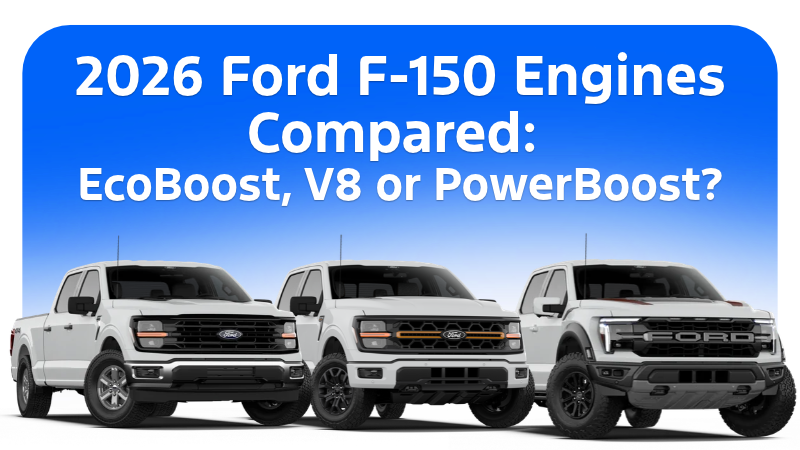
2026 Ford F-150 Engines Compared: EcoBoost, V8 or PowerBoost?

2026 Ford F-150 Engines Compared: EcoBoost, V8 or PowerBoost?

Choosing a 2026 Ford F-150 engine is less about finding one “best” option and more about matching the truck to the work you actually do. The 2.7-liter EcoBoost V6 is a strong everyday choice. The 3.5-liter EcoBoost V6 is the towing leader. The 5.0-liter V8 combines traditional V8 character with serious capability. The available PowerBoost full hybrid adds strong performance and useful onboard power. For New Mexico drivers, the right answer also depends on elevation, trailer weight, passengers, cargo, and how often the truck will work near its limits. Here is how the four mainstream F-150 powertrains compare. Start With Your Real Workload Before choosing an engine, write down what the truck needs to carry and tow on its busiest day, not just during a normal commute. For towing, consider the trailer’s loaded weight rather than its empty weight. Include water, fuel, tools, recreational equipment and anything else that will travel inside it. Trailer tongue weight, people and cargo in the truck all use part of the F-150’s available payload. Engine choice matters, but it does not determine capability by itself. Cab, bed, drivetrain, axle ratio, equipment and other factors can change a truck’s rating. Maximum towing and payload figures are separate ratings and should not be treated as if one configuration achieves every maximum at the same time. Always confirm the exact truck’s specifications and check the payload label on the driver-side doorjamb. Is the 2.7-Liter EcoBoost V6 Enough? For many F-150 shoppers, yes. The 2.7-liter EcoBoost V6 produces 325 horsepower and 400 lb-ft of torque. When properly equipped, it can tow up to 8,400 pounds. That makes it a practical fit for drivers who primarily commute, handle home projects and occasionally tow a smaller boat, utility trailer or recreational trailer. It offers substantially more torque than its displacement might suggest, without requiring shoppers to step up to one of the higher-output engines. Choose the 2.7-liter EcoBoost if your priorities are: - Everyday driving with useful truck capability - Occasional light or moderate towing - A lower engine requirement than a maximum-towing build - Strong low-end torque in a practical configuration The limitation is straightforward. If your trailer and cargo regularly approach the truck’s rating, a higher-capacity configuration can provide more operating margin. Which F-150 Engine Is Best for Maximum Towing? The available 3.5-liter EcoBoost V6 is the conventional towing leader in the 2026 F-150 lineup. It produces 400 horsepower and 500 lb-ft of torque. Properly equipped configurations can tow up to 13,500 pounds, and the highest available F-150 payload rating of 2,440 pounds is also associated with a properly configured 3.5-liter EcoBoost truck. Those two maximum figures are not a promise that one truck will deliver both at once. Shoppers should compare the doorjamb label, axle ratio, towing equipment and Ford’s rating for the exact cab, bed and drivetrain under consideration. The 3.5-liter EcoBoost is the strongest starting point for buyers who regularly tow larger travel trailers, equipment or other heavy loads. It is also worth considering when future needs may be more demanding than today’s trailer. Choose the 3.5-liter EcoBoost if your priorities are: - The highest available conventional towing capacity - Strong torque for loaded driving and grades - More capability margin for frequent towing - A gas powertrain with broad work-truck flexibility Why Choose the 5.0-Liter V8? The available 5.0-liter V8 produces 400 horsepower and 410 lb-ft of torque. When properly equipped, it can tow up to 12,800 pounds. Its appeal is not limited to the specification sheet. Some truck buyers simply prefer the response, sound and driving character of a naturally aspirated V8. The 5.0-liter also offers capability that sits close to the top of the conventional F-150 range without using a turbocharged engine. Choose the 5.0-liter V8 if your priorities are: - Traditional V8 feel and sound - Strong towing and hauling capability - Naturally aspirated power delivery - A familiar choice for work, recreation and long-term truck ownership Availability varies by trim and configuration, so confirm that the V8 can be ordered with the cab, bed, drivetrain and equipment you want. What Makes the PowerBoost Full Hybrid Different? The available 3.5-liter PowerBoost full hybrid combines a twin-turbocharged V6 with an electric motor. It produces 430 horsepower and offers the strongest torque output among the four mainstream F-150 powertrains. Its clearest advantage is versatility. PowerBoost includes Pro Power Onboard, which can supply electrical power for tools, recreation and other compatible equipment. Available output depends on the truck’s equipment, with Ford listing a 2.4-kW system and an available 7.2-kW system for PowerBoost configurations. Properly equipped PowerBoost trucks are rated to tow up to 12,400 pounds in certain 4x2 configurations or up to 11,600 pounds with 4x4. The hybrid equipment can also affect available payload, making the exact truck’s doorjamb label especially important. Choose PowerBoost if your priorities are: - Strong acceleration and towing capability - Built-in electrical power at a jobsite, campsite or tailgate - A hybrid powertrain without giving up full-size-truck utility - One truck that supports work and recreation in different ways Fuel use will vary with configuration, weather, terrain, driving habits and load. Buyers should compare the EPA label on the exact truck rather than assuming the hybrid will deliver the same result in every use case. What About the F-150 Raptor Engines? F-150 Raptor and Raptor R use specialized high-output powertrains designed around off-road performance. The Raptor’s high-output 3.5-liter EcoBoost V6 produces 450 horsepower, while the Raptor R’s supercharged 5.2-liter V8 produces 720 horsepower. These are compelling choices for performance-focused buyers, but they are not the route to the F-150’s maximum towing or payload ratings. If your main objective is hauling a heavy trailer, begin with the mainstream 3.5-liter EcoBoost, 5.0-liter V8 or PowerBoost configurations. How Does New Mexico Elevation Affect the Decision? Elevation deserves attention when a truck will tow through northern New Mexico, mountain passes or other high-altitude routes. Ford notes that vehicle performance can decrease at higher elevations when a truck is heavily loaded or towing. To match sea-level performance, Ford’s 2026 towing guidance recommends reducing gross vehicle weight and gross combined weight by 2 percent for every 1,000 feet of elevation. That does not automatically mean every Albuquerque driver needs the largest engine. It does mean buyers who tow near a truck’s limits should calculate for the routes they actually travel. Extra capability margin can be more valuable than selecting a configuration that only works on paper at sea level. Which 2026 F-150 Engine Should You Choose? For a quick starting point: - Choose the **2.7-liter EcoBoost** for daily driving and occasional light or moderate towing. - Choose the **3.5-liter EcoBoost** when maximum conventional towing is the main goal. - Choose the **5.0-liter V8** for strong capability with traditional V8 character. - Choose the **PowerBoost full hybrid** for strong performance plus useful onboard electrical power. - Consider **Raptor or Raptor R** when specialized off-road performance matters more than maximum towing or payload. The final decision should be made at the configuration level, not just the engine level. Power Ford can help you compare window stickers, payload labels and towing ratings across available 2026 F-150 configurations. Bring the weight and type of trailer you plan to tow, along with an estimate of passengers and cargo, so the conversation starts with the truck’s real job. Shop new Ford vehicles at Power Ford or contact Power Ford to compare 2026 F-150 powertrains in Albuquerque

2026 Ford Explorer Trim Levels: Which One Fits Your Life in New Mexico?

2026 Ford Explorer Trim Levels: Which One Fits Your Life in New Mexico?

2026 Ford Explorer Trim Levels: Which One Fits Your Life in New Mexico? The right 2026 Ford Explorer trim depends on what you want your SUV to do beyond carrying passengers. Active 100A covers the essentials. Active adds useful everyday comfort. ST-Line gives you a sportier look and more technology without moving to the performance engine. Tremor is the trail-focused choice. ST delivers the strongest on-road performance, while Platinum puts comfort and premium features first. All six Explorer models share the same basic strengths: three-row flexibility, a practical amount of cargo room, useful towing capability, and technology designed for everyday driving. The differences become important when you decide how much comfort, performance, off-pavement capability, and equipment you will actually use. What Every 2026 Explorer Gives You The 2026 Explorer lineup includes Active 100A, Active, ST-Line, Tremor, ST, and Platinum. Every model has three rows and can tow up to 5,000 pounds when properly equipped. Ford includes a Class III Trailer Tow Package across the lineup, although passengers, cargo, trailer setup, and other operating conditions still affect how much you can safely tow. Passenger capacity depends on the seating configuration. Most Explorer models come with second-row captain's chairs and seating for six, while a second-row bench can increase capacity to seven on eligible models. ST-Line uses the bench as its standard second-row arrangement. Tremor is configured for six passengers. With all three rows in use, the Explorer provides 16.3 cubic feet of cargo space. Folding the rear seats expands maximum cargo capacity to as much as 85.8 cubic feet, depending on the model. That makes the trim decision less about basic space and more about how you want the vehicle to feel and function. Active: More Everyday Comfort Explorer Active builds on that foundation with features that matter during daily use, including heated front seats, a heated steering wheel, a power liftgate, active noise cancellation, roof-rack side rails, and a ten-way power driver's seat. For many Albuquerque drivers, Active may be the lineup's most balanced configuration. The extra comfort is easy to appreciate on cold mornings, longer drives, school runs, and weekend trips, but the vehicle still stays focused on everyday usability rather than specialized performance or luxury. ST-Line: Sporty Design Without the Performance Engine Visit Power Ford in Albuquerque to compare current Explorer options and find the configuration that fits the way you drive in New Mexico. Visit Power Ford in Albuquerque to compare current Explorer options and find the configuration that fits the way you drive in New Mexico. ST-Line is for someone who likes the Explorer ST's visual attitude but does not need its more powerful V6. It keeps the 2.3L EcoBoost engine while adding black exterior accents, 20-inch wheels, Explorer hood lettering, red interior stitching, a 360-Degree Camera, and a ten-speaker B&O Sound System. Available BlueCruise hands-free highway driving also makes ST-Line worth considering for drivers who spend significant time on compatible stretches of I-25 or I-40. BlueCruise remains a driver-assist feature, so the driver must stay attentive and be ready to take control. Choose ST-Line when appearance and technology matter more to you than maximum acceleration or trail-focused hardware. Tremor: The Explorer for Rougher Routes The new Explorer Tremor is the most trail-oriented model in the 2026 lineup. It adds all-terrain tires, a Torsen limited-slip rear axle, off-road-tuned suspension with increased ride height, underbody protection, tow hooks, and auxiliary lighting. A 3.0L EcoBoost V6 is available for drivers who also want more power. That equipment gives Tremor a clear purpose. It is designed for families whose recreation regularly takes them beyond pavement, such as reaching trailheads, campsites, mountain property, or rough access roads. It is not automatically the best choice simply because New Mexico has snow, dirt roads, and changing elevations. If most of your driving stays on pavement, an Explorer with available Intelligent 4WD may meet your needs with fewer specialized features. Tremor is the right upgrade when off-pavement driving is a meaningful part of how you use the vehicle, not just an occasional possibility. ST: Performance Comes First Explorer ST is the on-road performance model. Its 3.0L EcoBoost V6 produces 385 horsepower and 415 lb-ft of torque, and Ford pairs it with a sport-tuned suspension. Rear-wheel drive is standard, while Intelligent 4WD is available. The important distinction is that ST is not simply a more powerful ST-Line. ST-Line emphasizes sporty appearance and technology with the standard 2.3L engine. ST changes the driving experience with the V6 and performance-focused suspension while retaining three-row seating and up to 5,000 pounds of towing capability when properly equipped. Choose ST if acceleration and a more athletic road feel are priorities you will appreciate every day. If you mainly want the look, ST-Line is the more direct fit. Platinum: Comfort and Premium Features Explorer Platinum is built around a more premium cabin rather than maximum performance. It uses the 2.3L EcoBoost engine and offers features such as the Lux Leather Package with quilted seating surfaces, heated and ventilated front seats, available massaging front seats, heated second-row seating, a 14-speaker B&O Sound System, and available BlueCruise. Platinum makes the strongest case for drivers who take frequent highway trips, carry adult passengers, or simply want their family SUV to feel quieter and more refined. It is also a reminder not to assume the highest trim automatically has the strongest engine. For 2026, the 3.0L V6 is reserved for ST and available on Tremor, while Platinum focuses on comfort. Which 2026 Explorer Trim Is Right for You? - Choose Active 100A for the essential three-row Explorer experience. - Choose Active for added daily comfort and convenience. - Choose ST-Line for sport-inspired design and upgraded technology. - Choose Tremor for regular off-pavement travel and trail-focused hardware. - Choose ST for V6 performance and a sport-tuned driving experience. - Choose Platinum for premium comfort and long-distance refinement. Do not make the decision from a feature list alone. Seating configuration, drivetrain, packages, and options can change how an Explorer fits your family and how it feels on the road. Compare the window stickers, sit in the second and third rows, and drive the trims that match your priorities back-to-back. Visit Power Ford in Albuquerque to compare current Explorer options and find the configuration that fits the way you drive in New Mexico.