

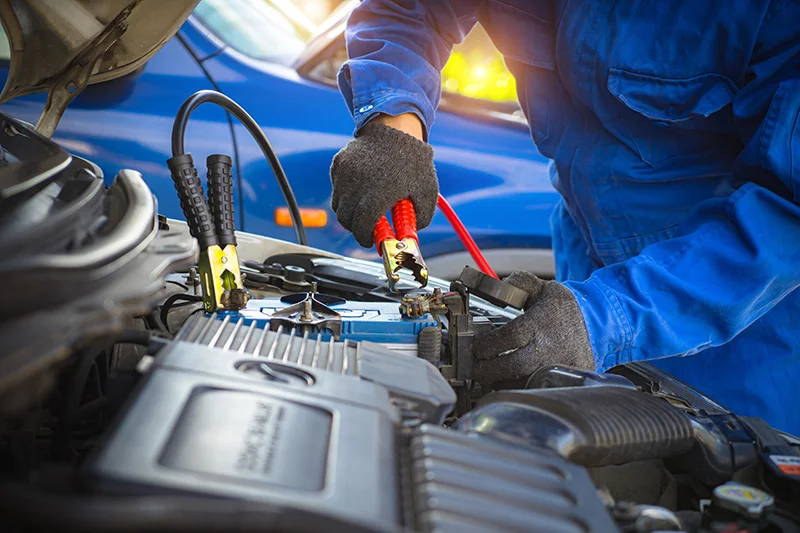
How to Jumpstart a Car: Connect jumper cables from a working vehicle to your dead battery, starting with positive terminals, then connect the negative cable to the working battery and to an engine ground point on the dead car. Start the working vehicle, then attempt to start the dead car. Always use proper safety gear and follow the correct sequence to avoid electrical damage.
Ever been stuck with a dead battery, wondering if you can jumpstart a car yourself? It’s a nightmare, whether you’re in a hurry or far from home.
At Power Ford in Albuquerque, we get how stressful a dead battery is. Our guide will show you how to jumpstart a car safely and easily. It’s perfect for both experienced drivers and those new to roadside emergencies.
Jumpstarting a car might seem scary, but with the right steps, you can do it. We’ll make it simple, protecting you and your car’s electrical systems.
Your safety is our main concern when jumpstarting a car. Our team has put together this guide to help you handle battery issues carefully. Let’s turn that frustrating moment into a successful restart!
What You’ll Need to Jumpstart a Car
Jumpstarting a car needs careful planning and the right tools. Before starting, make sure you have everything you need. Knowing what you need can make the process easier.
Essential Equipment and Safety Gear
To jumpstart a car safely, you need a few important items. Here’s a list of what you’ll need:
- High-quality jumper cables with clean, undamaged clamps
- Rubber work gloves to protect your hands
- Safety glasses to shield your eyes
- Clean, dry cloth for wiping battery terminals
The engine block is key when using jumper cables. It acts as a grounding point for the negative cable. Knowing this helps you connect the cables correctly and safely.
Before you start, check your battery for any signs of trouble. Look out for:
- Visible swelling or bulging of the battery case
- Cracks in the battery housing
- Leaking battery fluid
- Visible corrosion on battery terminals
Choosing the Right Vehicle to Help
Not all cars can help jumpstart another. You need a donor vehicle with certain features for a safe jumpstart:
- Fully charged 12-volt battery
- Compatible voltage with your vehicle
- Standard gasoline or diesel vehicle (avoid hybrids or electric cars)
Make sure the vehicles are close enough for the cables to reach. But they should not touch. Both cars should be in park (or neutral for manual transmissions) with parking brakes on. These steps help you jumpstart your car safely and get back on the road fast.

Step-by-Step Guide to Jumpstart a Car
Jumpstarting a car might seem scary, but it’s easier than you think. Just follow some simple steps and you’ll be driving again in no time. First, make sure you have your jumper cables ready. Also, park both cars in a safe spot, side by side but not touching.
- Park both vehicles close together, ensuring they’re not touching. Keep both cars in park with parking brakes engaged.
- Locate the batteries in both vehicles. Identify the positive (+) and negative (-) terminals clearly.
- When connecting jumper cables, start with the red cable. Connect one end to the working battery’s positive terminal, then to the dead car’s positive terminal.
- For the black cable, knowing where to connect is crucial. Where to connect the black cable on the dead car is not the negative terminal, but an engine block ground point.
Finding the right spot to connect the jumper cable to the engine block is key. Look for a metal surface on the engine block or chassis that’s not painted. This spot is safe and away from the battery.
- Attach the black cable’s other end to an unpainted metal surface on the engine block, away from fuel lines and moving parts.
- Start the working vehicle and let it run for about a minute.
- Try starting the car with the dead battery.
- If successful, let both vehicles idle for 10 minutes.
When you’re done, remove the cables in the reverse order. After jumpstarting, drive your car for at least 30 minutes. This helps recharge the battery. If your car still won’t start, you might need a pro’s help.
Remember, the right way to connect jumper cables to the engine block is important. It keeps your car safe and prevents damage.

Conclusion
Learning to jumpstart a car is a key skill for avoiding roadside troubles. Knowing how to do it can quickly get you moving again. But, it’s important to remember it’s just a temporary fix.
Car batteries usually last 5 to 7 years. If you’re jumping-starting your car often, it’s time for a battery check. Our team at Power Ford can do a detailed battery test to check your car’s electrical system.
If you’re having battery troubles, don’t wait to call our expert technicians. We’re here to find and fix any electrical issues. Visit Power Ford at 1101 Montano Rd. N.E., Albuquerque, NM 87107, or call 505-933-7890 for a free battery test and advice.
While knowing how to jumpstart is useful, getting professional help is best for your car’s long-term health. We’re committed to keeping you safe on the road.
FAQ
How long should I run my car after a jump start?
After a jump start, drive your car for at least 30 minutes. This helps recharge the battery. Avoid short trips or stop-and-go traffic. It won’t give your battery enough time to fully charge.
Can I use any vehicle to jump-start my car?
No, you can’t use just any vehicle. You need one with a fully charged battery of the same voltage. Hybrid or electric vehicles are not good choices because their systems are different and could get damaged.
Where exactly should I connect the black jumper cable?
Connect the black (negative) cable to the negative terminal of the working battery. But, the other end should go to an unpainted metal surface on the engine block or chassis. Avoid the dead battery’s negative terminal. Look for a bare metal area away from the battery, fuel lines, and moving parts.
Can I jump-start my car in wet conditions?
It’s possible, but not recommended. Wet conditions can lead to electrical shorts or shock. If you must jump-start in damp weather, make sure all connections are dry and secure.
What safety gear should I wear when jump-starting a car?
Wear rubber work gloves to protect your hands and safety glasses to protect your eyes from sparks or acid. Remove any jewelry, watches, or loose clothing that could get caught in the engine or cause a short circuit.
How long should I wait between connecting cables and starting the car?
Wait about three minutes after connecting the cables to let the charge start transferring. Then, start the donor vehicle and let it run for a minute. This ensures a stable power transfer before trying to start your vehicle.
Connect with us

Recent Blog Entries
- Your Guide to Genuine Ford Parts and Trusted Service in Albuquerque
- How to Choose a Ford Truck or SUV for Towing, Off-Road, and Performance in New Mexico
- Ford Financing Options for Bad Credit and Negative Equity Trade-Ins
- Finding a Trusted Ford Blue Advantage Dealer in Albuquerque
- What to Look for in a Ford Dealership Across Albuquerque and Santa Fe