How a Car Battery Works: A car battery powers your vehicle's entire electrical system through a series of chemical reactions between lead plates and a sulfuric acid electrolyte solution, producing the approximately 12.6 volts needed to start your engine and keep everything running. Understanding the key components — from battery cells and terminals to the role of the alternator — helps you recognize warning signs before a breakdown occurs. At Power Ford in Albuquerque, we're here to help you keep your battery and electrical system in top condition.
Ever wondered what powers your car? It's your car battery — the heart of your vehicle's electrical system. At Power Ford, we know how crucial it is to understand your battery's parts.
We'll dive into the internal battery elements that make it all work. Whether you love cars or just want to know more, you'll learn how these parts create electricity for your vehicle. Let's explore the world of car batteries together.
Need help or have questions? Contact us at Power Ford. We're ready to help keep your car running great!
Understanding the Basic Operation of a Car Battery
When you turn the key in your car, the lead-acid battery springs into action. It's important to know how this battery works. Let's look at the lead-acid battery structure, the battery cell construction, and how electrical current is generated.
Lead-Acid Battery Structure and Chemical Reaction
A typical lead-acid battery has six cells. Each cell has positive and negative electrodes in an electrolyte solution made of sulfuric acid and water. The chemical reaction between the lead plates and the acid is key — this reaction creates the electrical energy that powers your vehicle.
Battery Cell Construction and Voltage Production
The battery cells are built to work together in series. Each cell produces about 2.1 volts, adding up to a total of approximately 12.6 volts. The positive and negative electrodes are crucial, as they allow the chemical reaction to happen and generate the needed voltage.
How Electrical Current Is Generated and Flows
Electrical current flows through the battery's internal elements, allowing your car's electrical system to function. When the battery discharges, electrons move from the negative electrode to the positive electrode. This movement of electrons creates the current that starts your engine and powers other electrical components.
- Six cells create a total of 12.6 volts.
- Positive and negative electrodes are essential for chemical reactions.
- Electrolyte solution is a mix of sulfuric acid and water.
- Electrical current flows through internal battery elements.
Understanding these parts and processes helps you see how your car battery works. This knowledge can help you keep your vehicle running well and address any battery problems early.
Exploring Key Car Battery Components
Knowing what makes up your car battery is key to understanding how it works. Each part is vital for your car to run smoothly. Let's look at the internal parts, materials, electrolyte, terminals, and case design.
Internal Battery Elements and Their Functions
The inside of your car battery contains:
- Positive plates made of lead oxide
- Negative plates made of pure lead
- Electrolyte solution that facilitates chemical reactions
These parts work together to make electricity. The plates react with the electrolyte to allow current to flow.
Battery Plate Materials and Electrolyte Solution Composition
The materials of the battery plates are crucial. Lead and lead oxide are commonly used. The electrolyte is a mix of sulfuric acid and water, which is essential for the chemical reactions that generate electricity.
Battery Terminal Types and Battery Case Design
Battery terminals are important for connecting your battery to your car's electrical system. There are two main types:
- Positive terminals
- Negative terminals
Each type ensures the proper flow of electricity. The design of the battery case is also critical — it keeps the interior safe from damage and leaks, helping your battery last longer.
| Component | Material | Function |
|---|---|---|
| Positive Plate | Lead Oxide | Generates electrical energy |
| Negative Plate | Pure Lead | Completes the chemical reaction |
| Electrolyte Solution | Sulfuric Acid and Water | Facilitates chemical reactions |
| Battery Terminal | Lead or Copper | Connects to vehicle electrical system |
| Battery Case | Plastic or Composite Material | Protects internal components |
The Role of the Alternator and Battery Maintenance
Your car's alternator is key to keeping your battery charged. It generates electricity as you drive, keeping your battery ready to start your engine.
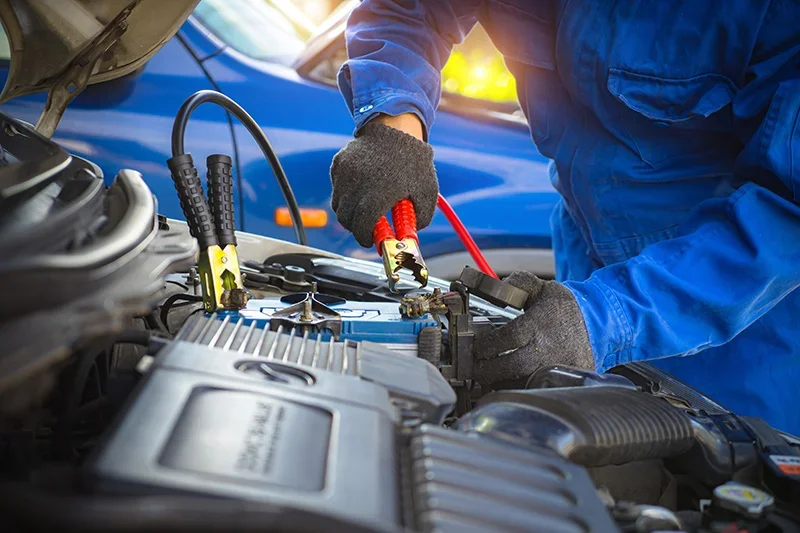
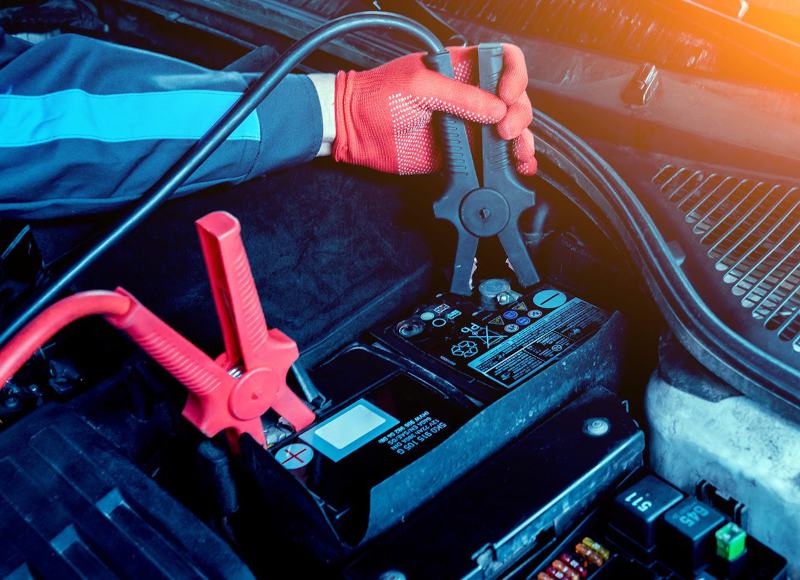
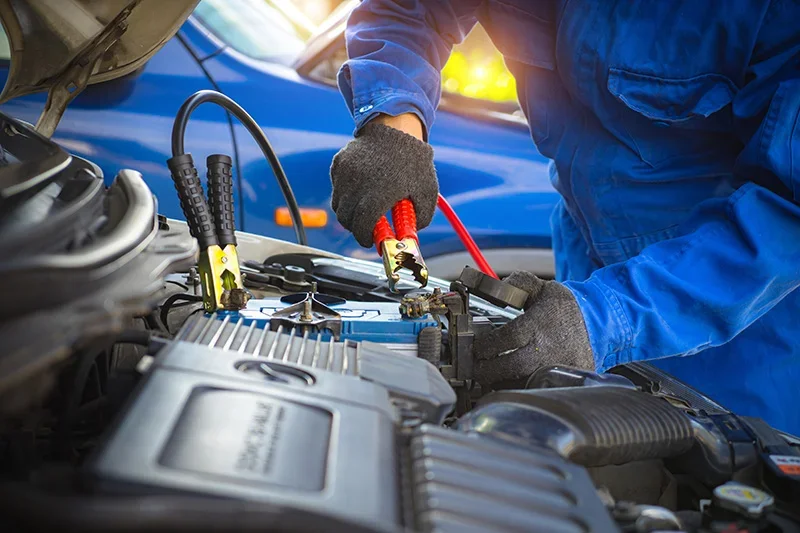
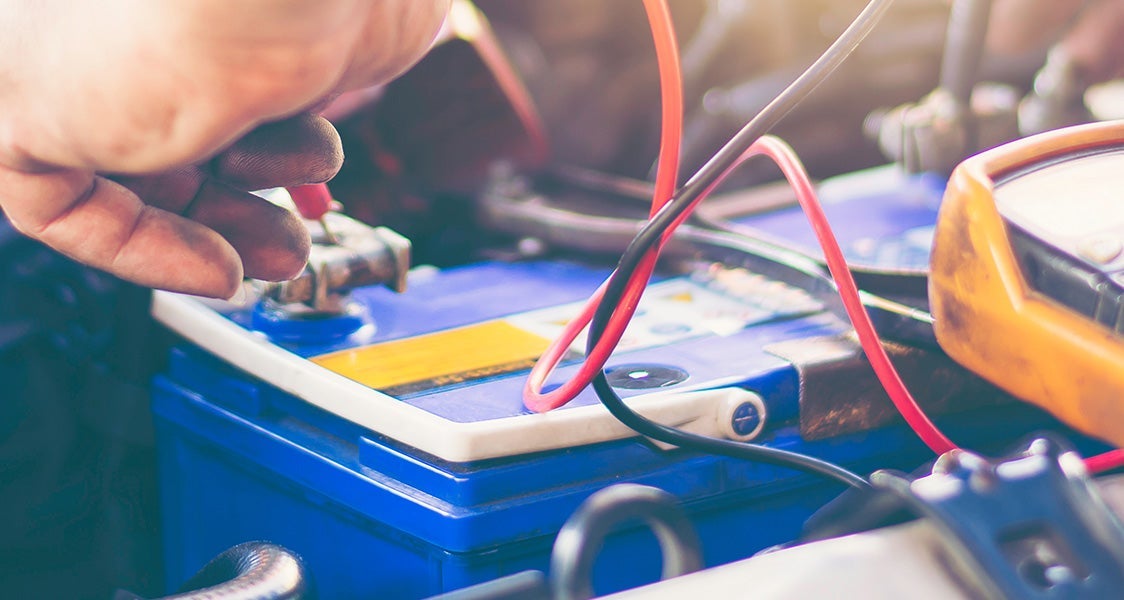
Keeping your battery in good shape is important. Test your battery's voltage regularly, and look for signs such as corrosion or a slow engine start. These could mean it's time for a new battery. It's also a good idea to know how to jumpstart a car in case you ever find yourself stranded with a dead battery. You can also review our general maintenance advice and stay current with your vehicle's recommended maintenance schedule to help extend battery life.
At Power Ford, we know how vital a good battery is. Need help with battery testing, battery service, or recharging? Give us a call at (505) 933-7883 or visit us at 1101 Montano Rd. N.E., Albuquerque, NM 87107. Our service department is here to keep your car's electrical system running strong.
FAQ
What are the main components of a car battery?
A car battery has several key parts, including the battery case, positive and negative electrodes, and battery plates made of lead and lead oxide. It also contains an electrolyte solution of sulfuric acid and water, as well as battery terminals that connect to your car's electrical system.
How does a lead-acid battery generate electricity?
A lead-acid battery generates electricity through a chemical reaction between the lead plates and the sulfuric acid electrolyte. During discharge, lead dioxide on the positive plate reacts with the sulfuric acid, producing lead sulfate and releasing electrical energy that powers your vehicle.
What is the role of the electrolyte solution in a car battery?
The electrolyte solution — a mixture of sulfuric acid and water — is crucial to a car battery's function. It facilitates the chemical reactions within the battery and allows ions to move between the positive and negative electrodes, which is essential for generating electrical current.
How do battery terminals differ?
Battery terminals come in different designs, including top-post and side-terminal styles. The type you choose can affect installation ease, connection reliability, and compatibility with your vehicle's electrical system. Our service team can help you identify the correct terminal type for your car.
What should I look for when maintaining my car battery?
To keep your car battery in good condition, check for corrosion on the terminals, ensure the battery is securely mounted, and test the battery's voltage regularly. If you notice swelling, leaks, or a drop in performance, it may be time for a replacement. Give us a call at (505) 933-7883 and our service team will be happy to help you assess your battery's health.