Blog

The Best Ford Vehicles for New Mexico Drivers This Spring (2026 Guide)

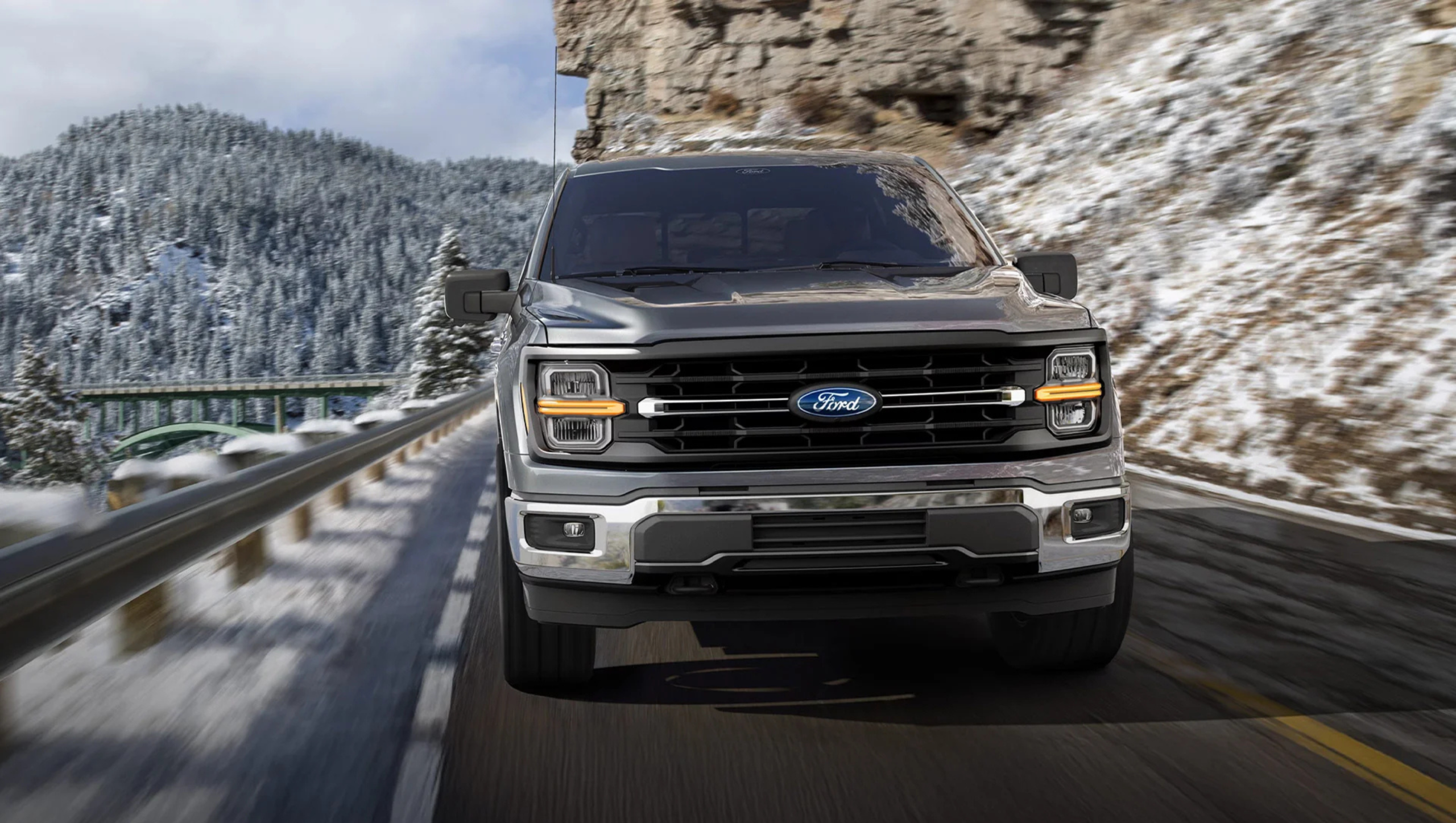
2025 Ford F-150 truck ready for a road trip at our Ford dealership Albuquerque

The Best Ford Vehicles for New Mexico Drivers This Spring (2026 Guide)

Spring in Albuquerque doesn't ease in. One week you're driving through leftover January grit on I-25, and the next the Sandias are clear, the temperature is climbing, and you've got three weekends of plans stacking up at once.
Power Ford is the Ford dealership Albuquerque drivers rely on, and we know New Mexico puts a specific kind of demand on vehicles. The altitude affects engine performance on mountain passes. The heat coming off the desert in May is already serious. Dust gets into everything. And the range of what people actually do here, towing boats to Elephant Butte, hauling ATVs out toward the Jemez, commuting the 65 miles to Santa Fe, means one vehicle has to cover a lot of different jobs. At Power Ford on Montaño, we see what Albuquerque drivers are actually dealing with. As the Ford dealership Albuquerque drivers turn to for straight answers, we know this terrain. This guide covers the three Ford models that make the most sense for life here, what each one does well, where each one falls short, and how to figure out which one fits your situation.

1. 2026 Ford F-150: Best for Towing, Hauling, and Working

The F-150 has been the best-selling truck in America for 47 consecutive years. That's not a marketing line, it's a market signal. People keep buying it because it keeps doing what they need. What it does well Towing capacity on the 2025 F-150 goes up to 13,500 lbs depending on configuration. For context, a fully loaded bass boat with trailer runs around 5,000 to 7,000 lbs. A mid-size travel trailer sits between 5,000 and 9,000 lbs. Most Albuquerque drivers towing to Elephant Butte or Abiquiu Lake are well within range. Pro Trailer Backup Assist is worth calling out specifically. Backing a trailer is the part most people struggle with, especially in crowded launch areas or tight campground spots. The system lets you control the trailer angle with a knob while the truck handles the steering. It works. Pro Power Onboard turns the truck into a mobile generator. The available 7.2-kilowatt version can run power tools, a camp setup, lights, or a small appliance. If you spend time at campsites without hookups, or you do any kind of fieldwork, that's a real utility. The Max Recline front seats are underrated for long drives. Albuquerque to Elephant Butte is about two hours. Albuquerque to Amarillo is four. Having a seat that actually reclines flat matters on those trips. Where it falls short Fuel economy. The base 2.7L EcoBoost gets around 20 MPG highway, and the larger engines drop from there. If most of your driving is city commuting and you're not hauling regularly, you're paying for capability you're not using. Parking in older parts of Albuquerque and Santa Fe can also be genuinely annoying in a full-size truck. It's not a dealbreaker, but it's real. Who it's right for Contractors, tradespeople, anyone who tows regularly, and people who spend enough weekends outdoors that the Pro Power Onboard and towing features get used. If you're buying a truck mostly for the look of it, the Explorer or Escape will save you money on fuel. Visit our Ford dealership Albuquerque showroom to see every F-150 configuration in person. Shop 2026 F-150 →

2. 2026 Ford Explorer: Best for Families and Long-Distance Driving

The Explorer sits in the sweet spot between practical and capable. It's not trying to be a truck, and it's not a commuter car. It's for people who need seating for the whole family and still want to feel like they can go somewhere interesting on a Saturday. What it does well Seating for up to seven is the obvious one. The third row folds flat when you don't need it, which opens up serious cargo room. The second row slides forward or back to balance legroom and cargo depending on the day. The available 3.0L EcoBoost V6 puts out 400 horsepower. For a three-row family SUV, that's a lot. Merging onto I-25 in Albuquerque traffic or climbing through the Tijeras Canyon doesn't require any planning. The power is just there. BlueCruise is the feature that changes long drives the most. It's Ford's hands-free highway driving system, and it works on over 130,000 miles of pre-mapped divided highways in the US. On a run from Albuquerque to Taos or down to Las Cruces, it takes the edge off significantly. You still need to pay attention, it monitors eye position with an interior camera, but you can rest your hands and let it handle the lane keeping and speed. The 2026 refresh also brought improved interior materials and a larger standard touchscreen. Earlier Explorer generations had some interior quality complaints. The 2026 addresses most of them. Where it falls short Towing capacity maxes out at 5,600 lbs, which is enough for a small trailer or a lighter boat but not for anything serious. If towing is a regular need, the F-150 is the right call. The third row is also tight for adults on trips longer than 30 minutes. It's genuinely fine for kids. Two full-size adults back there on a drive to Santa Fe is a different story. Who it's right for Families with kids, people who do a lot of highway miles and want driver assistance features, and anyone who needs three rows occasionally but not every day. Also worth considering if you've been driving a car and want to move up to an SUV without jumping straight to truck size. Test-drive the Explorer at our Ford dealership Albuquerque on Montaño before you decide. Shop 2026 Explorer →

3. 2025 Ford Escape: Best for Commuting and Everyday Driving The Escape is the most practical vehicle on this list and, for a lot of Albuquerque drivers, the most honest fit. Not everyone needs to tow. Not everyone has three kids. Some people just want a reliable, efficient vehicle that handles the commute, fits in any parking space, and can still handle a weekend trip up to the Jemez or over to Bandelier. What it does well The Escape Hybrid gets up to an EPA-estimated 42 MPG in the city. In Albuquerque, where a lot of driving involves stop-and-go on Paseo del Norte or Central, that number is meaningful. You're stopping at the pump less often, and the savings add up fast compared to a truck or full-size SUV. The Plug-In Hybrid version extends that further. If you can charge at home, a lot of daily driving happens entirely on electric range. You don't interact with gas prices for your Monday-through-Friday commute. The interior is more spacious than the exterior suggests. The sliding second row is a clever design. You can push it back for adult passengers or forward for extra cargo room behind it. The 13.2-inch SYNC 4 touchscreen is responsive and laid out well. The Escape also handles altitude without drama. Some smaller engines struggle climbing from Albuquerque up toward Santa Fe or into the mountains. The Escape's hybrid system compensates well because the electric motor fills in where the gas engine would normally bog down. Where it falls short Towing capacity is 1,500 lbs on the hybrid. That's enough for a small cargo trailer or a light utility haul, but not for boats or campers. This is genuinely a commuter and weekend vehicle, not a work truck. If you regularly carry more than four adults and a full load of gear, the cargo math gets tight. It's not a small vehicle, but it's not an Explorer either. Who it's right for Single drivers and couples, people who commute regularly and care about fuel costs, and anyone who mostly needs a vehicle for everyday life with occasional outdoor trips. The Plug-In Hybrid version specifically is a strong pick if you have a garage or parking spot where you can add a charger. Our Ford dealership Albuquerque team can walk you through both Escape hybrid options. Shop 2025 Escape →
Spring Maintenance at the Ford Dealership Albuquerque Trusts

At our Ford dealership Albuquerque service center, we see what spring heat does to vehicles that were not prepared. New Mexico spring is short and it transitions fast. By late May, daytime highs in Albuquerque are already pushing 90. Vehicles that weren't serviced properly heading into that heat show problems quickly. Cabin air filter This is the most commonly skipped item and one of the most noticeable. Albuquerque's spring wind carries dust and pollen at levels that clog a cabin air filter faster than most places. A dirty filter restricts airflow to your AC system, which means the cabin takes longer to cool and the system works harder. Replacing it before summer costs very little and makes a real difference. AC system If your AC was marginal last summer, it's not going to improve on its own. The time to check refrigerant levels and system pressure is before the heat peaks, not during it. Scheduling a service appointment in April or early May means you're not waiting in a queue in July when everyone else figures out their AC doesn't work. Tires Temperature swings between Albuquerque nights and afternoons affect tire pressure more than most people realize. Under-inflated tires wear faster, handle worse, and reduce fuel economy. Spring is also a good time to rotate if you're past the interval. FordPass Rewards Check your FordPass app before scheduling anything. Rewards points accumulate from purchases and service visits and can be applied toward oil changes, tire rotations, and accessories. A lot of customers have points sitting unused. Our service team at the Ford dealership Albuquerque relies on, Power Ford on Montaño, handles all of the above. If you bought your vehicle from us, we know its service history. If you didn't, we can still help. Schedule Service →

Ford Dealership Albuquerque FAQ

Which Ford truck is best for towing a boat in New Mexico?

The 2026 F-150 is the right choice for most boat owners in New Mexico. With a maximum towing capacity of 13,500 lbs, it handles the range of boats people take to Elephant Butte, Abiquiu Lake, and Cochiti Lake without being close to its limit. The Explorer can tow up to 5,600 lbs, which covers smaller boats but not larger ones.

Does altitude affect towing capacity in New Mexico?

Yes, though the F-150's turbocharged EcoBoost engines handle altitude better than naturally aspirated engines because the turbocharger compensates for thinner air. Albuquerque sits at 5,300 feet. If you're regularly towing up to higher elevations, the turbocharged engine options are worth prioritizing over the naturally aspirated V8 alternatives.

Is the Ford Explorer good for off-road driving in New Mexico?

The Explorer handles light off-road use on dirt roads and improved trails. It's not built for technical off-road terrain. If you're doing serious off-road driving in the Jemez or out toward the Bisti Badlands, the Bronco or F-150 with off-road packages are better fits. The Explorer is excellent for the kind of driving that's 80% highway and 20% unpaved forest roads.

What's the difference between the Ford Escape Hybrid and Plug-In Hybrid?

The standard Escape Hybrid uses a battery that charges itself through regenerative braking. You never plug it in. The Plug-In Hybrid has a larger battery that you charge externally, which gives you a range of around 37 miles on electric power alone before the gas engine kicks in. If your daily commute is under 37 miles and you have a place to charge at home, the plug-in version significantly reduces fuel costs. If you don't have charging access, the standard hybrid is the simpler choice with still-excellent fuel economy.

How long does service at our Ford dealership Albuquerque take?

Routine services like oil changes and tire rotations typically take under an hour. More involved services vary. Scheduling in advance, especially in spring and summer when demand picks up, gets you in faster. You can schedule online or through the FordPass app.

Can I use FordPass Rewards toward a vehicle purchase?

FordPass Rewards points apply toward service and accessories at participating dealerships. They don't apply directly toward vehicle purchases, but they can offset service costs on your current vehicle while you're deciding on an upgrade.

Your Ford Dealership Albuquerque Trusts: Power Ford on Montaño

Power Ford has served as the Ford dealership Albuquerque drivers trust for years, and the team here understands what the driving conditions in New Mexico actually demand. If you want to compare the F-150, Explorer, and Escape side by side or talk through which configuration makes sense for your situation, come in. Schedule Service | Get Pre-Approved | Browse Inventory

Recommended Posts

How Long Does a Ford F-150 Last?

How Long Does a Ford F-150 Last? 100K, 200K Miles and Beyond!

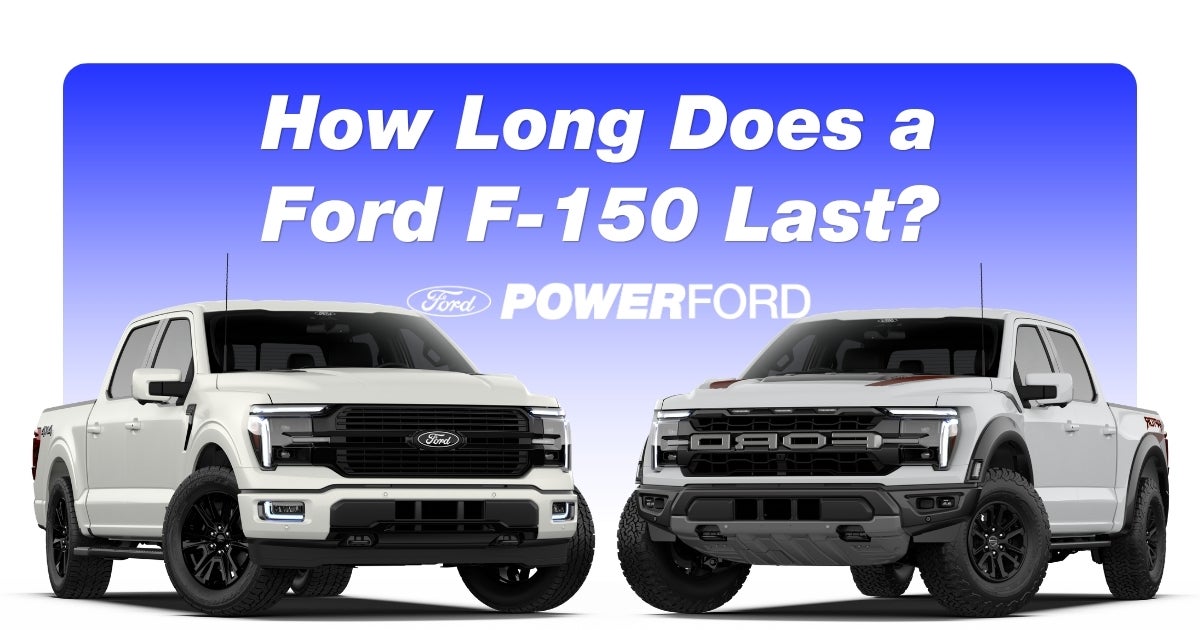
How Long Does a Ford F-150 Last? Reliability, Mileage, and Maintenance Can a Ford F-150 last 200,000 miles? Absolutely. But there is no mileage number where every F-150 suddenly becomes old, and there is no guarantee that every truck will reach 200,000 miles. Current vehicle longevity research estimates the F-150’s average lifespan at roughly 164,000 miles, with about one in four reaching at least 200,000 miles. The bigger question is how the truck was maintained and what kind of work those miles involved. Two F-150s can both show 100,000 miles and have lived completely different lives. One may have spent most of those miles cruising on I-25, while another may have spent years towing trailers, idling on job sites, carrying heavy equipment, or driving dusty roads. Ford considers towing, heavy loads, excessive idling, dust, and extreme temperatures severe driving conditions. That means the number on the odometer tells you how far the truck traveled, but it does not tell you how hard it worked to get there. Is 100,000 miles too much for an F-150? There is nothing magical about 100,000 miles that suddenly makes an F-150 a bad truck. A well-maintained F-150 with 120,000 miles may be a much stronger purchase than a neglected truck with 70,000 miles. For a used buyer, maintenance history, towing history, transmission behavior, fluid leaks, tire wear, suspension condition, previous damage and warning lights can tell you more than mileage alone. What helps an F-150 reach high mileage? The best way to help an F-150 reach high mileage is consistent maintenance. Stay on top of oil changes, fluids, filters, tires, brakes, and cooling system service, and pay attention to small issues before they become expensive repairs. If your truck spends a lot of time towing, idling, hauling heavy loads, or driving in hot and dusty conditions, your maintenance schedule should reflect that extra workload. For New Mexico F-150 owners, dust, heat, mountain driving, and rough roads make regular inspections even more important. A high-mileage truck is not automatically a worn-out truck. In many cases, the difference between an F-150 that feels tired at 100,000 miles and one that keeps going well beyond that point comes down to how consistently it was maintained and how quickly small problems were addressed. Does New Mexico Driving Affect F-150 Longevity? New Mexico driving can expose an F-150 to a wide range of conditions. Albuquerque commuting may be easy duty, while towing into the mountains, driving on dusty roads, hauling equipment, or working in extreme heat can place significantly different demands on the same truck. None of those conditions mean an F-150 cannot have a long service life. They simply make it more important to maintain the truck based on how it is actually used rather than treating every mile the same. Conclusion So how long does an F-150 last? There is no single mileage number that determines when a truck is finished. Some F-150s will need major repairs before 200,000 miles, while others can remain useful well beyond that point. The biggest factors are how the truck was maintained, how hard it worked, and whether small problems were handled before they became expensive ones. If you are shopping for a used F-150 in Albuquerque or the surrounding New Mexico area, do not judge the truck by mileage alone. Look at the entire story.

Bronco vs. Bronco Sport

2026 Ford Bronco vs. Bronco Sport: Which Is Better for New Mexico?

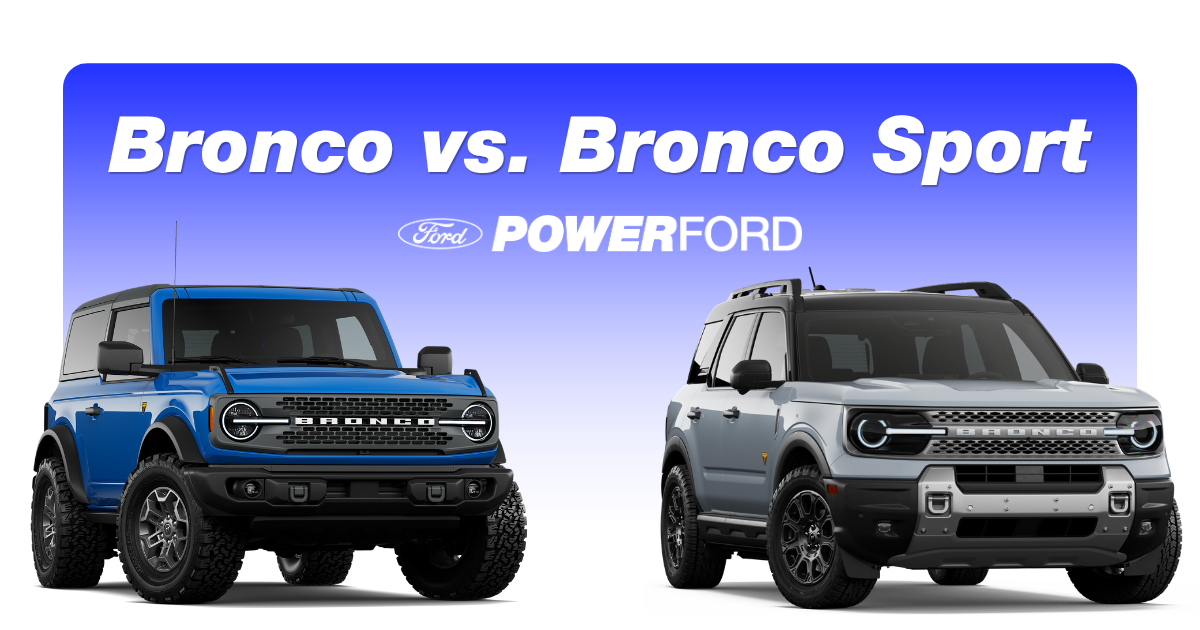
Bronco vs. Bronco Sport The 2026 Ford Bronco and Bronco Sport may share a name, but they are built for two very different types of drivers. The Bronco Sport is the better fit for someone who wants a comfortable everyday SUV with standard Four Wheel Drive and enough capability for camping, dirt roads, snow, and weekend adventures. The Bronco takes things further with body-on-frame construction, available serious off-road equipment, removable doors and roof options, and considerably more customization. The easiest way to think about it is this: the Bronco Sport is an everyday SUV that is ready for adventure, while the Bronco is an adventure vehicle that can still handle everyday life. Bronco Sport Capability Do not let the Bronco Sport name fool you into thinking it is simply a smaller Bronco with less capability. Every 2026 Bronco Sport comes standard with Four Wheel Drive, which already makes it an interesting choice for New Mexico drivers. Step up to the Bronco Sport Badlands, and you get a 2.0L EcoBoost engine, Advanced 4x4 with a twin-clutch rear drive unit, seven G.O.A.T. Modes, underbody protection, and available Sasquatch equipment. For someone who spends Monday through Friday driving around Albuquerque but wants to reach a campsite, trailhead, ski area, or forest road on the weekend, that may be more capability than they actually need. Bronco Capability The full-size Bronco is where the conversation changes from getting to the trail to actually taking on the trail. Buyers can choose more powerful EcoBoost engines, serious suspension and Four Wheel Drive hardware, available locking front and rear differentials with the Sasquatch Package, and even a manual transmission on certain configurations. You can also remove the doors and roof, which is something the Bronco Sport simply is not designed to do. If exploring difficult terrain is one of the reasons you are buying the vehicle in the first place, the Bronco gives you considerably more room to grow into that lifestyle. Daily Driving Bronco Sport There is also the part of ownership that happens when you are not climbing rocks. If most of your mileage comes from commuting around Albuquerque, highway driving, school runs, or errands, the Bronco Sport makes a strong case for itself. The 1.5L models are EPA-estimated at 25 MPG city and 30 MPG highway, while still giving you standard Four Wheel Drive. That combination makes the Bronco Sport particularly appealing for someone who wants outdoor capability without driving a more specialized off-road vehicle every day. Which Bronco is best for New Mexico? New Mexico is also a good place to appreciate the difference between these two SUVs because our driving conditions can change quickly. You can leave Albuquerque on dry pavement and find snow, mud, loose dirt, or rough roads as you gain elevation or head farther away from the city. For most drivers who occasionally encounter those conditions, the Bronco Sport provides a very useful combination of Four Wheel Drive capability and everyday comfort. For drivers who actively seek out tougher trails, deeper terrain, and more challenging off-road situations, that is where the additional hardware available on the Bronco begins to make sense. Bronco vs. Bronco Sport: Conclusion When choosing between the 2026 Ford Bronco and Bronco Sport, do not just ask which SUV is better. Ask how you actually spend your time behind the wheel. If most of your driving happens on pavement around Albuquerque, with occasional camping, dirt roads, snow, or weekend trips into the mountains, the Bronco Sport offers a strong balance of everyday comfort, standard Four Wheel Drive, fuel efficiency, and off-road capability. If off-road driving is a major part of your lifestyle and you want more ground clearance, stronger trail-focused hardware, removable doors and roof options, and greater customization, the full-size Bronco is likely the better fit. For New Mexico drivers, the right choice between the Bronco and Bronco Sport comes down to how much of your life happens on pavement and how much of it starts when the pavement ends.

Do You Really Need Four Wheel Drive in New Mexico?

Do You Really Need 4WD in New Mexico?

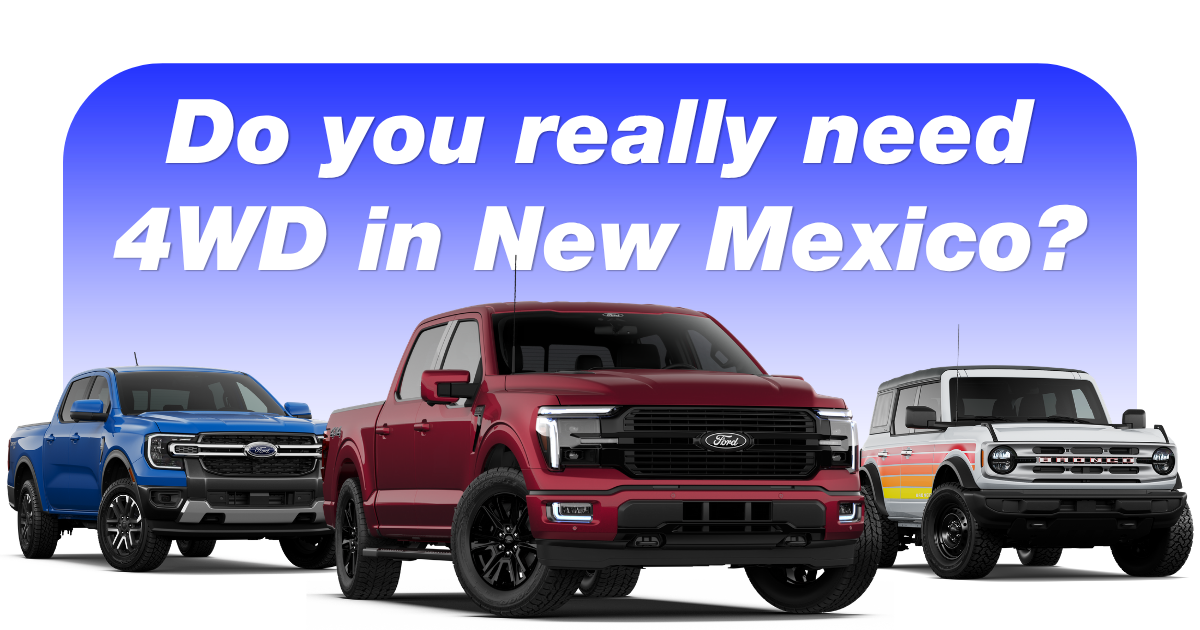
Living in New Mexico does not automatically mean you need Four Wheel Drive. If most of your driving consists of commuting around Albuquerque, running errands, and traveling on maintained highways, a two-wheel-drive vehicle with good tires may be all you need. However, if your lifestyle regularly takes you into the mountains, onto dirt roads, through snow, or farther off the pavement, Four Wheel Drive can quickly become one of those features you are glad you have. The real question is not whether Four Wheel Drive is better. The question is whether your day-to-day driving gives you a reason to use it. When Does Four Wheel Drive Make Sense in New Mexico? New Mexico has a little bit of everything. Albuquerque can be dry and sunny while roads farther north are dealing with snow and ice. Summer monsoon storms can also turn otherwise manageable roads into muddy or slick conditions very quickly. Four Wheel Drive makes the most sense for drivers who regularly: Go camping or hunting on dirt and forest roads. Travel into the mountains during the winter. Drive through snow, mud, sand, or loose terrain. Tow recreational equipment into areas where road conditions may be unpredictable. Spend time on job sites or rural roads. Want additional off-road capability for weekend recreation. If most of your driving never puts you in those situations, you may not need the additional capability. Four Wheel Drive Does Not Replace Good Tires This might be the most important thing to understand: Four Wheel Drive can help your vehicle gain traction and keep moving, but it does not make snow, ice, or wet pavement disappear. Your tires still play a major role in how well your vehicle accelerates, turns, and stops. The New Mexico Department of Transportation recommends checking your tires before winter travel, reducing your speed in snow and ice, increasing following distance, and checking road conditions before heading out. During monsoon conditions, NMDOT also recommends slowing down, avoiding cruise control on slippery roads, and never attempting to cross a flooded roadway. In other words, Four Wheel Drive is a great tool. It is not a substitute for good tires and good judgment. What Does Ford Four Wheel Drive Give You? The advantage of buying a modern Ford with Four Wheel Drive goes beyond simply sending power to all four wheels. On the 2026 Ford F-150, available Four Wheel Drive configurations can include selectable drive modes for conditions such as Slippery, Deep Snow and Sand, and Mud and Ruts. Models such as the F-150 Tremor take that capability even further with standard Four Wheel Drive, an electronic locking rear differential, off-road suspension, all-terrain tires, and additional trail-focused drive modes. The 2026 Ford Ranger also offers Four Wheel Drive across the lineup, with Four Wheel Drive standard on Ranger Raptor. Depending on the model and equipment, Ranger drivers can access terrain-focused drive modes designed for conditions such as mud, sand, rocks, and other off-road situations. That matters in New Mexico because the road you start on is not always the road you finish on. So Do You Actually Need Four Wheel Drive? If you spend nearly all of your time driving around Albuquerque on paved roads, you probably do not need Four Wheel Drive simply because you live in New Mexico. If your weekends involve camping, hunting, fishing, skiing, mountain roads, forest roads, or exploring places where pavement eventually disappears, Four Wheel Drive becomes much easier to justify. It really comes down to where you drive when you are not commuting. You may only need Four Wheel Drive a handful of times each year, but those handful of times may be exactly why you bought it. At Power Ford, we would rather help you determine how you actually use your vehicle than automatically tell you that you need more equipment. Compare available two-wheel-drive and Four Wheel Drive Ford vehicles at MyFordDealer.com, or visit Power Ford in Albuquerque and let us help you decide which configuration makes the most sense for your lifestyle.