Blog / Explorer

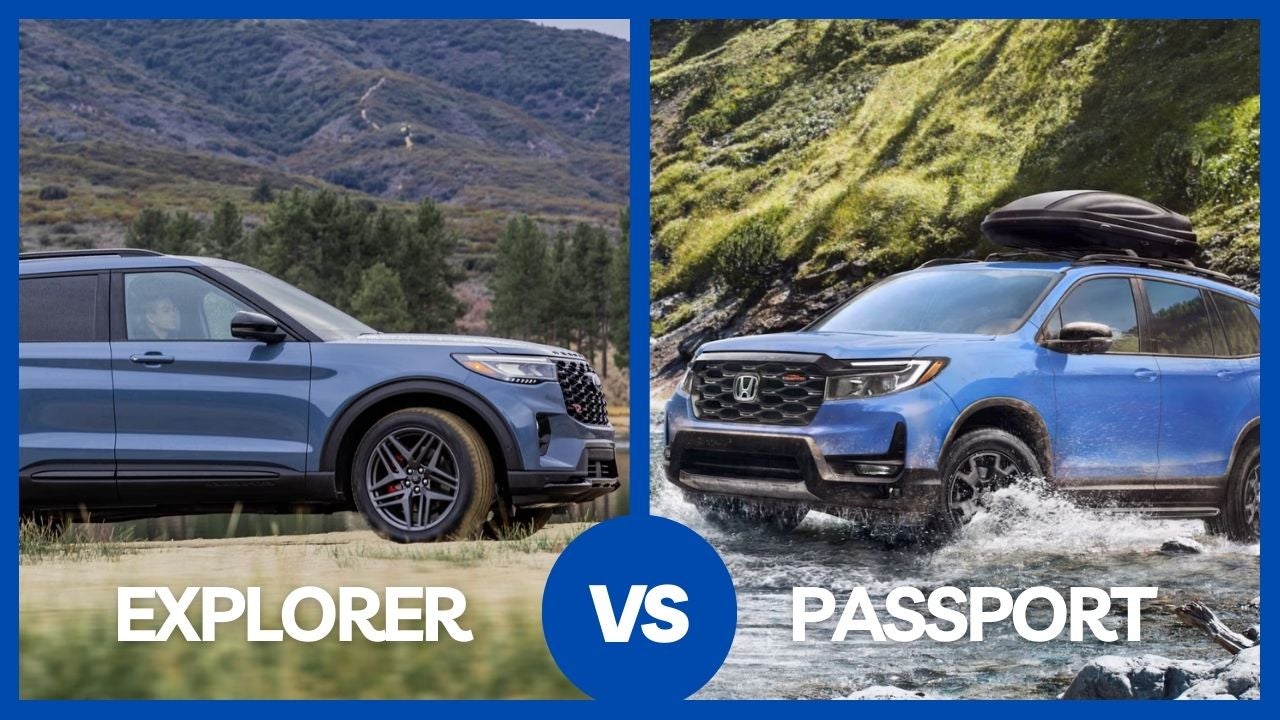
2025 Ford Explorer vs Honda Passport: SUV Battle

Explorer vs Passport Hero

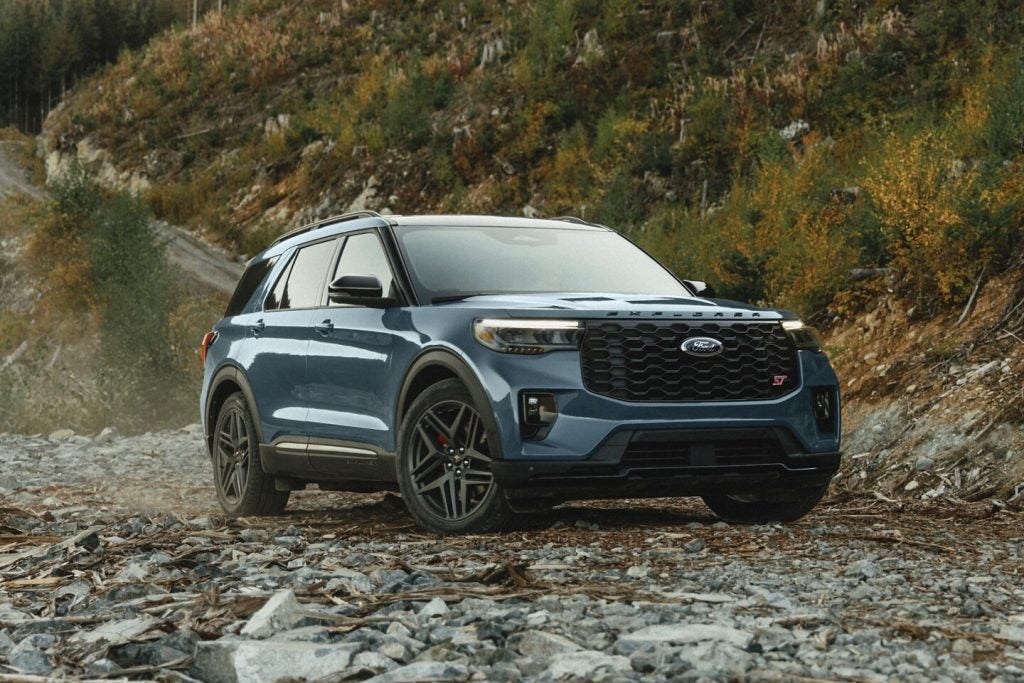
Are you deciding between the Ford Explorer's rugged charm and the Honda Passport's sleek look for your next family SUV? At Power Ford, we're exploring this showdown to help you choose the right SUV.

Both SUVs offer lots of room for families and their stuff. Let's look closer at performance, comfort, and value. You'll see which SUV is the best fit for you and choose the best option for your family. Are you ready to see what makes each SUV special?

2025 Ford Explorer vs Honda Passport: Performance and Capability

The 2025 Honda Passport vs. Ford Explorer showdown brings exciting performance options to the table. Let's dive into what makes these SUVs stand out on the road and off the beaten path.

Engine Specifications and Power Output

The Ford Explorer comes standard with a 300-horsepower turbocharged four-cylinder engine. For those craving more power, the Explorer offers an available 400-horsepower turbo V6 that accelerates from 0 to 60 mph in just 5.6 seconds. This brings it in line with the 0-60 time of the Honda Passport's standard 280-horsepower V6 engine.

Fuel Economy Comparison

When it comes to 2025 Passport vs Explorer fuel efficiency, the Explorer has a slight edge. In its rear-wheel-drive configuration, the Explorer achieves an EPA-estimated 24 mpg combined city/highway. The all-wheel-drive version manages 23 mpg. The Passport offers a competitive 21 mpg combined, but this figure has been disputed by drivers and reviewers.

Handling and Drive Experience

Both SUVs offer smooth rides, but the 2025 Explorer and Passport off-road capabilities differ. The Explorer's available all-wheel drive system enhances traction in various conditions. The Passport, while not as powerful, provides a capable and comfortable driving experience with its standard V6 engine and AWD system.

FeatureFord ExplorerHonda Passport
Standard Engine300 hp Turbo 4-cylinder280 hp V6
0-60 mph Time7.0 seconds5.9 seconds
Combined MPG (RWD/AWD)24/2321

Interior Comfort and Technology Features

When comparing the 2025 Ford Explorer and Honda Passport, you'll see both have roomy cabins. The Explorer has a lot of space, with 16.3 cubic feet behind the third row. It also has 46 cubic feet behind the second row, and over 85 cubic feet when both rows are folded.

The Passport is a bit smaller but still has plenty of room. It has 41 cubic feet behind the second row and over 78 cubic feet when the second row is folded. Both SUVsare great for families and those who love adventure.

Looking at features, the Explorer has a bigger infotainment screen - a 13.2-inch touchscreen compared to the Passport's 8-inch screen. Both SUVs have Apple CarPlay, Android Auto, and Bluetooth for easy phone connection.

Feature2025 Ford ExplorerHonda Passport
Infotainment Screen13.2-inch touchscreen8-inch touchscreen
Cargo Space (Max)85 cubic feet78 cubic feet
Smartphone IntegrationApple CarPlay, Android AutoApple CarPlay, Android Auto

When it comes to technology, the Explorer has BlueCruise for optional hands-free driving. The Passport has adaptive cruise control as standard.

Design, Safety, and Value Proposition

The 2025 Honda Passport and Ford Explorer are two top SUVs with their own strengths. We'll look at their design, safety, and value to help you choose.

Exterior Styling and Dimensions

The Ford Explorer's bold design has made it the best-selling SUV in the country, and its 7.6inch minimum ground clearance enable it to handle any many on- and off-road conditions.

The Honda Passport blends ruggedness with city style. With 8.1 inches of ground clearance, it's great for city streets and light off-roading.

Safety Features and Ratings

Both the 2025 Honda Passport and Ford Explorer focus on keeping passengers safe. The Explorer safety features include advanced driver assistance tech, a reinforced structure, and optional 360-degree camera coverage.

The Passport has the Honda Sensing® set of advanced safety features. It also has standard all-wheel drive for better handling on different terrains.

Trim Levels and Pricing

The 2025 Ford Explorer has four trim levels as follows:

  • Active: Starting at $39,755
  • ST-Line: MSRP $44,615
  • ST: The most expensive at $54,260
  • Platinum: Priced at $52,250

Every Explorer trim comes with LED headlamps and a power liftgate.

The 2025 Honda Passport has three trim levels:

  • EX-L: Starting at $42,400
  • TrailSport: Priced at $45,000
  • Black Edition: Topping out at $48,470

Each trim has a strong 280-hp 3.5-liter V-6 engine for powerful performance.

Warranty Coverage

Ford and Honda offer standard warranty packages for the Explorer and Passport respectively. This gives you confidence in your vehicle and your purchase for years.
Conclusion

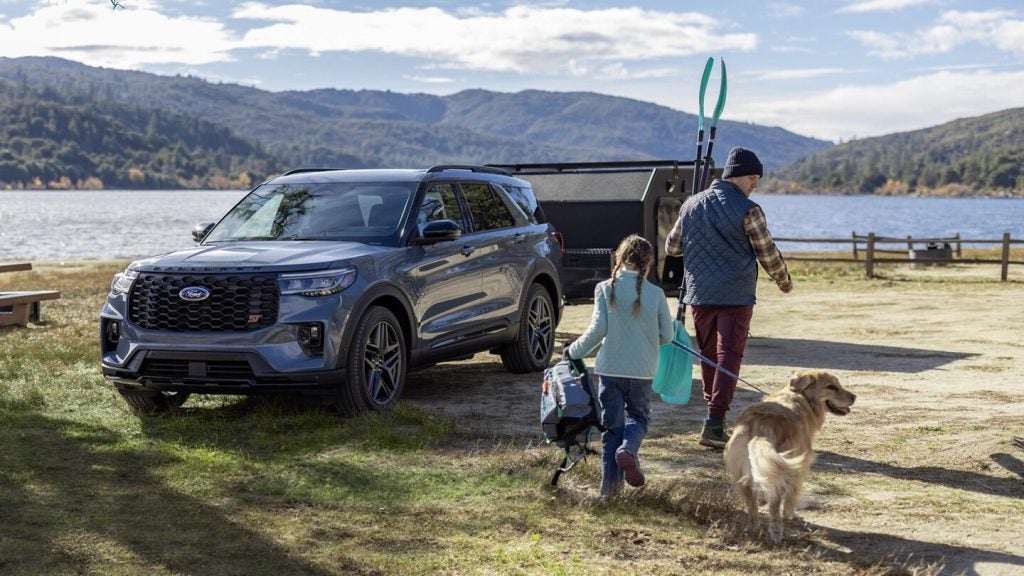
In the 2025 Ford Explorer vs Honda Passport showdown, both SUVs are top contenders. The Explorer impresses with its strong engine and advanced tech while also shining in fuel efficiency. Safety is a key feature for both SUVs, while the Explorer has a clear lead in space.

Choosing between the 2025 Ford Explorer and Honda Passport depends on your needs. To see the Explorer's power, tech, and comfort, visit Power Ford at 1101 Montano N.E., Albuquerque, NM 87107. Call us at 505-933-7883 to book a test drive and find out if the Explorer is right for you.

FAQ

How does the 2025 Ford Explorer compare to the Honda Passport in terms of engine power?

The 2025 Ford Explorer has more powerful engines. It comes with a standard 300-horsepower turbocharged four-cylinder. You can also get a 400-horsepower turbo V6. The Honda Passport is capable with its 280-horsepower V6, but doesn't have as much power as the Explorer.

Which SUV has better fuel efficiency, the 2025 Explorer or the Passport?

The 2025 Ford Explorer gets up to 24 mpg combined in rear-wheel-drive. The Passport is rated at an outstanding 21 combined mpg, but many have found that it struggles to live up to this capability in real life.

What are the key technology features in the 2025 Ford Explorer?

The 2025 Ford Explorer has a digital instrument cluster and a 13.2-inch center touchscreen. It also has BlueCruise for hands-free driving. Plus, it offers smartphone integration and a premium audio system.

How do the interior spaces of the 2025 Explorer and Passport compare?

Both SUVs have comfortable seating and lots of cargo space - 85 cubic feet maximum compared to the Passport's 78. The Explorer's interior was updated for a modern look. The Passport features standard leather trimmed seats.

What's the starting price for the 2025 Ford Explorer?

The base trim of the 2025 Ford Explorer starts at $39,755. For pricing on all trims, contact Power Ford.

How do the safety features compare between the 2025 Explorer and Passport?

Both SUVs focus on safety with advanced driver-assistance tech. The Explorer has optional BlueCruise hands-free driving, and both have standard safety suites.

How does the 2025 Explorer compare to the Passport in off-road capabilities?

Both SUVs are good off-road. The Honda Passport comes with AWD as standard while the Explorer's is only optional, but the Explorer's powerful engines might still give it an advantage on rough terrain.
Posted in:

Related Posts

2026 Ford Explorer

2026 Ford Explorer Drive Modes Explained: Which Mode Should You Use?

The 2026 Ford Explorer offers selectable drive modes that adjust multiple vehicle systems for different roads, loads and driving priorities. The practical answer is simple: use Normal for everyday driving, Eco when you want gentler responses, Sport when you want sharper performance, Tow/Haul when pulling a trailer or carrying a heavy load, Slippery for snow or ice, and Trail or Off-Road only when the road surface and your Explorer’s equipment call for it. Drive modes support the driver, but they cannot create traction that the tires and road surface do not provide. Safe speeds, suitable tires, and good judgment still matter, especially during New Mexico winter travel or on unpaved roads. What Changes When You Select a Drive Mode? According to the 2026 Explorer Owner’s Manual, selecting a drive mode changes predetermined settings across various electrical and mechanical systems. The exact changes depend on the selected mode and the vehicle’s equipment. The Explorer returns to Normal each time you restart the vehicle. To choose another mode, rotate the drive-mode controller on the center console once to open the selection menu, then rotate it again to select and engage the mode. Most modes can be selected while driving if you remain attentive. However, Ford cautions against selecting a mode intended for off-road use while driving on a paved public road. The requested mode may also take several seconds to activate after its conditions are met. Normal Mode: The Everyday Setting Normal balances the Explorer’s systems for ordinary drivability. It is the appropriate setting for most Albuquerque commuting, school runs and highway travel. Because the Explorer returns to Normal after every restart, you do not need to select it each time. When the road conditions and your driving needs are ordinary, leaving the vehicle in Normal is the straightforward choice. Eco Mode: Smoother Responses for Efficient Driving Eco reduces accelerator-pedal responsiveness to soften driver inputs. Depending on the Explorer’s equipment, it may also change how adaptive cruise control returns to its set speed, allow automatic start-stop to operate more frequently and reduce climate-control output when the system is in Auto. Eco does not guarantee a specific fuel-economy improvement. Driving speed, acceleration, weather, traffic, tire pressure and cargo still affect fuel consumption. Think of Eco as a tool that encourages smoother operation rather than a shortcut around driving conditions. Sport Mode: Quicker Response and a More Engaging Feel Sport increases accelerator response and holds lower transmission gears longer to support stronger acceleration. Ford also adjusts chassis controls, while certain configurations may change steering effort, suspension behavior or exhaust sound. Sport makes sense when you want a more responsive on-road driving experience. It can be useful when joining faster traffic or enjoying a winding paved road, but it does not change speed limits or the amount of available grip. Tow/Haul Mode: Use It for Trailers and Heavy Loads Tow/Haul changes transmission behavior to reduce frequent shifting by moving upshifts to higher engine speeds. It also provides downshift engine braking to help maintain vehicle speed on a descent. Depending on equipment, it may adjust steering response and inhibit automatic start-stop. This is the appropriate mode when towing a trailer or hauling a heavy load. It can be especially helpful where New Mexico highways climb and descend, but it does not replace correct loading, proper trailer equipment or the limits listed on the vehicle’s certification label and in Ford’s towing guide. Ford states that 2026 Explorer models include a Class III Trailer Tow Package and can tow up to 5,000 pounds when properly equipped. Actual capacity depends on the complete vehicle, passenger, cargo and trailer configuration. Confirm the individual Explorer’s labels and instructions before towing. Slippery Mode: For Snow, Ice and Loose Material Slippery lowers accelerator response, changes transmission shift points and optimizes traction and stability controls to help reduce wheelspin. On equipped vehicles, it also adjusts the four-wheel-drive system for slippery surfaces. Ford identifies snow-covered or icy roads and firm surfaces covered with loose material as appropriate situations. The Owner’s Manual also says not to use Slippery mode on dry pavement. For trips toward higher elevations, select the mode only when conditions justify it. Slippery mode does not shorten braking distance or eliminate the need for suitable tires, greater following distance and lower speeds. Trail or Off-Road Mode: Configuration Matters The available mode can differ by drivetrain and model. Ford’s current Explorer information identifies Trail for rear-wheel-drive configurations and Off-Road for four-wheel-drive configurations, while the Owner’s Manual marks Trail as an if-equipped feature. Trail lowers accelerator response, delays upshifts and changes traction and stability-control operation for low-speed travel on surfaces such as two-track trails, loose gravel and mixed uneven terrain. Depending on equipment, it may also optimize the four-wheel-drive system and disable automatic start-stop. Do not treat an off-road mode as permission to use a road or trail. Confirm access rules, evaluate the surface and weather, and stay within the vehicle’s clearance and tire capabilities. Before relying on a specific mode, verify the Explorer’s window sticker and Owner’s Manual because drivetrain and equipment determine availability. Which 2026 Explorer Drive Mode Should You Choose? Use the mode that matches the current job, not the one with the most aggressive name. Normal covers daily driving. Eco softens responses, Sport sharpens them, Tow/Haul supports trailer and heavy-load operation, Slippery addresses slick conditions, and Trail or Off-Road is reserved for an appropriate unpaved environment and properly equipped vehicle. If your Explorer does not offer the mode you expected, or a mode will not activate, start with the Owner’s Manual and the vehicle’s equipment list. A system fault can also cause the Explorer to return to Normal. Ford owners can schedule service if a drive-mode warning or repeated malfunction needs diagnosis. Shoppers can compare Explorer drivetrains and trims to confirm which drive modes and related hardware fit how they plan to drive.

2026 Ford Explorer

2026 Ford Explorer: Three Rows Without Full-Size Bulk

The 2026 Ford Explorer is a strong fit for families that need three rows but do not want the size of a full-size SUV. Depending on the seating configuration, it carries six or seven people and provides up to 85.8 cubic feet of cargo space. Every Explorer includes a Class III Trailer Tow Package and can tow up to 5,000 pounds when properly equipped. The lineup also lets you choose a clear personality: Active for everyday comfort, ST-Line for sport-inspired design, Tremor for trail-focused hardware, ST for stronger performance or Platinum for premium features. Explorer works because it can adapt as the day changes from commuting to school pickup to a weekend trip. Compare current Ford options at Power Ford and find the seating, drivetrain and trim that fit your family.

Ford Explorer climbing a rocky off-road trail

Where to Find a Certified Pre-Owned Ford Explorer With Warranty Near Los Lunas, NM

A certified pre-owned Ford Explorer near Los Lunas means one specific thing: a Ford Blue Advantage Gold Certified unit, under six model years old, under 80,000 miles, inspected on 172 points, and backed by a 7-year or 100,000-mile powertrain warranty. Power Ford stocks them about 30 miles north on I-25. We walked through how the program works and how to pick a dealer in our guide to finding a trusted Ford Blue Advantage certified pre-owned dealer in Albuquerque, so this page stays on the two things Los Lunas shoppers actually ask about: what the warranty covers on an Explorer specifically, and what to verify before you drive up to sign. What Certification Actually Adds to a Used Ford Explorer Ford Blue Advantage has tiers, and the tier decides the warranty, so it is the first thing to pin down on any listing. Gold Certified covers Ford vehicles under six model years old with fewer than 80,000 miles and requires a 172-point inspection. Blue Certified opens up to ten model years and 150,000 miles on a 139-point inspection, and it accepts non-Ford makes. A dealership's own “inspected” or “certified” badge is not the same thing and carries no factory-backed warranty behind it. For an Explorer in 2026, the Gold Certified window is useful shorthand. Under six model years old puts you at roughly 2021 and newer, which is squarely inside the current Explorer generation that launched for the 2020 model year — so a Gold Certified Explorer is also, almost by definition, a current-generation one. That matters more than it sounds: you are not sorting through two different platforms, powertrains and interiors while trying to compare prices. Browse Certified Pre-Owned Fords The Warranty Coverage That Comes With It Three pieces of coverage come standard on a Gold Certified Explorer, and they run on different clocks. The comprehensive limited warranty is 12 months or 12,000 miles and starts the day you buy. The powertrain limited warranty is 7 years or 100,000 miles, but it is measured from the vehicle's original in-service date, not your purchase date — so a 2022 Explorer delivered new in March 2022 has powertrain coverage running to March 2029 or 100,000 miles, whichever lands first. Roadside assistance runs alongside the powertrain term. Ford Blue Advantage also adds a 14-day or 1,000-mile money-back guarantee on certified purchases. If that timeline leaves a gap you are not comfortable with, it can be extended rather than replaced. Ford Protect PremiumCARE covers more than 1,000 components out to 8 years or 150,000 miles, including normal wear-and-tear failures rather than manufacturing defects alone, and it brings roadside assistance and rental coverage with it. It is transferable if you sell the Explorer, and it is honored at Ford dealers nationwide — which is the part that matters if your family drives out of state. Explore Ford Protect Coverage What to Verify on a Used Explorer Before You Sign Ask for the in-service date first, because it sets the powertrain clock and two Explorers of the same model year can be nearly a year apart on it. Then read the included vehicle history report for accident records and service gaps, and confirm in writing which tier the car is certified under. One more Explorer-specific detail is worth knowing: the IIHS ratings for the Explorer cover the 2020–26 model years, but the small overlap front result applies to vehicles built after May 2020 following a structural change — so on an early 2020 build, check the door-jamb build date rather than assuming the rating carries over. The 2026 Explorer is an IIHS Top Safety Pick with Good ratings in the small overlap front, moderate overlap front and side tests. Picking the Right Explorer for a Los Lunas Driver The Explorer's case is three rows without a full-size footprint. It seats up to seven, the standard 2.3L EcoBoost four-cylinder makes 300 horsepower and 310 lb-ft of torque, and properly equipped it tows up to 5,600 pounds — enough for a small camper, a boat for Cochiti or Elephant Butte, or a two-horse setup out toward the Manzanos. For a daily I-25 run into Albuquerque, the four-cylinder is the sensible choice; the V6 trims are worth the fuel only if you actually tow. Two options are worth insisting on when you are shopping certified rather than ordering new, because you cannot add them later. Four-wheel or all-wheel drive earns its keep on winter mornings and unpaved roads south of town, and the Class III Trailer Tow Package is what unlocks the full 5,600-pound rating — without it, the same Explorer is rated well below that. Check the window sticker or have the VIN decoded rather than trusting a listing photo. See Our Ford Explorer Inventory Shopping From Los Lunas Power Ford is at 1101 Montaño Rd NE in Albuquerque, roughly 30 miles north of Los Lunas and a 35- to 40-minute run up I-25 outside rush hour. Certified inventory moves, so the practical approach is to call ahead, have us confirm the tier and in-service date on a specific VIN, and make one trip instead of three. You can see the full picture of what we do for the area on our Ford dealership page for Los Lunas, and if you are weighing a certified truck instead of an SUV, our look at whether a Ford Blue Advantage certified F-150 is worth it applies the same coverage math to the F-150. We work with buyers from Belen, Bosque Farms, Peralta and Tomé on the same terms. Common Questions Los Lunas Shoppers Ask Us Where can I find a certified pre-owned Ford Explorer with warranty near Los Lunas, NM? Power Ford in Albuquerque stocks Ford Blue Advantage Gold Certified Explorers about 30 miles north of Los Lunas on I-25. Every Gold Certified Explorer carries a 172-point inspection, a 12-month or 12,000-mile comprehensive limited warranty, a 7-year or 100,000-mile powertrain limited warranty, and 24/7 roadside assistance. Call (505) 933-7883 to check current certified Explorer stock before you make the drive up. What warranty comes with a Ford Blue Advantage certified Explorer? A Gold Certified Explorer includes a 12-month or 12,000-mile comprehensive limited warranty that starts from your purchase date, plus a 7-year or 100,000-mile powertrain limited warranty measured from the vehicle's original in-service date rather than the day you buy it. Roadside assistance runs as long as the powertrain coverage, and a vehicle history report is included. What model year Ford Explorer qualifies as Gold Certified in 2026? Gold Certified requires a Ford under six model years old with fewer than 80,000 miles, so in 2026 that generally means a 2021 or newer Explorer. Older or higher-mileage Explorers can still qualify for Blue Certified, which allows up to ten model years and 150,000 miles on a 139-point inspection. Ask which tier a specific listing carries. Come Drive One Before You Decide A certified Explorer is easier to judge in person than on a listing page. Come look at the inspection documentation, read the history report, check the in-service date on the paperwork, and drive it up the hill before you commit to anything. We'll beat any Ford deal in New Mexico, or you'll get $1,000 cash in your pocket. Call (505) 933-7883 and we will have the certified Explorers pulled up and ready when you get here. Schedule a Test Drive Contact Our Team