

At Power Ford in Albuquerque, NM, we understand that fuel economy is a top priority for truck buyers who need capability without breaking the bank at the pump. The 2026 Ford F-150 delivers impressive efficiency across multiple powertrain options, making it easier than ever to find the right balance between power and fuel savings.
The 2026 Ford F-150 offers fuel economy ratings ranging from 20 city / 26 highway / 22 combined MPG with the standard 2.7L EcoBoost V6 in rear-wheel drive configuration to 25 city / 26 highway / 25 combined MPG with the available 3.5L PowerBoost full hybrid V6. Whether you're commuting through Albuquerque's metro area, hauling equipment to job sites across New Mexico, or towing recreational vehicles through the state's diverse terrain, the F-150 lineup provides engine options that match your specific needs. Our team at Power Ford maintains an extensive inventory of 2026 F-150 trucks across all trim levels and powertrain configurations.
Key Highlight
The 2026 Ford F-150 PowerBoost Hybrid achieves best-in-lineup fuel economy at 25 combined MPG while delivering 430 horsepower and 578 lb-ft of torque—the highest torque rating in the non-Raptor F-150 lineup.
This comprehensive guide explores the fuel economy ratings for every 2026 F-150 engine option, compares real-world driving range across different configurations, and explains how factors like drivetrain choice and driving conditions affect your actual MPG. We'll also show you how Albuquerque's high-altitude environment and local driving patterns influence fuel efficiency, helping you make an informed decision when selecting your next F-150.
Key Takeaways
- The 2026 Ford F-150 PowerBoost Hybrid delivers the best fuel economy at 25 city / 26 highway / 25 combined MPG in 4x2 configuration
- The 2.7L EcoBoost V6 offers the best non-hybrid efficiency at 20 city / 26 highway / 22 combined MPG in rear-wheel drive
- Choosing 4WD over 2WD typically reduces fuel economy by 1-2 MPG combined across most engine options
- The available 36-gallon extended-range fuel tank can provide over 800 miles of driving range when paired with efficient powertrains
- Power Ford in Albuquerque maintains inventory of all F-150 engine configurations and can help you select the most efficient option for your needs
- Albuquerque's 5,312-foot elevation can affect fuel economy differently than EPA ratings, which are tested at sea level
2026 Ford F-150 MPG Ratings by Engine at Power Ford Albuquerque
The 2026 F-150 lineup offers five distinct gasoline engines plus a full hybrid option, each delivering different fuel economy characteristics. Understanding these differences helps you choose the powertrain that best matches your driving habits and workload requirements. All EPA fuel economy estimates are based on standardized testing procedures, though your actual mileage will vary based on driving conditions, vehicle configuration, and individual driving style.
The standard engine across XL, STX, and XLT trims is the 2.7L EcoBoost V6, which produces 325 horsepower and 400 lb-ft of torque while achieving EPA-estimated ratings of 20 city / 26 highway / 22 combined MPG in 2WD configuration. This twin-turbocharged engine delivers impressive highway efficiency that rivals many smaller vehicles. When you upgrade to 4WD, the ratings adjust to 18 city / 24 highway / 20 combined MPG. Our Power Ford inventory includes numerous 2.7L EcoBoost models that provide excellent daily driving efficiency without sacrificing capability.
2.7L EcoBoost V6
20 city / 26 highway / 22 combined MPG (2WD) | 325 hp, 400 lb-ft torque | Standard on XL, STX, XLT
3.5L PowerBoost Hybrid V6
25 city / 26 highway / 25 combined MPG (2WD) | 430 hp, 578 lb-ft torque | Available on STX, XLT, Lariat, King Ranch, Platinum
3.5L EcoBoost V6
18 city / 24 highway / 20 combined MPG (2WD) | 400 hp, 500 lb-ft torque | Best-in-class 13,500 lbs max towing
For drivers seeking maximum efficiency without compromising power, the 3.5L PowerBoost full hybrid V6 stands as the clear winner. This advanced powertrain combines a twin-turbocharged 3.5L V6 with a 35-kilowatt electric motor integrated into the 10-speed automatic transmission, producing 430 combined horsepower and an impressive 578 lb-ft of torque. The hybrid system achieves 25 city / 26 highway / 25 combined MPG in 4x2 configuration and 22 city / 24 highway / 23 combined MPG in 4x4. The PowerBoost also includes standard Pro Power Onboard 2.4 kW capability, with an available 7.2 kW upgrade that transforms your truck into a mobile generator. Contact our Albuquerque team at (505) 234-1131 to explore PowerBoost hybrid models in stock.
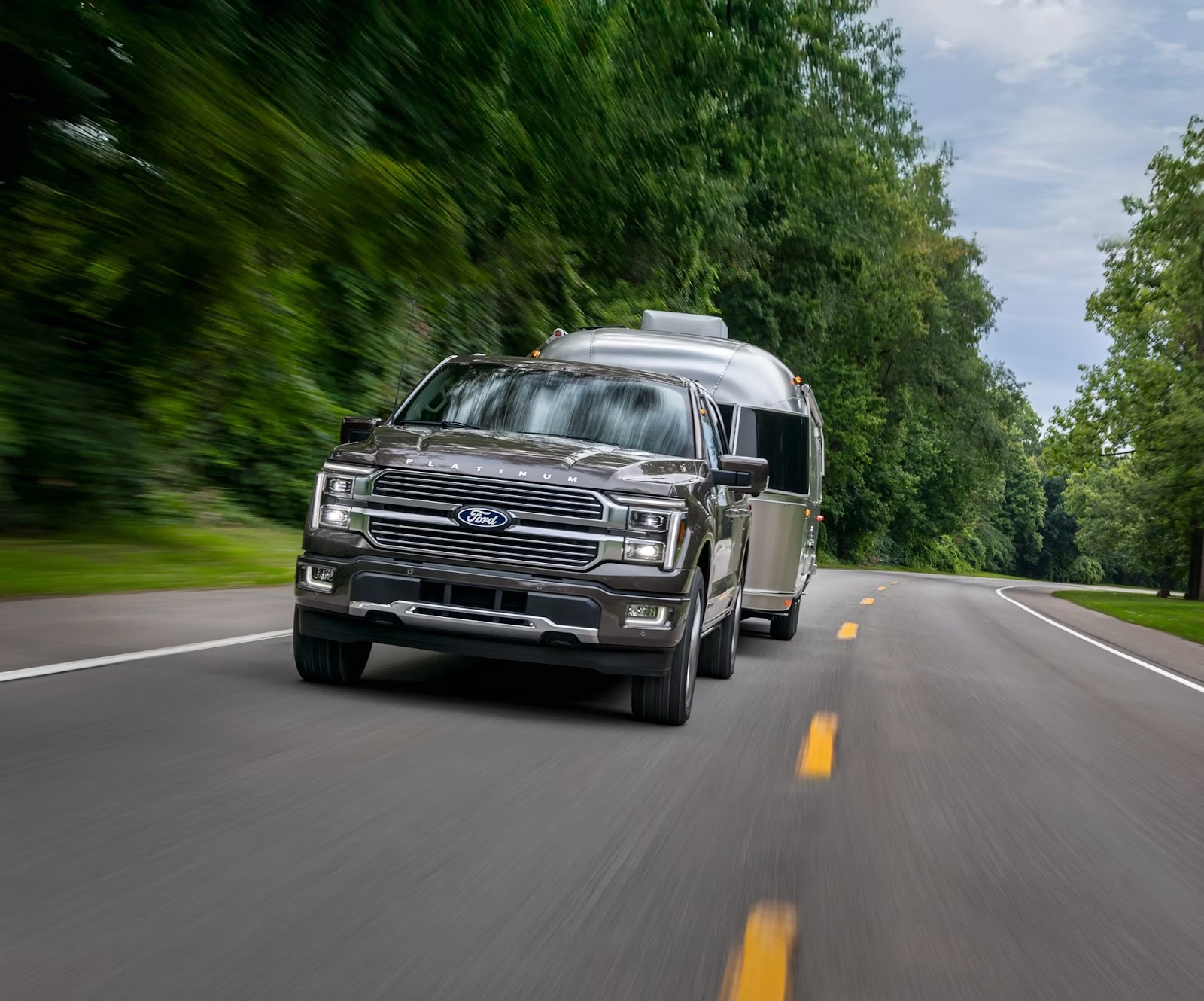
The 2026 F-150 PowerBoost Hybrid combines a 3.5L twin-turbo V6 with electric motor technology for best-in-class fuel economy and torque
Complete 2026 F-150 Fuel Economy Comparison Chart
This comprehensive comparison shows EPA fuel economy ratings for all 2026 F-150 engine and drivetrain combinations. The data reveals significant variation based on your configuration choices, with differences of up to 13 MPG combined between the most and least efficient options. Understanding these numbers helps you calculate long-term fuel costs and select the right powertrain for your budget.
| Engine | Drivetrain | City MPG | Highway MPG | Combined MPG |
|---|---|---|---|---|
| 3.5L PowerBoost Hybrid V6 | 4x2 (2WD) | 25 | 26 | 25 |
| 3.5L PowerBoost Hybrid V6 | 4x4 (4WD) | 22 | 24 | 23 |
| 2.7L EcoBoost V6 | 4x2 (2WD) | 20 | 26 | 22 |
| 2.7L EcoBoost V6 | 4x4 (4WD) | 18 | 24 | 20 |
| 3.5L EcoBoost V6 | 4x2 (2WD) | 18 | 24 | 20 |
| 3.5L EcoBoost V6 | 4x4 (4WD) | 17 | 23 | 19 |
| 5.0L Ti-VCT V8 | 4x2 (2WD) | 17 | 23 | 19 |
| 5.0L Ti-VCT V8 | 4x4 (4WD) | 16 | 22 | 18 |
| 3.5L EcoBoost V6 (Tremor) | 4x4 (4WD) | 16 | 21 | 18 |
| 3.5L High-Output EcoBoost V6 (Raptor) | 4x4 (4WD) | 15 | 18 | 16 |
Understanding the 2026 Ford F-150 EcoBoost MPG Advantage
The EcoBoost engine family uses twin turbochargers and direct fuel injection to extract maximum power from smaller displacement engines, resulting in better fuel economy than traditional naturally aspirated engines of similar output. The 2.7L EcoBoost achieves its impressive 26 highway MPG through advanced technologies including port and direct fuel injection, variable valve timing, and an integrated exhaust manifold that reduces weight and improves thermal efficiency. When properly equipped, this engine can tow up to 8,500 pounds while still delivering excellent fuel economy for daily driving around Albuquerque.
2026 Ford F-150 Hybrid MPG Performance
The PowerBoost hybrid system uses regenerative braking to capture energy normally lost during deceleration, storing it in a 1.5 kWh lithium-ion battery pack mounted beneath the truck bed. This stored energy powers the electric motor during acceleration and low-speed driving, reducing fuel consumption in stop-and-go traffic where traditional engines are least efficient. The hybrid can operate on electric power alone for short distances at speeds up to approximately 25 mph, making it particularly effective for city driving. The system seamlessly transitions between electric, gasoline, and combined power modes without driver intervention. Visit our F-150 overview page to learn more about hybrid technology benefits.
What Albuquerque Drivers Should Know About F-150 Fuel Economy
Driving conditions in Albuquerque and throughout New Mexico present unique factors that affect real-world fuel economy. The city's elevation of 5,312 feet above sea level means thinner air with less oxygen, which can impact engine performance and efficiency differently than EPA ratings tested at sea level. Turbocharged engines like the EcoBoost family typically perform better at altitude than naturally aspirated engines because the turbochargers compensate for reduced air density by increasing boost pressure.
Temperature extremes also play a significant role in fuel economy. Albuquerque experiences hot summers where air conditioning use increases fuel consumption, and cold winter mornings where engines take longer to reach optimal operating temperature. The hybrid PowerBoost system is particularly sensitive to temperature, with the lithium-ion battery performing best in moderate conditions. During extreme heat or cold, you may notice slightly reduced electric-only range, though the gasoline engine seamlessly compensates to maintain performance.
How Towing and Payload Affect MPG
Towing is the single largest factor that reduces fuel economy in any truck. When towing a 7,000-pound travel trailer—a common scenario for New Mexico outdoor enthusiasts—you can expect highway fuel economy to drop by approximately 40-50% compared to unloaded driving. A 2.7L EcoBoost that achieves 26 highway MPG unloaded might return only 13-15 MPG when towing. The 3.5L EcoBoost and PowerBoost hybrid maintain better efficiency under load thanks to their higher torque output, which means the engine doesn't work as hard to maintain speed. Payload in the truck bed has a smaller but still noticeable impact, with every 500 pounds of cargo reducing fuel economy by approximately 1-2%.
Tire Selection and Wheel Size Impact
Factory tire and wheel combinations are optimized for the EPA fuel economy ratings, but many F-150 buyers upgrade to larger or more aggressive tires for appearance or off-road capability. Moving from highway all-season tires to aggressive all-terrain tires can reduce fuel economy by 1-3 MPG due to increased rolling resistance and weight. Oversized tires beyond factory specifications create even larger penalties. The Tremor off-road package includes 33-inch all-terrain tires that contribute to its lower fuel economy rating compared to standard F-150 models with the same engine. If maximum fuel efficiency is your priority, stick with the factory tire specifications or choose highway-oriented all-season tires.
Fuel Tank Capacity and Driving Range Specifications
The 2026 F-150 offers multiple fuel tank options that significantly affect your driving range between fill-ups. Understanding these options helps you plan long trips and reduces the inconvenience of frequent refueling, particularly important when traveling through rural areas of New Mexico where gas stations may be sparse.
Standard and Extended-Range Fuel Tanks
Regular Cab and SuperCab configurations come standard with a 23-gallon fuel tank, while SuperCrew models feature a larger 26-gallon standard tank. The PowerBoost hybrid uses a unique 30.6-gallon tank designed to fit around the hybrid battery components. For maximum range, Ford offers an optional 36-gallon extended-range fuel tank on select gas engine configurations, typically adding $400-$500 to the vehicle price. This larger tank is available on SuperCrew and SuperCab models with gas engines and is particularly popular among buyers who tow frequently or drive long distances.
| Configuration | Fuel Tank Size | Example Engine | Estimated Range (Combined) |
|---|---|---|---|
| PowerBoost Hybrid 4x2 | 30.6 gallons | 3.5L Hybrid V6 | 765 miles |
| 2.7L EcoBoost 2WD with 36-gal tank | 36 gallons | 2.7L EcoBoost V6 | 792 miles |
| SuperCrew 2WD Standard | 26 gallons | 2.7L EcoBoost V6 | 572 miles |
| 3.5L EcoBoost 4WD Standard | 26 gallons | 3.5L EcoBoost V6 | 494 miles |
| 5.0L V8 4WD Standard | 26 gallons | 5.0L Ti-VCT V8 | 468 miles |
| Raptor | 26 gallons | 3.5L High-Output EcoBoost | 416 miles |
Calculating Your Real-World Driving Range
The driving range estimates above are based on EPA combined fuel economy ratings and assume you use the full tank capacity. In practice, most drivers refuel when the tank reaches 10-15% remaining, which reduces usable range by approximately 40-60 miles. Highway driving typically extends range significantly—a PowerBoost hybrid with its 30.6-gallon tank achieving 26 highway MPG can theoretically travel nearly 800 miles on a single tank during highway-only driving. City driving reduces range proportionally. Our team at Power Ford can help you calculate expected range based on your specific driving patterns and route requirements. Call us at (505) 234-1131 to discuss which fuel tank option best suits your needs.

The F-150's digital instrument cluster provides real-time fuel economy monitoring and trip computer data to help you maximize efficiency
2026 Ford F-150 V8 MPG vs EcoBoost Comparison
Many truck buyers face the decision between traditional V8 power and modern turbocharged V6 technology. The 2026 F-150 offers both options, and the fuel economy difference is smaller than you might expect. The 5.0L Ti-VCT V8 produces 400 horsepower and 410 lb-ft of torque while achieving 17 city / 23 highway / 19 combined MPG in 2WD configuration. This represents only a 3 MPG combined penalty compared to the 2.7L EcoBoost V6 and just 1 MPG less than the more powerful 3.5L EcoBoost V6.
The V8 offers distinct advantages beyond raw specifications. Its naturally aspirated design means no turbo lag, providing immediate throttle response that some drivers prefer. The V8 also produces a traditional exhaust note that many truck enthusiasts value. Interestingly, the 5.0L V8 is one of the few engines where choosing 4WD doesn't significantly impact EPA ratings—the 4WD version is rated at 16 city / 22 highway / 18 combined MPG, only 1 MPG less than the 2WD configuration. This makes the V8 an attractive option for buyers who want 4WD capability without the typical fuel economy penalty.
Annual Fuel Cost Comparison
Understanding long-term fuel costs helps you evaluate the true ownership expense of different engine options. Based on 15,000 miles of annual driving and an average fuel price of $3.50 per gallon (typical for Albuquerque), here's how the engines compare:
| Engine | Combined MPG | Annual Fuel Cost | 5-Year Fuel Cost |
|---|---|---|---|
| 3.5L PowerBoost Hybrid (2WD) | 25 MPG | $2,100 | $10,500 |
| 2.7L EcoBoost V6 (2WD) | 22 MPG | $2,386 | $11,932 |
| 3.5L EcoBoost V6 (2WD) | 20 MPG | $2,625 | $13,125 |
| 5.0L Ti-VCT V8 (2WD) | 19 MPG | $2,763 | $13,816 |
| 2.7L EcoBoost V6 (4WD) | 20 MPG | $2,625 | $13,125 |
| 3.5L EcoBoost V6 (4WD) | 19 MPG | $2,763 | $13,816 |
| 5.0L Ti-VCT V8 (4WD) | 18 MPG | $2,917 | $14,583 |
The PowerBoost hybrid saves approximately $663 per year compared to the 5.0L V8 in 2WD configuration, which amounts to $3,316 over five years of ownership. However, the hybrid typically costs $2,500-$3,500 more than comparable gas engine configurations, meaning the fuel savings offset the higher purchase price within 4-5 years for drivers who log 15,000+ annual miles. For lower-mileage drivers, the payback period extends accordingly.
Which Engine Offers the Best Value?
The answer depends entirely on your priorities and usage patterns. If you prioritize maximum fuel efficiency and drive primarily in city conditions, the PowerBoost hybrid delivers unmatched combined MPG and the added benefit of Pro Power Onboard capability. For highway-focused driving and excellent all-around efficiency, the 2.7L EcoBoost offers the best value with its 26 highway MPG rating and lower purchase price. If you regularly tow heavy loads exceeding 8,500 pounds, the 3.5L EcoBoost provides the best balance of capability and efficiency with its 13,500-pound max towing rating. The 5.0L V8 appeals to drivers who value traditional V8 character and want 4WD without a significant MPG penalty. Our knowledgeable sales team at Power Ford can help you find the right F-150 based on your specific requirements.
Experience F-150 Fuel Efficiency at Power Ford in Albuquerque
Understanding fuel economy specifications on paper is valuable, but nothing compares to experiencing the 2026 F-150's efficiency firsthand. At Power Ford, located at 1101 Montano Rd NE, Albuquerque, NM 87107, we invite you to test drive the specific engine and configuration you're considering. Our comprehensive test drives typically last 30-45 minutes and include a mix of city streets, highway driving, and even light off-road conditions if you're interested in Tremor models. We'll show you how to use the digital instrument cluster to monitor real-time fuel economy and explain how different drive modes affect efficiency.
Our sales team averages over 10 years of experience with Ford trucks and understands how Albuquerque's unique driving conditions—from high altitude to temperature extremes—affect real-world fuel economy. We can answer detailed questions about how different engines perform when towing through New Mexico's mountain passes, how the hybrid system operates in stop-and-go traffic, and which fuel tank option makes sense for your typical driving distances. We maintain one of the largest F-150 inventories in the region, with models spanning all engine options, trim levels, and cab configurations.
Beyond the initial purchase, Power Ford's state-of-the-art service department helps you maintain optimal fuel economy throughout your ownership experience. Our factory-trained technicians perform maintenance using genuine Ford parts and can diagnose any issues affecting efficiency. We also offer accessories like tonneau covers and aerodynamic bed caps that can improve highway fuel economy by reducing drag. Call us today at (505) 234-1131 to schedule your test drive or visit our showroom to explore the complete 2026 F-150 lineup. We're open seven days a week with extended weekday hours to accommodate your schedule.