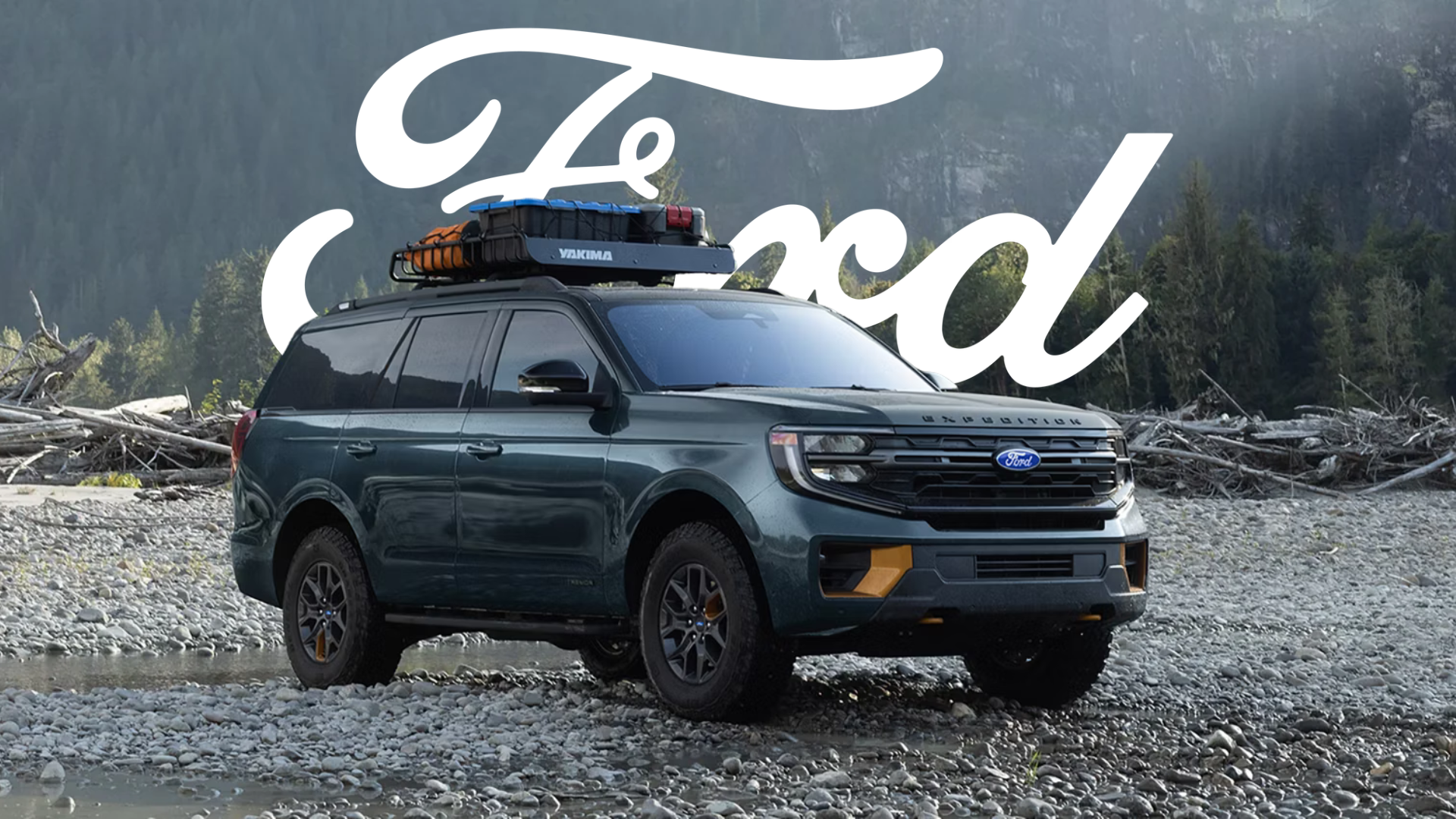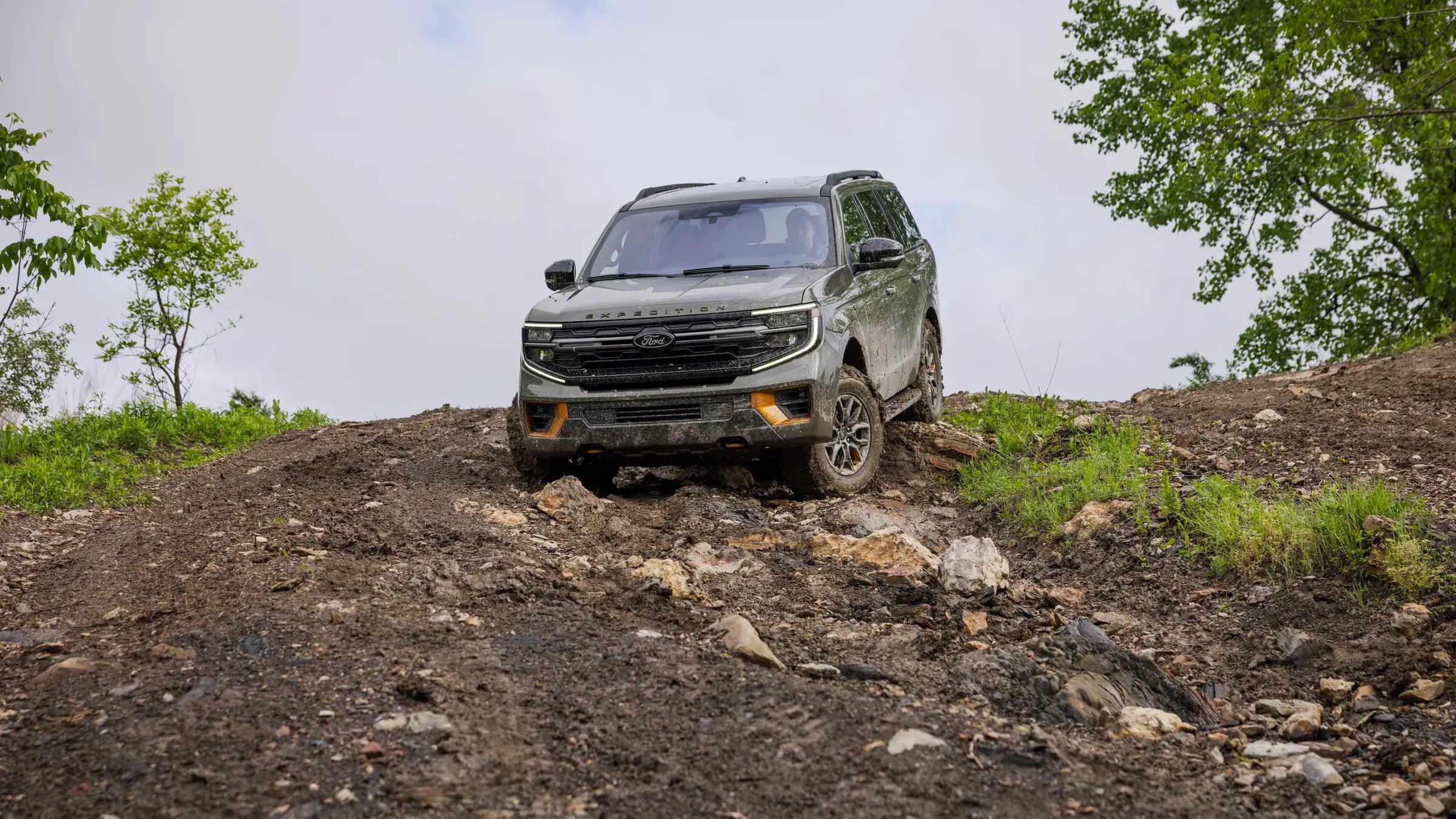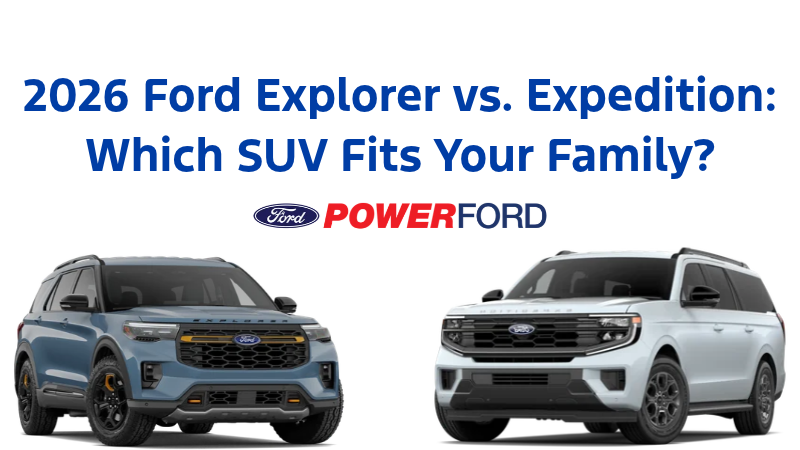
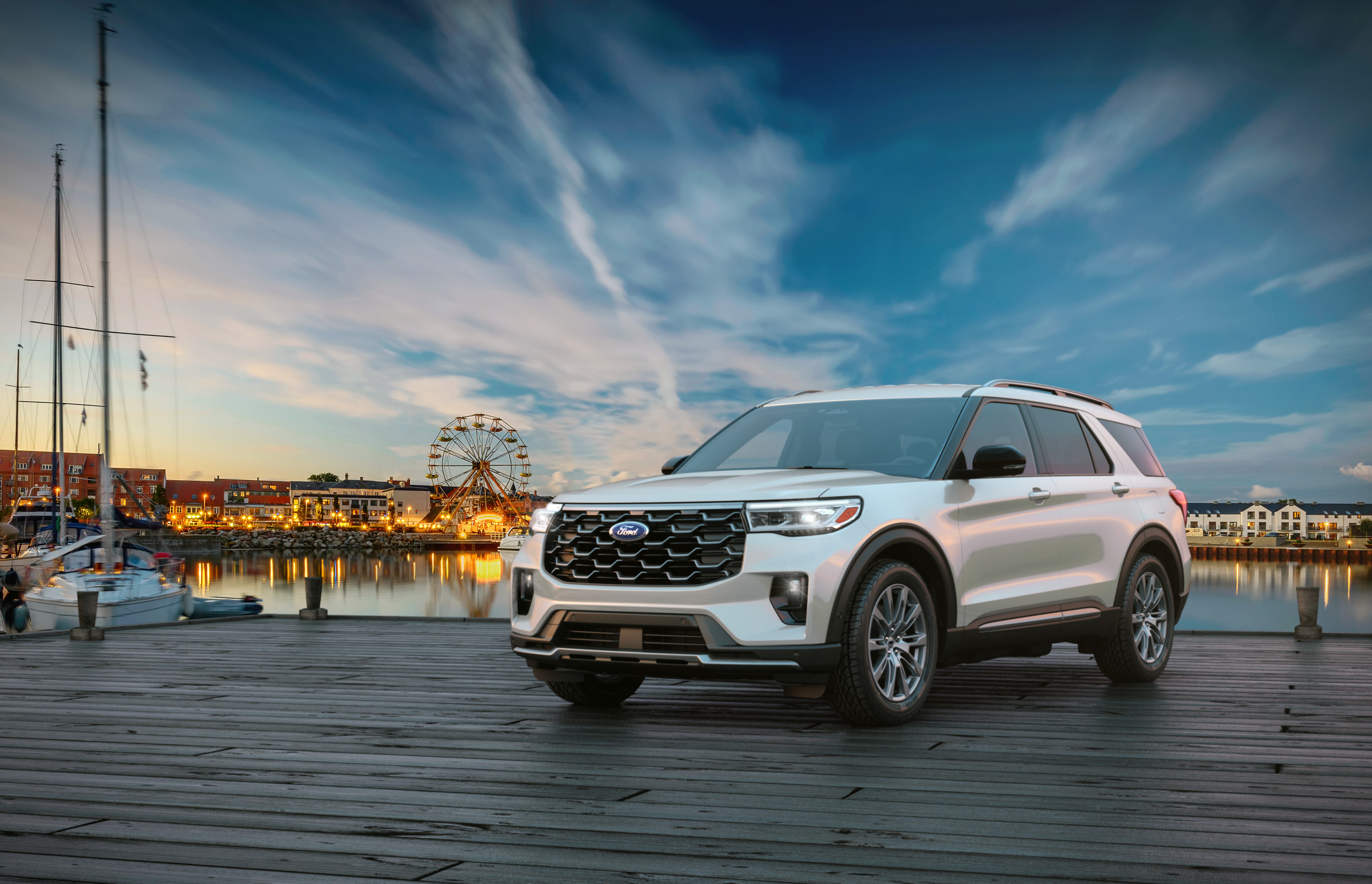
Choose the 2026 Ford Explorer if you want three rows, seating for six or seven, up to 5,000 pounds of towing capacity when properly equipped, and a smaller footprint for daily driving. Choose the 2026 Ford Expedition if you regularly use the third row, need seating for up to eight, carry more cargo with every seat occupied or tow beyond the Explorer's limit. Expedition MAX adds even more cargo space for families who need passengers and luggage on the same trip.
The Expedition offers more capacity, but that does not automatically make it the better family SUV. The right choice depends on how often you fill the third row, what you tow, how much cargo travels with your passengers, and whether the larger exterior dimensions fit your everyday parking and driving.
How Much Passenger Space Do You Actually Need?
The 2026 Explorer seats six or seven, depending on model and second-row configuration. Most models use second-row captain's chairs for six-passenger seating, while eligible configurations can use a bench to reach seven. The Explorer Tremor is configured for six.
The 2026 Expedition can seat seven or eight, depending on model and seating configuration. A second-row bench provides the highest capacity, while captain's chairs create an easier path to the third row and separate second-row passengers.
Ask who rides in the third row and how often. Explorer can make sense for occasional three-row use or six people with captain's chairs. Expedition becomes more useful when the third row is part of the daily routine, especially when child seats, sports equipment or luggage also need space. Before choosing, install your real child seats and test the path between rows.
Explorer vs. Expedition Cargo Space
With all three rows in use, the Explorer provides 16.3 cubic feet of cargo space. Its maximum cargo capacity reaches 85.8 cubic feet in Active 100A, Active and ST-Line models, or 85.3 cubic feet in Tremor, Platinum and ST.
The standard-length Expedition provides up to 22.9 cubic feet behind the third row and up to 108.5 cubic feet behind the first row. Expedition MAX increases those figures to as much as 37.4 cubic feet behind the third row and 123.1 cubic feet behind the first row.
Those differences matter most when people and cargo compete for space. If you usually fold the Explorer's third row, its maximum cargo room may be enough. If the third row must stay raised while you load luggage or equipment, Expedition provides more room, and Expedition MAX creates the clearest advantage.
Do not jump directly to MAX because it has the largest number. Its extra length also affects the space it occupies in a garage, driveway, and parking area. Measure the places where the SUV will live, not only the items you want it to carry.
Which SUV Is Easier to Drive Every Day?
The 2026 Explorer is 198.7 inches long. A standard Expedition is 209.9 inches long, while Expedition MAX measures 221.7 inches. The Expedition is also wider and taller.
That size supports Expedition's passenger and cargo advantages, but it is part of the ownership decision. Explorer is the more manageable choice for tighter parking and households that do not need full-size capacity every day. Drive both on the same visit and check visibility, turning space, camera views, and parking fit.
How Much Towing Capacity Do You Need?
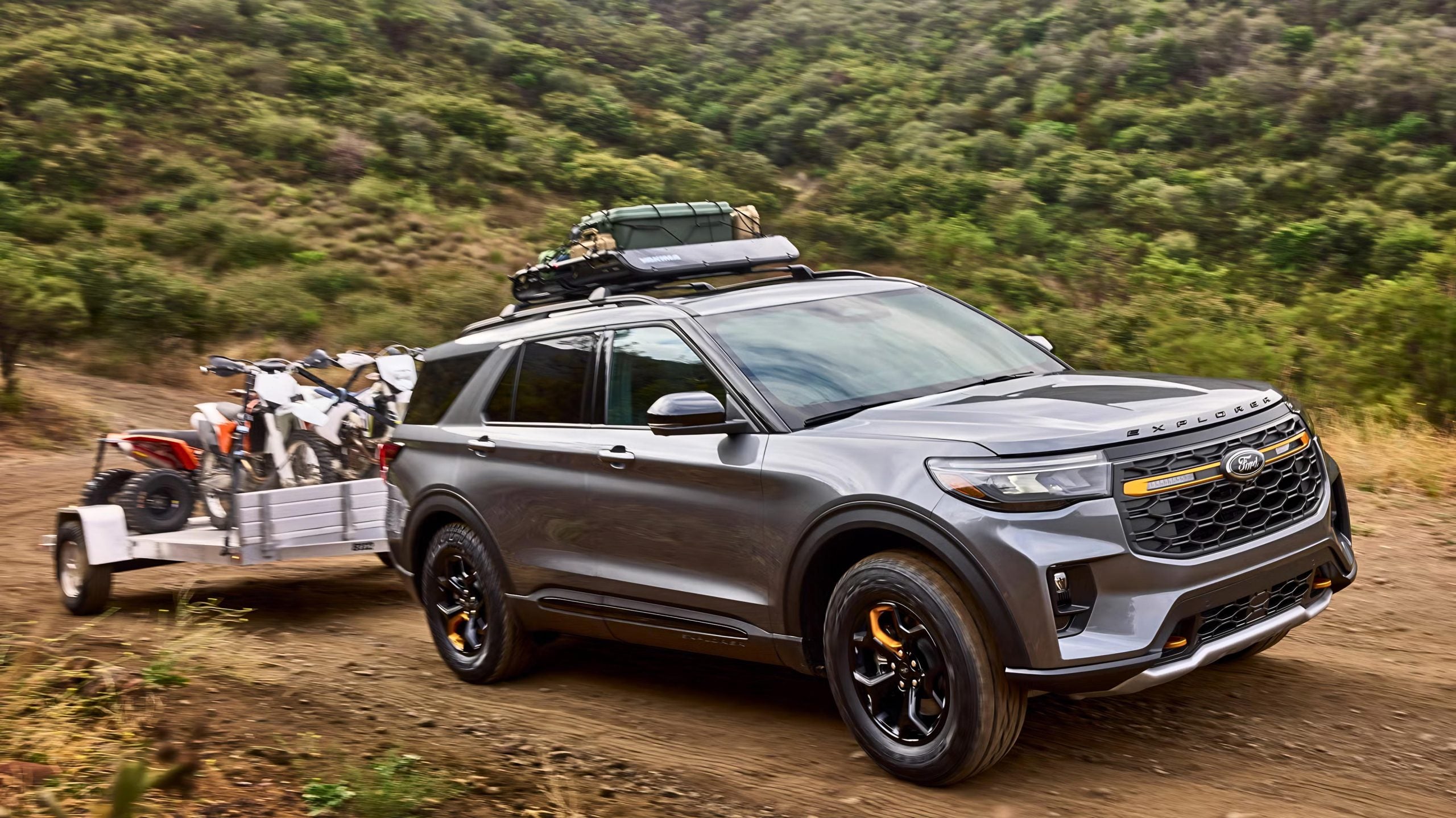
Every 2026 Explorer comes with a Class III Trailer Tow Package and can tow up to 5,000 pounds when properly equipped. That can cover many smaller recreational and utility trailers, but the trailer's loaded weight matters more than its empty or advertised weight.
The 2026 Expedition offers up to 9,600 pounds of available towing capacity in a specific properly equipped configuration: a standard-wheelbase 4x4 without 24-inch wheels and using a weight-distributing hitch. Other Expedition configurations have different ratings. Expedition MAX, wheel choice, equipment, passengers, and cargo can all change the number.
Choose from the trailer backward. Record its loaded weight and tongue weight, then account for every passenger and item inside the SUV. Verify the rating and driver-side doorjamb payload label on the exact vehicle.
If the trailer stays comfortably within the Explorer's limits, moving to an Expedition only for a larger maximum may add size you do not otherwise need. If your loaded trailer exceeds the Explorer's rating or leaves too little operating margin for passengers and cargo, Expedition is the appropriate place to continue the comparison.
Which One Fits New Mexico Travel Better?
For daily Albuquerque driving with occasional mountain trips or weekend recreation, Explorer balances three-row space with manageable dimensions. Available Intelligent 4WD adds traction flexibility on eligible configurations, while Tremor adds specialized off-pavement hardware.
Expedition makes the stronger case when long-distance trips regularly combine a full cabin, substantial luggage and a larger trailer. Expedition MAX is the most cargo-focused choice when the third row must stay in use. Four-wheel drive and trim availability vary, so compare the exact configuration rather than assuming every vehicle is equipped alike.
Neither SUV removes the need to plan for weather, tires, speed, trailer setup or elevation. Capability should create usable margin, not encourage operation at the limit.
Should You Upgrade From Explorer to Expedition?
An Expedition upgrade makes sense when your current Explorer repeatedly runs out of room with the third row occupied, your passenger count has grown or your trailer needs exceed the Explorer's properly equipped rating. Those are recurring needs that the larger SUV directly addresses.
If the extra seats and cargo space would sit unused most of the year, a newer Explorer may be the more balanced upgrade. It keeps the three-row format while offering multiple trims for comfort, performance or off-pavement use. Our 2026 Explorer trim guide can help narrow that decision.
Explorer or Expedition: The Direct Answer
Choose Explorer for three-row flexibility in a smaller package, especially when six or seven seats, up to 5,000 pounds of properly equipped towing, and occasional third-row use cover your routine. Choose Expedition when you need up to eight seats, more cargo space behind an occupied third row or substantially more available towing capacity. Choose Expedition MAX when carrying passengers and cargo at the same time is the central requirement.
Bring your passenger count, cargo dimensions, and loaded trailer weight when you compare them. Browse current new Ford vehicles at Power Ford, then drive the Explorer and Expedition back-to-back to see which amount of SUV fits your real life.